Circle City Repipe locates hidden water supply leaks in Indianapolis houses and small buildings, and in nearby communities across Marion and the surrounding counties. Water leak detection is the locating step: proving that water is leaving the system, working out which line it is leaving from, and pinning the spot closely enough that the repair opens one small area instead of a wall. The work is carried out by licensed and insured contractors, and it ends with a written finding rather than a hole.
Detection is its own job because a concealed leak rarely shows up where it starts. Water runs along joists, down the inside of a wall cavity or across the top of a slab before it stains anything, so the brown ring on a ceiling may be several feet from the pinhole that feeds it. Opening at the stain is a guess. When the leak has to be found and fixed in one visit, that combined scope is water leak repair; the pipe work itself is pipe repair. Water already spraying or pouring is not a detection job at all: shut the main and see emergency pipe repair.
What happens on the first visit
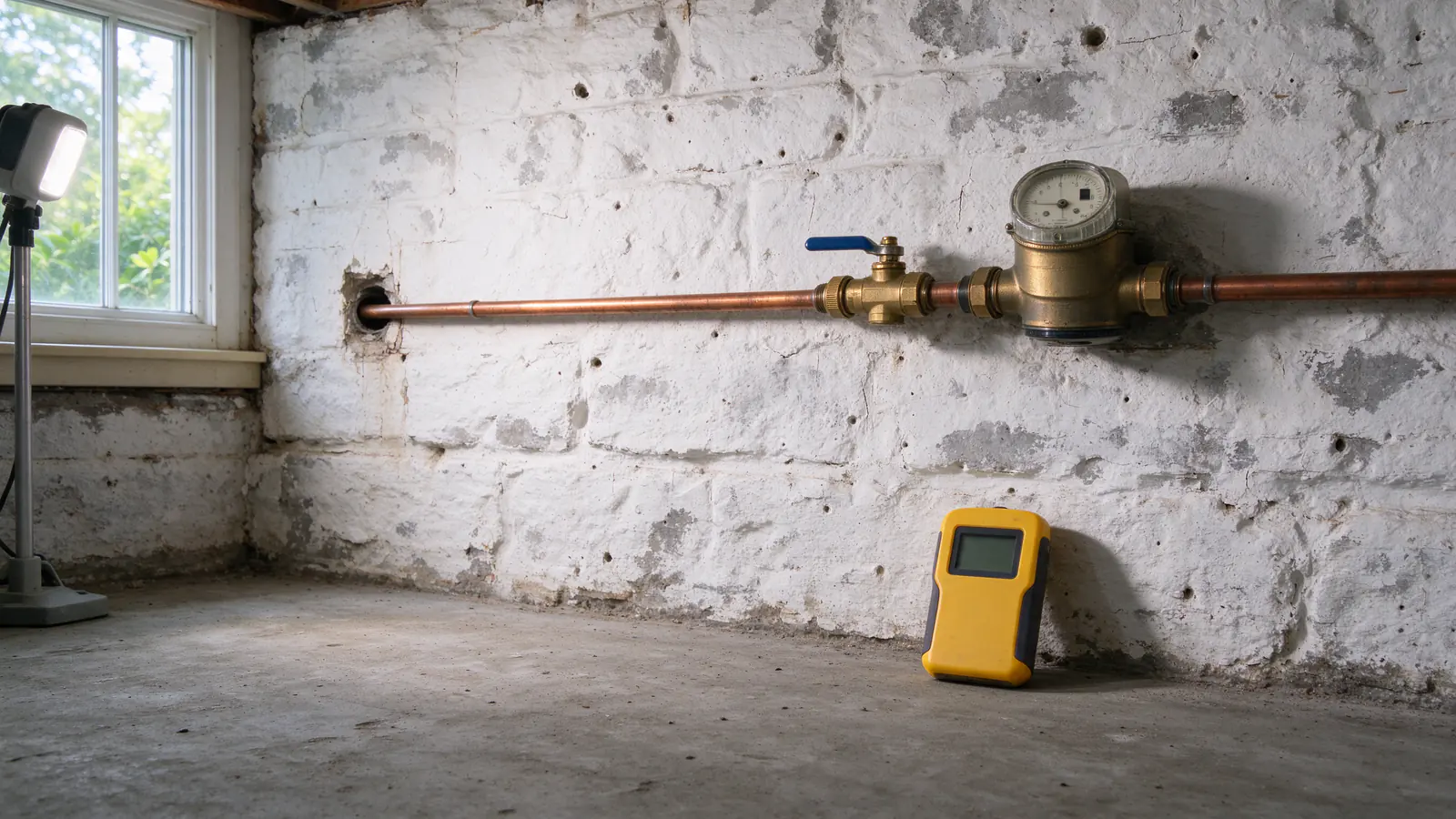
The first visit starts at the meter. With every fixture, the ice maker, the softener and any irrigation shut off, the meter’s low-flow indicator should sit still. If it turns, water is leaving somewhere downstream of it. That one check sorts a supply leak from a running toilet that was missed, and it is the reason the visit starts outside the room with the stain.
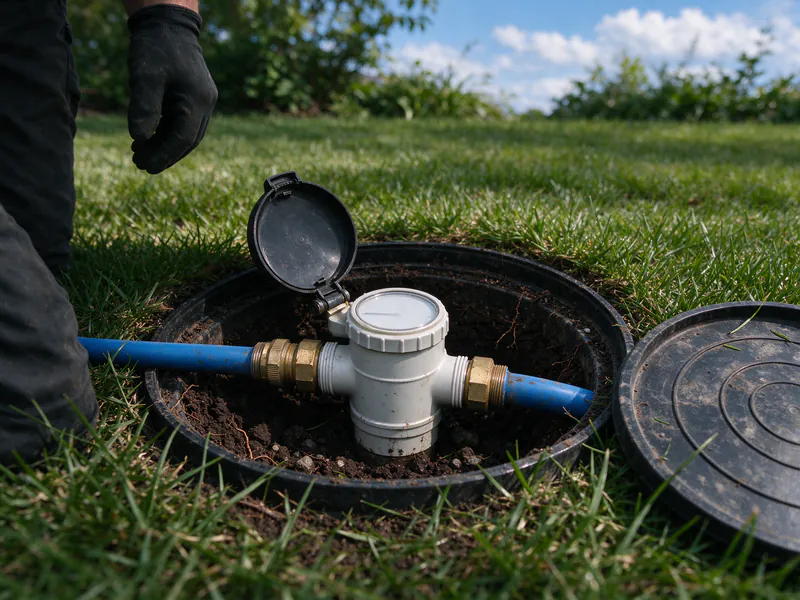
The next step is the main shutoff. If the meter stops when the main is closed, the leak is inside the house. If it keeps moving and the meter is in an outside pit, the leak is on the buried line between the pit and the shutoff, which is the water line rather than the interior plumbing. A main valve that will not close fully muddies that test, which is one reason an old gate valve often ends up on the repair list; the main water shut-off valve replacement page covers why.
Inside, a gauge goes on a hose bibb or laundry connection and the system is held at static pressure. A steady drop with nothing open confirms the leak. Then the hot side is isolated at the water heater and each side is tested on its own, and any branch shutoffs that exist are closed in turn. Each step halves the search. By the time anyone listens for the leak, it is usually narrowed to one side and one part of the house.
Signs that point to a hidden leak
Most hidden leaks announce themselves indirectly. A water bill that climbs with no change in use is often the first. Others are a stain that grows or comes back after paint, a musty smell in one closet, warped flooring, a warm spot on a floor, the sound of running water at night, or a water heater that runs when nobody is using hot water. In houses with a basement, a sump pump that runs in dry weather or a soaked patch of yard can mean water arriving from the service line rather than the sky.
None of those signs proves where the leak is or what caused it. A ceiling stain under a bathroom can be a supply leak, a drain leak, a failed tub seal or condensation on an uninsulated cold line. A supply leak shows up on a pressure test; a drain leak or a seal does not, because those lines are not under pressure. That is why the pressure test comes before any locating equipment, and why it sometimes ends the search by showing the supply side is sound.
How each locating method works
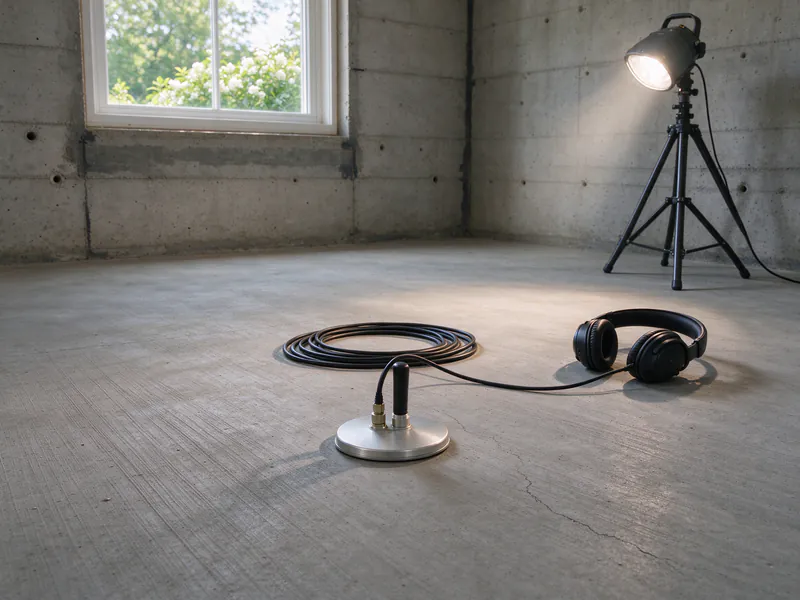
Each method finds something different, so the choice follows the pipe, the depth and the surface. Acoustic equipment listens for the hiss of water escaping a pressurized line. It works well on copper and steel, which carry sound, including through a concrete slab or a few feet of soil. It is weaker on PEX and other plastics, which damp the sound, and on very small leaks.
Thermal imaging reads surface temperature. A hot-water leak warms the floor, wall or slab around it, so the camera shows a bloom centered on the leak. A cold-side leak gives little contrast, and the camera cannot see through deep or insulated runs. Moisture meters are the slower partner: they map how far water has spread through drywall, plaster or subfloor and follow the gradient back toward the wettest point, which is usually close to the source.
Tracer gas is the method for quiet or awkward leaks. The line is drained, isolated and filled with a harmless gas mix that escapes through the same opening as the water, and a sensor picks it up at the surface. It suits plastic pipe, buried service lines and leaks too small to hear. It takes longer to set up, and it needs a line that can be isolated. A finding often uses two methods: one to narrow the area and one to confirm the spot.
A stain, a high bill or a meter that won't stop?
Locating comes first: meter, pressure test, then the method that suits the pipe. Openings are planned once the spot is known.
Leaks on the service line and the Citizens side
A leak outside the house is split by ownership. In Citizens Energy territory the property owner owns the full length of the water service line and maintains the meter pit. Citizens repairs leaks in the public right-of-way at its own expense; leaks outside the right-of-way, on the owner’s property, are repaired by a licensed and bonded plumber at the customer’s expense. Citizens also provides leak location to determine responsibility, as its water connection FAQs explain.
That split is why the meter and its location matter. With an outside pit, the meter records everything on the owner’s side. With an inside meter, a leak can sit on the buried line before the meter and never move the dial. Where a house still has an inside meter and the service-line repair runs past three feet, Citizens requires the meter to move to an outside pit at the customer’s expense, which changes the size of the job. The meter pit and service line guide explains what that relocation involves.
Under slabs and inside walls
Location changes the repair more than the leak does. A leak in a wall or ceiling is reached through drywall or plaster, and a small, square opening at the marked spot is easy to patch. A leak under a concrete floor is a different scope: break the slab at the spot, or abandon the buried line and run a new one overhead. The slab leak repair page goes through that choice. A leak in a crawlspace is often visible once someone gets under the house, and the cost there is mostly the access.
After the leak is found
The finding is what turns a leak into a decision. It should say which pipe failed, what it is made of, what likely caused it and what the repair options are, with the openings each one needs. The cause matters most. A fitting cracked by a freeze, a nail through a line or a single failed joint in sound pipe is a spot repair. A pinhole in copper is a warning that the same pipe may have more, and the copper pinhole leaks guide explains why there is no single cause. A leak in threaded galvanized pipe usually means the rest of it is wearing the same way, which points toward galvanized pipe replacement.
Pattern matters as much as cause. A third leak in a few years, leaks in more than one run or leaks in pipe that is also restricting flow are reasons to price a partial repipe or a whole-house repipe against another patch. The repipe vs repair guide sets out where that line usually falls, and the repiping assessment asks the same questions in a few minutes.
If water damage has already happened, insurers usually want to know where the leak was and what caused it, so the written finding is worth keeping with the claim. Whether a policy covers the leak, the damage or the access is set by the policy and the adjuster; the homeowners insurance and repiping guide covers the questions to ask.
What moves the price of leak detection
Leak detection is priced by what it takes to find the leak, not by a set fee for the visit. The method is the first driver: a meter and pressure test that confirms a leak in an open basement is quick, while tracer gas on a buried line takes more equipment and setup. Access is the second: a slab, a finished basement ceiling or a tight crawlspace slows every step. The third is how many lines and branches have to be isolated before the search narrows. Ask whether the locate is priced on its own or folded into the repair that follows, and get that in writing before work starts.