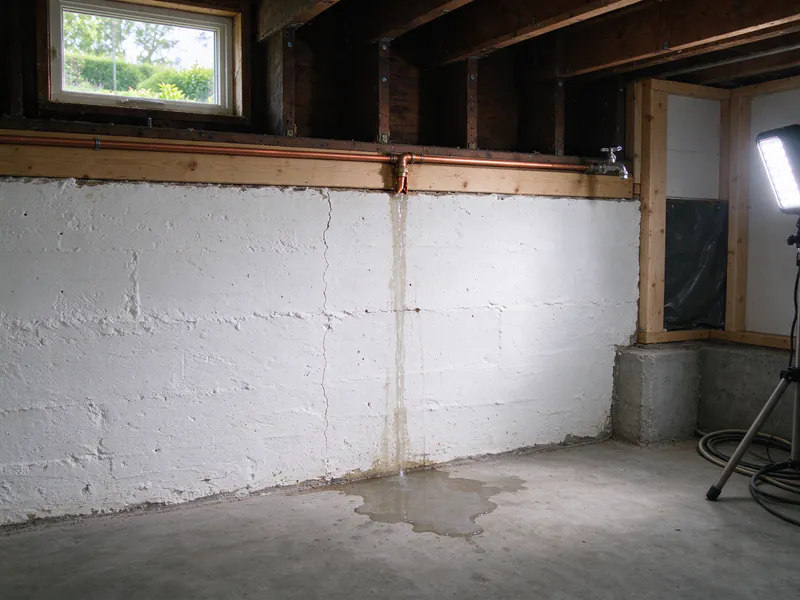
Circle City Repipe offers burst pipe repair across Indianapolis and nearby communities in Marion and the surrounding counties, for frozen pipes, split lines and blown fittings, with emergency response for burst pipes and active leaks. A burst pipe repair has two parts. The first is the pipe itself: shutting the water off, cutting out the split and joining new pipe to sound pipe. The second is finding out why it happened, because a line that froze once in an outside wall will freeze again in the same place. The work is carried out by licensed and insured contractors.
If water is running right now, the order is simple. Close the main shutoff, stay clear of water near outlets, appliances or the electrical panel, and then call. The emergency pipe repair page covers those first steps in detail, and the burst pipe guide covers what to do while you wait. This page covers the repair.
What happens on the first visit
It starts with the water. Does the main shutoff hold? An old gate valve may slow the flow without stopping it, and in that case the house has to be isolated at the meter, which in Citizens Energy territory is often in an outside meter pit. If the valve failed, it goes on the list for main shutoff valve replacement once the pipe is done.
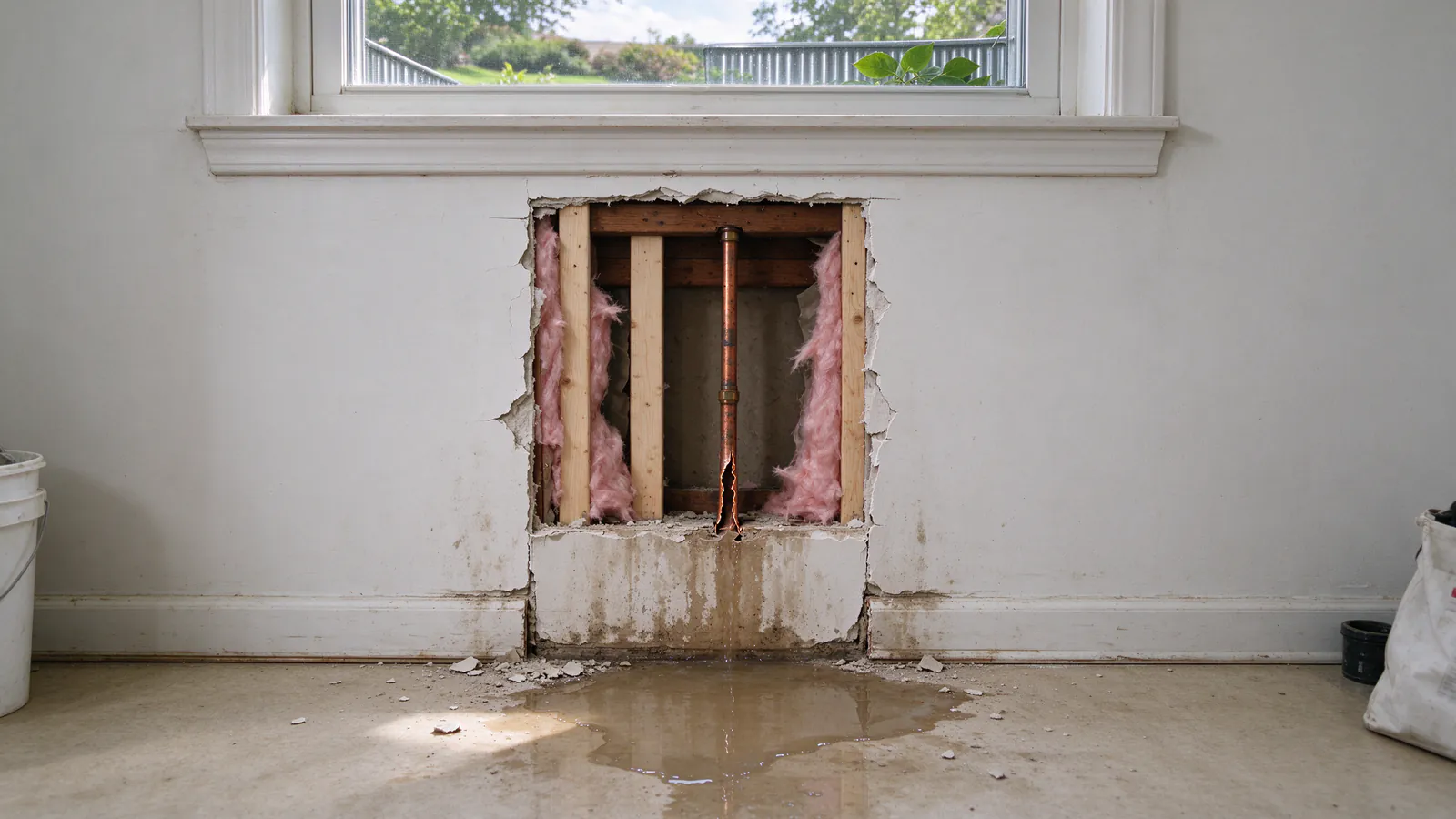
Then the split is found, and the run around it is checked. Water can travel along a joist before it drips, so the wet spot is not always the break. Copper typically shows a lengthwise split, sometimes a bulge that has not opened yet. PEX more often fails at a fitting that cracked or pulled apart. Galvanized steel tends to crack at a thread. Every length on the same exposed run is checked, because ice that formed in one place can have split pipe somewhere else.
Last is the cause. Was the line in an outside wall, over a garage, in a crawlspace with an open vent, near a dryer vent or a hose bibb? Was the heat off, or the thermostat set low while the house was empty? Those answers decide whether the repair is just the pipe or the pipe and a new route.
How pipes burst in a freeze
A pipe does not usually split because the water inside it expands against the wall at the spot where it freezes. Ice forms first where the pipe is coldest and grows into a plug. As it grows, it pushes the remaining water down the line toward a closed faucet or valve. That trapped water has nowhere to go, the pressure climbs, and the pipe gives way at its weakest point, which can be several feet from the ice. That is why a split often appears in a warm-looking spot and why it only leaks once the ice thaws and pressure returns.
Indianapolis gives pipes plenty of chances. NOAA’s 1991-2020 climate normals for Indianapolis International Airport show more than 100 nights a year at or below freezing, about 29 days when the temperature never gets above freezing, and about three nights a year at or below zero. The lines most exposed are the ones in exterior walls, over unheated garages and porches, in vented crawlspaces, in attics outside the insulation, and the short run feeding an outside hose bibb. A hose left attached to a frost-free sillcock can hold water in the valve body and split it inside the wall.
Not every burst is a freeze. High static pressure, water hammer slamming a corroded section, a pipe weakened by years of pinhole corrosion, or a braided supply hose that failed at a washer or toilet can all release water just as fast. The cause sets the fix.
Pipe split or frozen?
Close the main shutoff first. Then describe what froze or split and what is wet.
Thawing and repair
Pipe that is still frozen is thawed with warm air or listed pipe-thawing equipment, starting from the faucet end so melting water can drain. An open flame against frozen pipe in a wall cavity is how freezes become fires. As the line thaws, it is watched for new leaks.
The split is cut out back to sound pipe on both sides and replaced: copper with lead-free solder or press fittings, PEX with new fittings matched to the tubing, galvanized from fitting to fitting with a transition to copper or PEX. Then water goes back on and the whole exposed run is held under pressure while every joint and every length that was frozen is checked dry. Only then does the wall or ceiling close.
Stopping it from happening again
New pipe does not remove freeze exposure; where it runs does. A line in an outside wall can be moved to an interior wall or dropped into the heated basement, insulated on the warm side of the wall, or fed by a branch that can be shut off and drained for the winter. Crawlspace lines can be insulated and the vents closed in cold weather. A frost-free sillcock only works with the hose removed. The winter freeze post covers what to check before a cold snap. PEX tolerates a freeze better than copper, but the PEX vs copper guide explains why material alone is not the answer. Where several runs have frozen or split over the years, the repair or repipe guide covers when a reroute becomes part of a larger repipe.
Insurance and water damage
Homeowners policies are commonly written around sudden, accidental water damage, and a burst pipe often counts as sudden. The pipe that failed and the damage it caused can be treated differently, and many policies ask whether the house was heated. Terms vary by insurer, so the only reliable answer is the policy and a written reply from the insurer. Photographs of the split, the wet areas and the thermostat help any claim. The homeowners insurance and repiping guide goes further. Water extraction, drying and finish restoration are restoration work, not plumbing, and are priced separately.
Permits
A repair that replaces the split pipe in kind normally needs no permit inside the City of Indianapolis, because the Department of Business and Neighborhood Services exempts in-kind replacement up to 20 percent of the piping. Rerouting a line to a new wall, changing material on a long run or replacing more than that can need one, and the excluded cities and surrounding towns are confirmed per address.
What burst pipe repair costs
A typical Indianapolis-area range for the burst pipe repair itself is about $400 to $1,500. Water damage cleanup is separate, and after-hours calls push toward the high end. What moves the price is the number of splits, the pipe material, how much wall or ceiling has to open, and whether thawing the rest of the run takes time. A reroute is priced on its new route. The Indianapolis repipe cost guide compares burst repairs with pipe repair and water leak repair.