Circle City Repipe provides emergency pipe repair in Indianapolis and nearby communities across Marion and the surrounding counties, with emergency response for burst pipes and active leaks and phones answered 24/7 for emergencies. Regular hours are 7 AM to 6 PM, seven days a week. Emergency work is about stopping water first and fixing pipe second. The few minutes between finding water and turning it off decide most of the damage, so the first steps belong to whoever is in the house. The work itself is carried out by licensed and insured contractors.
This page covers what to do before anyone arrives, what counts as an emergency and what can wait, and what emergency response does and does not include. The repair itself is covered on the burst pipe repair page for split and frozen lines and on the water leak repair page for leaks inside walls and ceilings.
What to do first
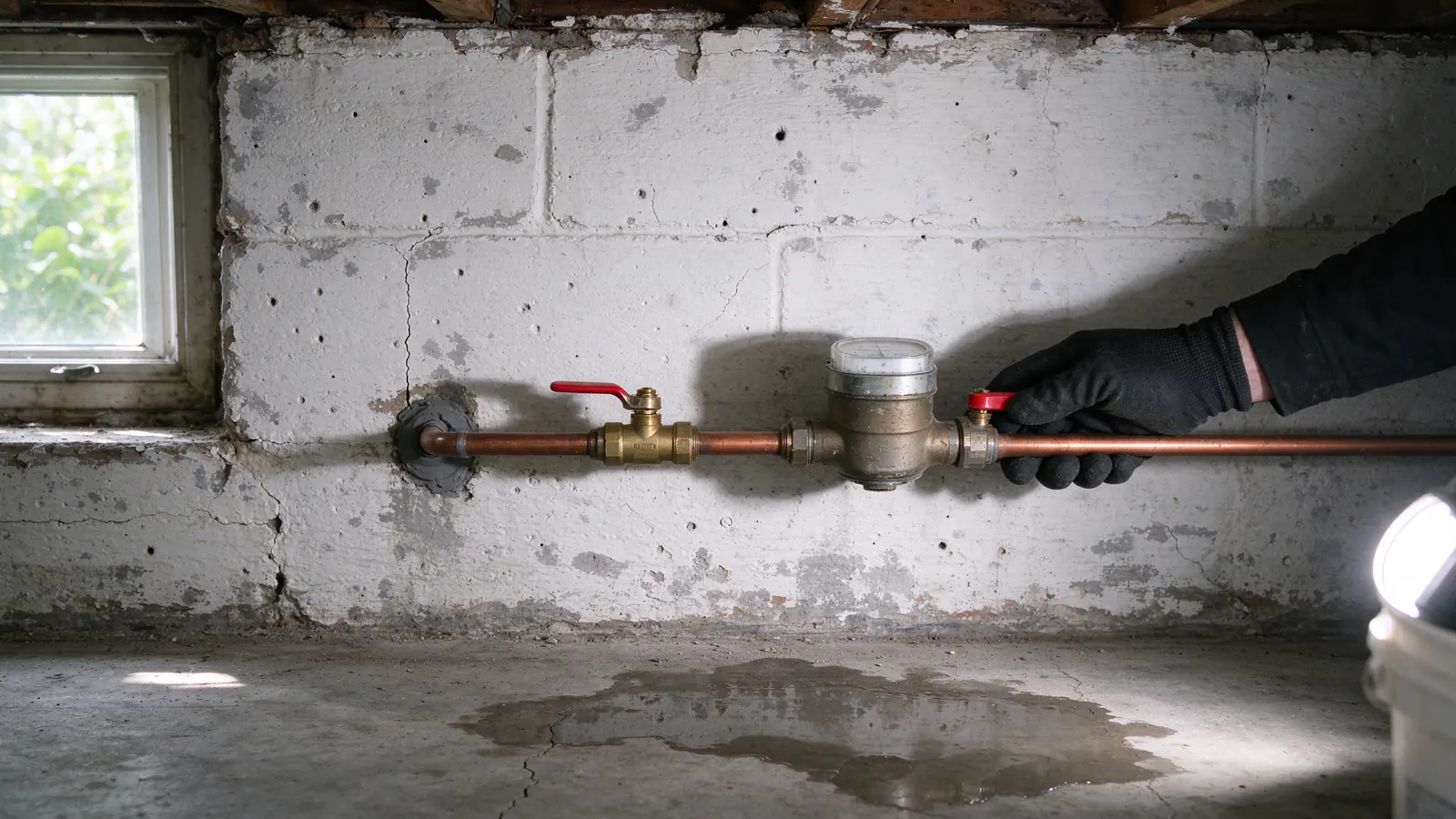
Close the main shutoff. In most houses the main valve is where the water line comes through the foundation: on the front basement wall, in a crawlspace near the front of the house, or in a utility closet next to the water heater in a house built on a slab. Where the meter is inside, the valve is just past it. A quarter-turn lever closes when the handle is across the pipe; an old round-handled gate valve closes clockwise and can take many turns. If the leak is under one sink or toilet, the fixture’s own stop valve may be enough, and the rest of the house keeps water.
Keep clear of electricity. Water that reaches outlets, extension cords, appliances or the breaker panel can make the floor around it dangerous. Do not walk through standing water to reach a panel. If the panel can be reached from dry floor, switch off the circuits for the wet area; if it cannot, stay out of that area and call the electric utility. Ceiling light fixtures under a leak should be left off.
Drain the house. Once the main is closed, open a faucet at the lowest point, usually a basement laundry tub or utility sink, so the water left in the pipes drains there rather than through the break. Water will keep coming out of the break for a few minutes as the lines above it empty; that is normal.
Protect what you can, then call. Move rugs, electronics and boxes out of the way and put a bucket under a ceiling drip. Keep out from under a ceiling that is sagging with water. Take photographs of the failed pipe and the wet areas before cleanup. Then call Circle City Repipe with what failed, where the water is and whether it has stopped.
Water running right now?
Close the main shutoff and keep clear of anything electrical. Then call with what failed and whether the water has stopped.
If the main will not shut off
Older houses sometimes have a gate valve at the main that has not been turned in years. It may close part of the way and stop, or the stem may snap if it is forced. Close it as far as it will go without forcing it, open the lowest faucet to drain the house, and call. A valve that failed in an emergency is worth replacing once the leak is fixed; the main shutoff valve replacement page covers the quarter-turn ball valve that replaces it.
Beyond the house valve is the meter. In Citizens Energy territory, standard meter settings for houses are in an outside pit near the right-of-way, an inside meter moves to a pit when its service line is replaced, and some older houses still have the meter in the basement. The curb valve near the street is a different matter. Homeowners report that Citizens will shut the water off at the street when asked, and that anyone who forces a curb valve with a borrowed key is responsible for what breaks. The meter pit guide explains how the pit and the service line are laid out.
What counts as an emergency
A pipe spraying water, water coming through a ceiling, a leak into a finished basement, water near electrical equipment, or a leak that the main will not stop all need emergency response. So does a house that cannot go without water, such as one with someone who depends on it for medical care.
Plenty of leaks can wait. If a fixture stop or the main has stopped the water and the house can manage for a day, a scheduled visit costs less than an after-hours call, and the repair is the same. A slow drip at an exposed basement pipe can go into a bucket until morning. Knowing the difference saves the after-hours premium.
Leaks outside the house follow different rules. In Citizens Energy territory, Citizens repairs leaks between the main and the right-of-way line. A leak on the owner’s side of that line, between the property line and the house, is the owner’s to repair through a licensed plumber bonded with Citizens. Water bubbling up in the street or the tree lawn is a call to the utility first.
What emergency response includes
The first job is to confirm the water is stopped and the house is safe. The second is to find what failed: a split pipe, a cracked fitting, a blown supply hose at a toilet or washer, a leaking water heater connection, a pinhole that finally let go. Where the pipe and access allow, the repair is made then: the damaged section is cut out and replaced with listed material and pressure checked before the water is left on. The pipe repair page explains how each material is repaired.
Where a permanent repair has to wait, for parts, for access through a finished ceiling, or because the pipe around the break is too poor to join to, the damaged branch is isolated and capped so the rest of the house has water again. The permanent repair is then priced in writing and scheduled. If the break turns out to be one more failure on pipe that has been failing for years, the repair or repipe guide covers what to weigh before spending on another patch.
What emergency response does not include
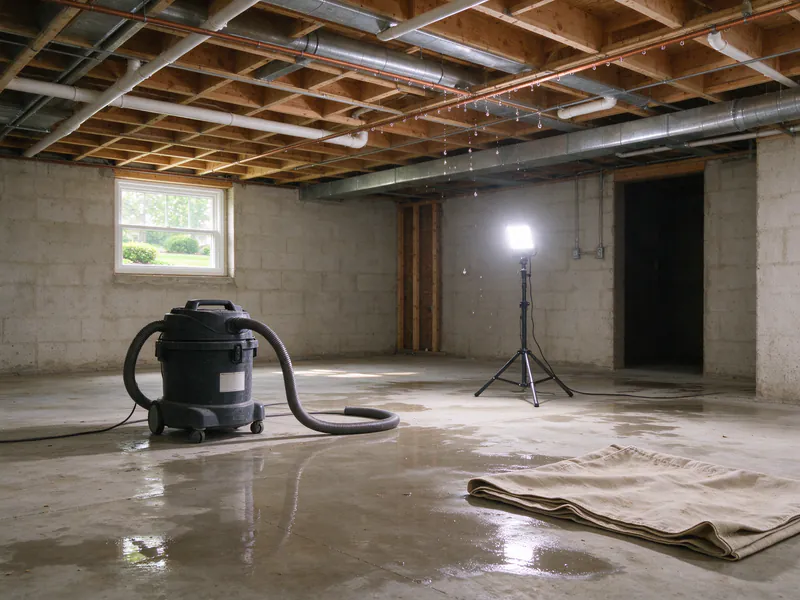
Water extraction, drying, mold prevention and finish restoration are restoration work, not plumbing, and are handled separately. Fixing the pipe does not dry a soaked wall cavity. Homeowners policies are commonly written around sudden, accidental water damage, and the pipe and the damage may be treated differently; the homeowners insurance guide covers what to check. Photographs taken before cleanup help any claim.
What emergency pipe repair costs
Emergency calls outside the 7 AM to 6 PM hours cost more than scheduled work. For a burst pipe, the typical Indianapolis-area range for the pipe repair itself is about $400 to $1,500, with after-hours calls toward the high end and water damage cleanup separate. A leak that is stopped by a valve and repaired at a scheduled visit is priced as ordinary pipe repair. The burst pipe guide covers the first hour in more detail, and the Indianapolis repipe cost guide compares repair prices.