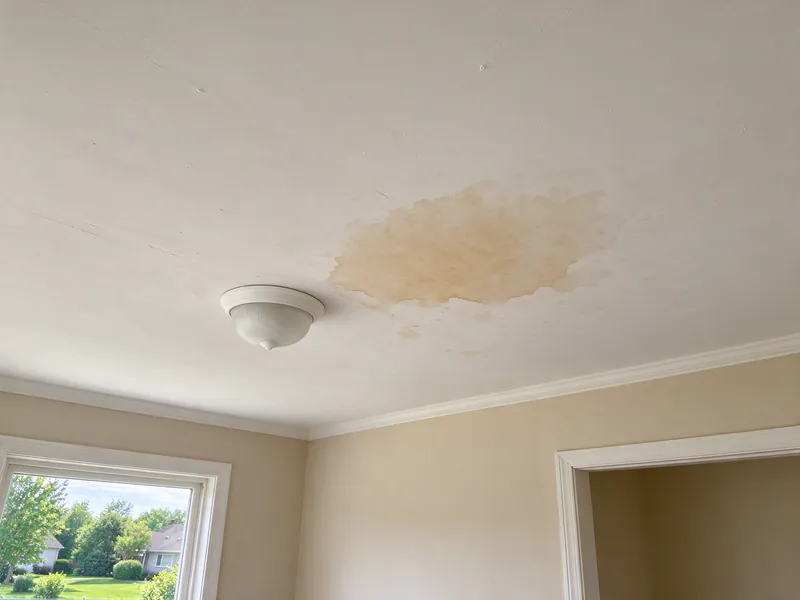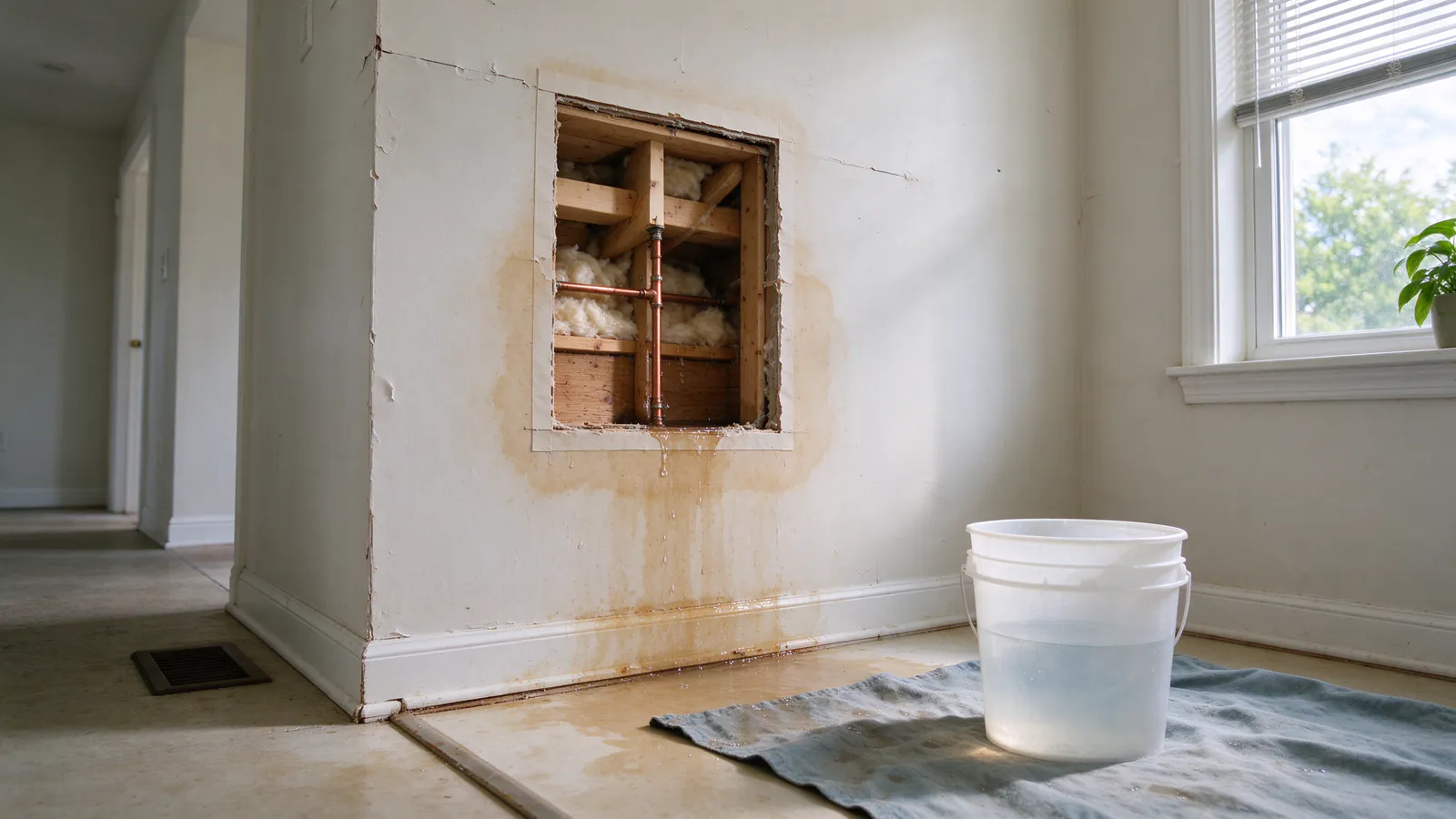
Circle City Repipe offers water leak repair across Indianapolis and nearby communities in Marion and the surrounding counties: finding a leak from the symptom, stopping it, fixing the pipe and patching the opening. Most people arrive with a symptom rather than a diagnosis. A brown ring on the ceiling under a bathroom, a baseboard that stays damp, paint that bubbles, a floor that has started to cup, or a water bill well above the usual. The work is carried out by licensed and insured contractors, and it follows the same order every time, because skipping a step is how a leak gets patched over and comes back.
This page covers the whole job, end to end. If the location is already known and the pipe is exposed, pipe repair covers the repair itself. If the leak cannot be found from the symptom, water leak detection covers the locating methods on their own. A pipe that has split open and is spraying is a burst pipe, and the first job there is the main shutoff.
What happens on the first visit
The visit starts with the question of whether the water is from the supply at all. Supply pipe is under pressure day and night, so a supply leak keeps going whether or not anything is running. Drain and waste lines only leak when water is going down them. A toilet wax ring, a shower pan or a tub overflow can soak a ceiling just as well as a pinhole, and none of them is a supply pipe. Roof leaks after rain and condensation dripping off a cold line in a humid basement are the other common look-alikes. Getting this wrong means opening the wrong wall.
Next is the meter. With every fixture off, the meter’s low-flow indicator should sit still. If it turns, water is leaving the system somewhere, and that confirms a supply leak even when nothing can be seen. Toilets get checked first, because a flapper leaking into the bowl moves the meter and is not a pipe problem. Isolating sections with their own valves narrows it further: if the dial stops when the water heater’s cold inlet is closed, the leak is on the hot side.
Then the leak is followed, not guessed at. Water travels along joists, pipes and the back of drywall before it shows, so the stain is rarely right under the leak. A moisture meter on the surface, the layout of the fixtures above and the route the pipes take usually put the leak within a small area. Where they do not, acoustic listening, thermal imaging or a pressure test on isolated sections finds it, as described on the leak detection page. Only then is the opening marked and the price set.
Find, stop, fix, patch
Find. The goal is one opening, in the right place, sized to reach the leak and a few inches of pipe either side. Cutting a ceiling under a bathroom from below is usually cheaper to close than removing tile from above.
Stop. If a fixture stop or a branch valve isolates the leak, the rest of the house keeps water. Otherwise the main shutoff closes for the repair. If the main is an old gate valve that will not close, that is worth knowing now; the main shutoff valve replacement page covers replacing one that will not close.
Fix. The damaged length of pipe or the failed fitting is cut out and replaced with listed material, usually a short section of copper or PEX joined with soldered, press or crimp fittings. The pipe around the leak is looked at closely. One pinhole in otherwise sound copper is a repair. Copper that is green and pitted along the whole exposed run, or galvanized steel that crumbles at the threads when it is cut, is telling you about the rest of the system.
Patch. With the water back on, the repair is held under line pressure and checked dry before anything is closed. Then the opening gets a basic patch, left ready for finishing. Paint, texture, tile and plaster restoration are separate, because they depend on the room.
Water showing up where it shouldn't?
Describe the stain, the room above it and when it gets worse. The likely cause and the opening are explained before anything is cut.
What usually causes a hidden leak
Leaks inside walls and ceilings come from a short list of causes, and each points somewhere different. Copper pinholes start inside the pipe and work outward, and the reasons vary: water chemistry, flow speed, flux left in the joints, and workmanship all play a part, as the copper pipe repair page explains. Galvanized steel rusts from the inside and usually leaks first at threaded joints, where the wall is thinnest. Joints fail on their own too: a solder joint that was never fully wetted, a crimp ring that was not squared, a push-fit fitting on pipe that was not deburred. A joint leak in sound pipe is a repair; a pipe-wall leak in pipe that is thin everywhere is a warning.
Other causes are mechanical. A nail or screw through a line during a past remodel can seep slowly for years. Pipe that rubs on framing every time water hammer slams it can wear through. And freezing can open a split in a line in an outside wall that only starts leaking when it thaws, and Indianapolis averages more than 100 nights a year at or below freezing.
When the leak is outside the walls
Some leaks are not in the house at all. If the meter turns with everything shut off and nothing inside is wet, the buried service line from the street is a suspect, especially if the yard has a soft or unusually green strip. In Citizens Energy territory the service line belongs to the property owner, and Citizens repairs leaks only between the main and the right-of-way line. Leaks on the owner’s side are repaired by a licensed plumber bonded with Citizens, at the owner’s expense. Where the meter is still inside the house and a service leak repair runs longer than three feet, Citizens rules move the meter to an outside pit. The water line replacement page and the meter pit guide cover how that works.
Leaks under a concrete floor, such as in a slab addition or a basement floor with buried lines, are a different job again, covered on the slab leak repair page.
Insurance and water damage
Homeowners policies are commonly written around sudden, accidental water damage rather than slow wear, so a leak that soaked a ceiling overnight and one that seeped for months may be treated differently, and the pipe itself may be treated differently from the damage it caused. Policies vary by insurer, so the only reliable answer is the policy and a written reply from the insurer. Photographs of the stain before the opening, the failed pipe and the repair help any claim. The homeowners insurance and repiping guide goes further. Drying, mold remediation and finish restoration are restoration work, not plumbing, and are priced separately.
Permits for a leak repair
Inside the City of Indianapolis, the Department of Business and Neighborhood Services exempts in-kind pipe replacement from a plumbing permit up to 20 percent of all piping in the structure, so replacing a damaged section at one leak normally needs no permit. Rerouting a line, changing a material or replacing enough pipe to pass that limit can. The excluded cities of Lawrence, Speedway, Beech Grove and Southport and the surrounding towns set their own rules, which are confirmed per address.
When the next leak is the real question
A second leak in a different place on the same kind of pipe changes the conversation. One repair is usually the right answer. Three in a few years, on pipe of the same age, usually is not, because each one opens another wall and the rest of the pipe is wearing the same way. The repair or repipe guide sets out where that line sits, and a partial repipe replaces one bath group or one floor where only part of the house is failing.
What water leak repair costs
A typical Indianapolis-area range to find and fix one leak behind a wall or ceiling is about $350 to $1,200, including a small access opening and a basic patch. Finish restoration and water damage are extra. An exposed leak in a basement or crawlspace usually falls in the lower pipe repair range of about $150 to $650. What moves the price is how long the leak takes to locate, what the wall or ceiling is made of, whether tile or cabinets are in the way, and the pipe material at the leak. The Indianapolis repipe cost guide puts these ranges side by side with the rest of the work.