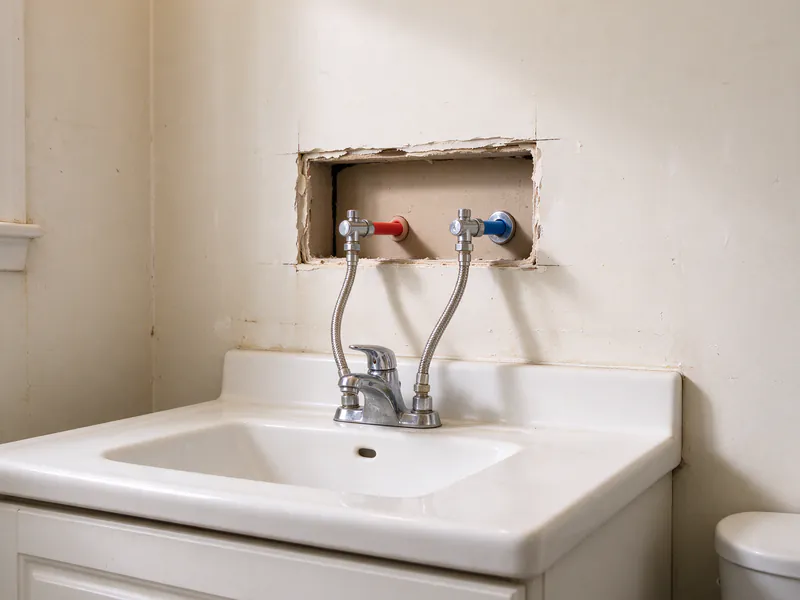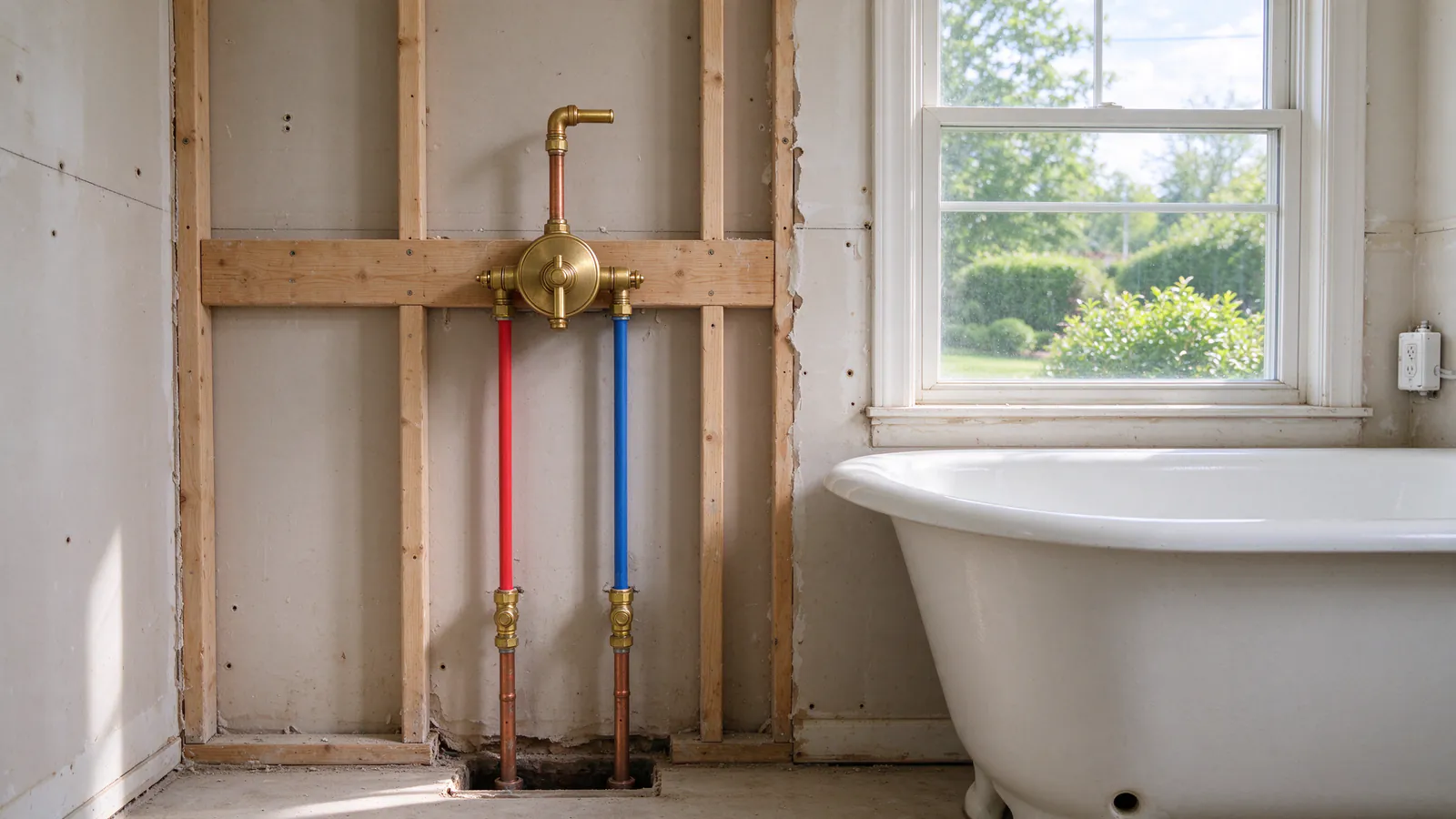
Circle City Repipe replaces sections of failing water supply pipe in Indianapolis houses and in nearby communities across Marion and the surrounding counties. A partial repipe replaces a defined part of the system, such as one bath group, one floor, the hot side or a main, and leaves the rest of the old pipe in service. The work is carried out by licensed and insured contractors, under a plumbing permit where the City requires one, and every point where new pipe meets old is written into the scope before anything is opened.
The honest thing to say about a partial repipe is what it does not do. It does not remove all the old piping. Whatever sits outside the boundary keeps aging at its own pace, keeps its old joints and valves, and may still carry rust, scale or lead solder into the new section. That is not a reason to avoid one. It is a reason to draw the line on purpose. Where the whole system is the problem, a whole-house repipe is usually the better answer; where one area is clearly worse, or the budget has to be staged around remodels, a partial repipe is a reasonable plan.
What happens on the first visit
The first visit decides where the boundary goes, so it looks at the whole system, not only the part that is leaking. It starts at the meter setting and the main shutoff and follows the main through the basement or crawlspace. Pipe material is identified along the way, because a house that looks copper at the water heater may still have galvanized steel feeding the upstairs bath. The guide to identifying pipe material covers the checks an owner can do first.
Static pressure is read at a hose bibb or laundry connection, and flow is checked at fixtures upstairs and down, hot and cold. Those readings matter more for a partial repipe than for a full one. If flow is weak at every fixture, the restriction may sit in the main or the service line, and replacing one bathroom’s branches will not fix it. If flow is weak only at one bath, or only on the hot side, the problem is more likely local. The low water pressure page explains how pressure and flow readings separate those causes.
The visit then turns to the boundary itself: where a tie-in can be reached without opening a finished ceiling, whether a shutoff can go there, and what the next stage would look like if the owner wants to continue later. The scope, the openings and the price are set out in writing before any wall is touched.
Where a partial repipe draws the line
Every partial repipe is defined by its boundary. The most common ones follow how a house is plumbed.
A bath group boundary replaces the supply lines to one bathroom’s fixtures, back to the nearest main. It fits a remodel where the walls are already open, or one bathroom that keeps leaking while the rest of the house behaves. A floor boundary replaces every branch on one level, which suits a second floor fed by tired risers or a basement level being finished. A main trunk boundary replaces the exposed lines along the basement joists or through the crawlspace and leaves the risers and branches inside the walls. That one is tempting because it needs few openings, but it leaves the hardest-to-reach pipe in place, and that pipe is often where the restriction is.
None of these is right by default. The choice depends on what the readings and the pipe show, which parts of the house are being opened anyway, and whether the owner plans to finish the job later.
Hot side only
Hot water repiping, sometimes searched as hot water line replacement, replaces the hot main from the water heater and the hot branches to the fixtures and leaves all the cold pipe in place. It is a common boundary because the hot side often fails first. Heat speeds up corrosion inside galvanized steel and can speed erosion inside copper, and hot lines expand and contract every time the water heater cycles. Homeowners report runs of pinholes on hot lines while the cold lines beside them stay dry.
The catch is that the cold side is usually the same age, the same material and in the same walls. Replacing only the hot side opens those walls once now and again later when the cold side goes, unless both are done while the openings are there. Cold water repiping on its own is less common and usually follows a specific finding, such as a scaled galvanized cold main or a cold line routed through a freezing exterior wall. Where hot and cold run side by side through the same opening, replacing both costs little more in labor than replacing one, and the written scope should show that choice clearly.
Where new pipe meets old
The tie-ins are where a partial repipe succeeds or fails. Each one joins new pipe to whatever stays, and each one needs to be planned.
New copper or brass to old galvanized steel needs a dielectric union or a listed transition fitting. Without one, the two metals form a galvanic cell in the water and the steel side corrodes much faster than it would on its own. PEX to galvanized avoids that metal-to-metal contact, but it does not stop the old steel upstream from shedding rust flakes and scale into the new lines, where they lodge in fixture cartridges and aerators. New pipe to old copper is the simplest joint, but if the old copper was installed before 1986, Citizens Energy Group notes its joints may contain lead solder. Those joints stay in service outside the boundary.
A shutoff valve at each main tie-in is worth adding. It lets the new section be isolated, and it gives a later stage a clean starting point. If the house is likely to be finished in stages, the new pipe should also be sized for the whole house rather than for the part being replaced. The repipe vs repair guide goes further into when staging makes sense and when it only spreads the same cost over more openings.
Repiping a bathroom during a remodel
A remodel is the most common reason for a partial repipe. Once the tile and wall board are off, the supply lines are exposed, and replacing them costs far less than coming back after the new tile is set. Homeowners taking a bathroom down to the studs often ask whether they need a permit even if the layout stays the same. In Indianapolis the answer turns on how much pipe is replaced and how.
The Department of Business and Neighborhood Services requires a plumbing permit for construction activity on a plumbing system. The exemption covers replacement in kind of no more than 20 percent of all the piping in the structure. A bath remodel that moves fixtures, changes galvanized to PEX or replaces most of a bath group’s piping is unlikely to fit inside that, and close cases are confirmed with the permit office for the address. For an existing home the permit is $153 for up to 1,000 square feet plus $23 for each additional 500, and a failed inspection adds a $175 reinspection. Plumbing work that needs a state license is permitted through a state-licensed plumbing contractor registered with the City.
The City’s Building Standards require a rough-in inspection after the pipe is installed and before it is covered. In a remodel that means the inspection has to happen before the tile backer or drywall goes up, so it belongs on the remodel schedule. The Indianapolis repiping permit guide explains how Lawrence, Beech Grove and the suburbs handle their own permits.
Walls already open?
Send the room, the pipe you can see and the remodel schedule. The repipe can be planned around the rough-in inspection.
When a partial repipe is the wrong answer
A partial repipe does not suit every house. Galvanized steel throughout is the clearest case: the pipe outside the boundary is corroding from the inside at the same rate as the pipe being replaced, and it keeps restricting flow to the new section. The galvanized pipe replacement page explains why that pipe tends to fail as a system.
Weak pressure across the whole house is another. If the static reading at the hose bibb is low, the cause is upstream of the house piping, in the service line, the meter setting, a half-closed main valve or a failing pressure-reducing valve, and new pipe in one bathroom will not change it. Repeated pinholes in copper spread through several runs point the same way, toward the whole system rather than one area; the copper pinhole leaks guide explains why one leak often means more thin spots nearby.
Finally, a partial repipe planned as the first of several stages can end up costing more than one whole-house job, because each stage opens walls, sets up access and goes through inspection again. Staging is still the right choice for some budgets and remodel plans, as long as it is chosen with that in view.
What moves the price of a partial repipe
There is no single typical range for a partial repipe, because the boundary changes the job so much. The price is driven by how many fixtures are inside the boundary, how many tie-ins there are and where they sit, whether the route runs through an open basement or through finished ceilings, plaster or tile, the pipe material, whether a shutoff and new stop valves are added, and whether the work needs a permit. Patch and paint scope is the part most often left vague, so the quote should say exactly which openings are closed and by whom.
The Indianapolis repipe cost guide shows how those drivers stack up against a whole-house repipe, and the cost estimator gives a planning figure for whole-house work without a phone call. If the problem turns out to be a single leak rather than a failing section, pipe repair may be all the house needs.
PEX or copper for a section
A partial repipe can use either material, and the choice affects the tie-ins as well as the new pipe. PEX repiping bends around obstacles and needs fewer openings, which helps in a finished house, and it joins old galvanized without a metal-to-metal joint. Copper repiping matches existing copper and suits exposed runs in a basement, but it needs a dielectric fitting wherever it meets steel. Mixing PEX and copper inside one house is common and allowed by the Indiana Plumbing Code, provided each joint uses the right fitting. The PEX vs copper guide compares the two in more depth.