Circle City Repipe replaces all of the water supply piping in Indianapolis houses, doubles and small buildings, and in nearby communities across Marion and the surrounding counties. A whole-house repipe takes every hot and cold line out of service from the main shutoff to the fixtures and replaces it with PEX or copper, under one plumbing permit and one set of inspections. The work is carried out by licensed and insured contractors, and it is planned around the walls, the people living in the house and the permit office that covers the address.
Whole-house is the right scope when the problem is the pipe itself rather than one bad spot. Galvanized steel corrodes from the inside along its whole length, so a house with one scaled-shut branch usually has others on the way. Copper that has started pinholing in one run is often the same age, the same alloy and carrying the same water as the rest. Replacing one section at a time leaves old pipe beside new for years and opens a fresh set of walls each time. Some owners search for this as a whole-house water line replacement; inside the house it is the same job, while the buried line from the street is water line replacement, a separate scope. If one bathroom or one floor is clearly the problem, a partial repipe may be the better answer, and the Indianapolis repipe cost guide shows how the two compare.
What happens on the first visit
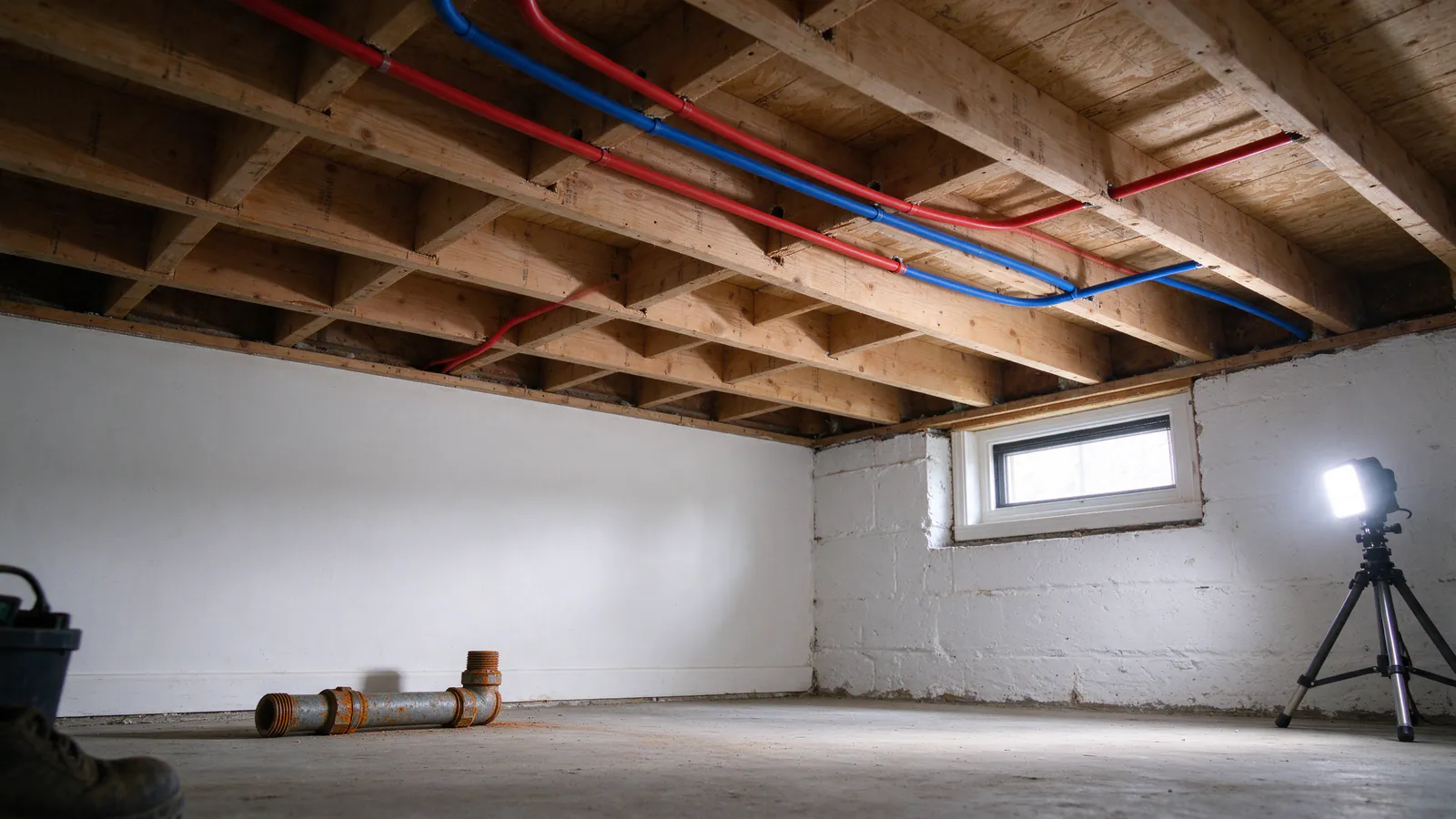
The first visit sets the scope, so it starts with the pipe rather than the price. It begins at the meter setting and the main shutoff, where the water enters the house, and follows the main as far as it can be seen in the basement, crawlspace or utility room. A magnet and a light scratch tell galvanized steel from copper or lead; color, markings and fittings tell PEX from CPVC or older plastics. The guide to identifying pipe material covers the same checks for owners who want to look first.
Static pressure is read at a hose bibb or laundry connection, then flow is checked at the fixtures, upstairs and down, hot and cold. That separates a supply problem from a pipe problem. Weak flow everywhere with good static pressure points to a restriction inside the house, such as scaled galvanized pipe or a half-open main valve. Weak pressure at the hose bibb points toward the street, the service line or a pressure-reducing valve, and a repipe would not fix it. The low water pressure page explains that split in detail.
The rest of the visit is about access. Where are the bathrooms relative to the basement? Is there a crawlspace, an unfinished attic or a closet stacked under an upstairs bath? Are the walls plaster or drywall, and is there tile or cabinetry in the way? Those answers decide how many openings the job needs and where they go, and they are what turns a typical range into a written price.
Why Indianapolis supply piping wears out
Indianapolis was built in layers, and its plumbing follows the same layers. Census figures show about a third of the city’s homes were built before 1960, the era when threaded galvanized steel was standard supply pipe. Citizens Energy Group notes that lead in service lines and plumbing was common in homes built before 1950, and that some homes built before 1986 may have lead solder in the joints of their copper. Many older houses now carry a mix: galvanized near the original fixtures, copper where a past owner fixed a leak, and steel again further up the wall.
Galvanized pipe fails from the inside. The zinc coating wears through, the steel rusts, and the rust builds into scale that narrows the bore until a three-quarter-inch line carries the flow of a straw. The outside can look fine while the inside is nearly closed, which is why rusty threads at a fitting matter more than the color of the pipe. Copper fails differently, usually at pinholes and joints, and there is no single cause: water chemistry, flow velocity, workmanship, flux left inside the pipe and stray electrical current all play a part. The copper pinhole leaks guide goes through them.
Water chemistry adds to the picture without settling it. Citizens’ Indianapolis water averages about 19 grains per gallon of hardness, varies with the plant serving the address, and is treated with orthophosphate to limit lead and copper leaching from plumbing. Hard water scales water heaters and fixtures; it is not, by itself, proof that a given house needs new pipe. The Indianapolis hard water guide covers what it does and does not do to supply lines.
Routing through basements, crawlspaces and chases
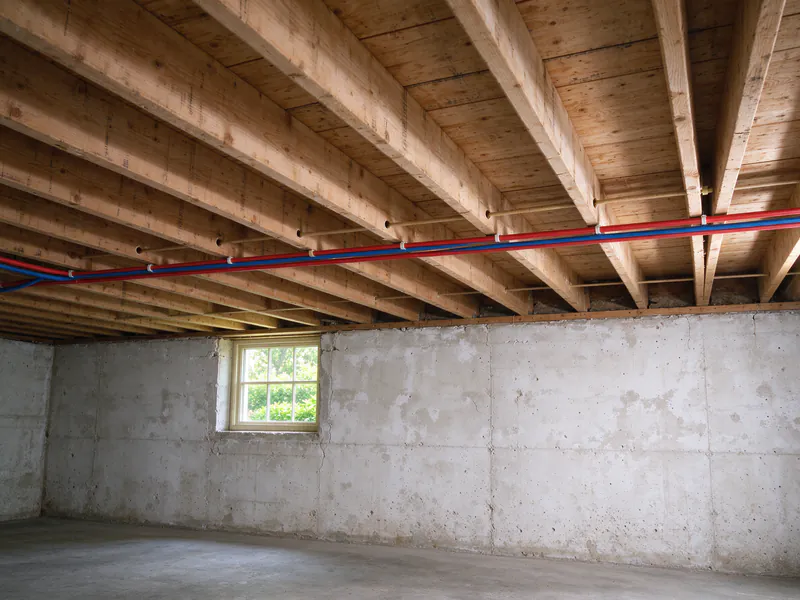
A repipe limits wall damage by choosing routes rather than following the old ones. The main and most branches run along basement joists or through a crawlspace, where the pipe is exposed and easy to support. From there, each riser to an upstairs fixture needs a path: a closet stacked under the bath, a kitchen chase, the cavity beside an old drain stack, or an interior wall with nothing in the way. In a house with plaster walls the route matters even more, because every opening in plaster takes more work to close than one in drywall.
Crawlspaces bring their own conditions. The pipe has to be supported off the soil, kept away from vents and protected where it passes framing. A tight or wet crawlspace takes longer to work in, and that shows up in the price. Slab sections, such as a later addition, usually get new lines overhead or in a wall rather than under the concrete; the slab leak repair page explains why rerouting is often chosen over breaking the floor.
Attic runs and freeze exposure
Some houses, especially single-story homes without a basement, are easiest to repipe from the attic. That works when the lines stay inside the insulation on the heated side, or are insulated and kept away from eaves and gable vents. Indianapolis averages more than 100 nights a year at or below freezing and a few nights a year at or below zero, by NOAA’s 1991-2020 climate normals, so an exposed run in a cold attic or an outside wall is a real risk. New pipe does not remove freeze exposure by itself; where it runs does. PEX tolerates a freeze better than copper, but it can still fail at fittings and still stops flowing when frozen.
Main shutoff and branch valves
A repipe is the moment to fix the valves as well as the pipe. The main water supply enters the house at the main shutoff, and that is where a whole-house repipe begins. Many older houses still have a gate valve there that has not been turned in years and will not close fully, or will snap when it is forced. Replacing it with a quarter-turn ball valve while the water is off already gives the house a shutoff that works when a pipe bursts. If the main valve sits in a Citizens meter pit rather than inside the house, the main water shutoff valve replacement page explains who may work on it.
Beyond the main, the new layout can add branch shutoffs so one bathroom or the kitchen can be isolated without shutting the whole house down, and new stop valves at each fixture. A home-run manifold puts every fixture’s shutoff on one panel. Where the incoming pressure is high, a pressure-reducing valve and a thermal expansion tank at the water heater may belong in the scope. These are what make a repipe a modernization of the system rather than a pipe swap, and each one should be named in the written scope rather than added later.
Old pipe in an Indianapolis house?
Start with a written scope: what gets replaced, where the walls open, and what the permit covers.
Shutting the water off and living in the house
Most families stay home during a whole-house repipe. New lines are run beside the old ones while the house still has water. Then each area is switched over in turn, so outages come in blocks rather than lasting the whole job. The longest one is usually the tie-in at the main, when the house is isolated at the shutoff or the meter. Where the old main valve will not hold, the water has to be shut off at the meter setting, which in Citizens territory is often an outside pit. The scope should say which days the water is off, roughly for how long, and which rooms have open walls on which days.
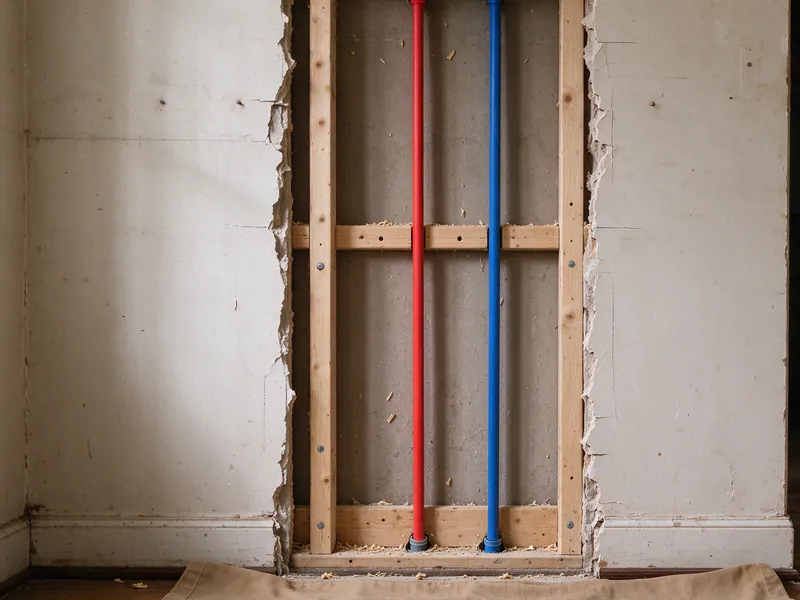
Openings are planned before the work starts, not found during it. A typical whole-house repipe opens walls or ceilings behind fixtures, at riser routes and where a branch has to cross a finished ceiling. The guide to how invasive repiping is covers what those openings usually look like, and the repiping timeline guide covers how long each stage tends to take.
What gets reconnected
Every fixture the old system fed has to be fed by the new one. That means toilets, lavatory and kitchen sinks, tubs and showers, the dishwasher, the laundry hookup, the refrigerator line where there is one, outside hose bibbs and the water heater. Water heater connections get new flexible or rigid connectors and, where pressure calls for it, an expansion tank. Fixture supply lines are usually replaced at the same time, because a twenty-year-old braided connector is a weak point that costs little to change while the stop valve is being replaced anyway.
Fixtures themselves are not replaced as part of a repipe. Old faucets sometimes need new cartridges or aerators after the switch, because scale loosened from old galvanized pipe can lodge in them during the first flush. Clearing aerators after the job is part of the flush, not an extra.
Permit, inspection, testing and flushing
Inside the City of Indianapolis, the Department of Business and Neighborhood Services requires a plumbing permit for work on a plumbing system. Replacing pipe in kind is exempt only up to 20 percent of all piping in the structure, so a whole-house repipe needs a permit. For an existing home the fee is $153 for up to 1,000 square feet plus $23 for each additional 500, and a failed inspection adds a $175 reinspection. The City’s Building Standards require a rough-in inspection after the pipe is installed but before it is covered and before fixtures are set. That sets the order of the job: open, pipe, test, inspect, then patch. The Indianapolis repiping permit guide covers who can pull the permit and how the excluded cities differ.
Before any wall closes, the new system is pressure tested. The lines are capped, filled and held under pressure for a set time while every joint is checked. Then the system is flushed through each fixture, hot and cold, to clear debris, and flow is checked again against the readings from the first visit. A test that holds is what makes it safe to patch.
Where a whole-house repipe stops
A supply repipe replaces the drinking water pipe inside the house. It does not replace the buried service line from the street, the drains and vents, or the sewer. In Citizens territory the owner owns the service line, and a full replacement has to be SDR9 polyethylene with tracing wire, done by a plumber bonded with Citizens under a Citizens permit. Where the service line is lead or galvanized, the lead service line replacement page explains how Citizens’ program and the interior repipe fit together.
Drain lines are a separate system too. In prewar houses the cast iron stack is sometimes failing at the same time, and the open walls of a repipe are a sensible moment to look at it. Cast iron stack replacement is priced and permitted as its own job.
PEX or copper for the whole house
Both are allowed for water distribution under the Indiana Plumbing Code, and neither is the right answer for every house. PEX repiping bends around obstacles, needs fewer fittings and fewer openings, and usually costs less. Copper repiping is rigid, tolerates heat and sunlight, and suits owners who want metal pipe where it is exposed. Copper’s material price has also climbed much faster than plastic pipe’s in recent Bureau of Labor Statistics producer price data, which widens the gap. The PEX vs copper guide compares the two in detail.
What a whole-house repipe costs here
A typical Indianapolis-area range for a whole-house repipe is $4,000 to $15,000 or more, and larger multi-story, tile-heavy or copper jobs can run higher. A one-story house with an open basement and one bath sits toward the bottom; a two-story house with plaster, two baths and a copper choice sits toward the top or above it. The cost estimator gives a planning range without a phone call, and a walk-through turns it into a written price.