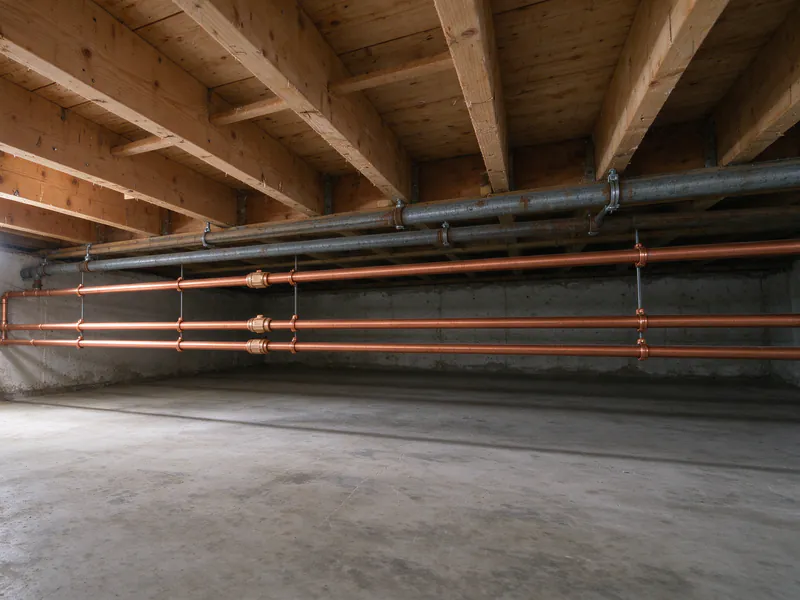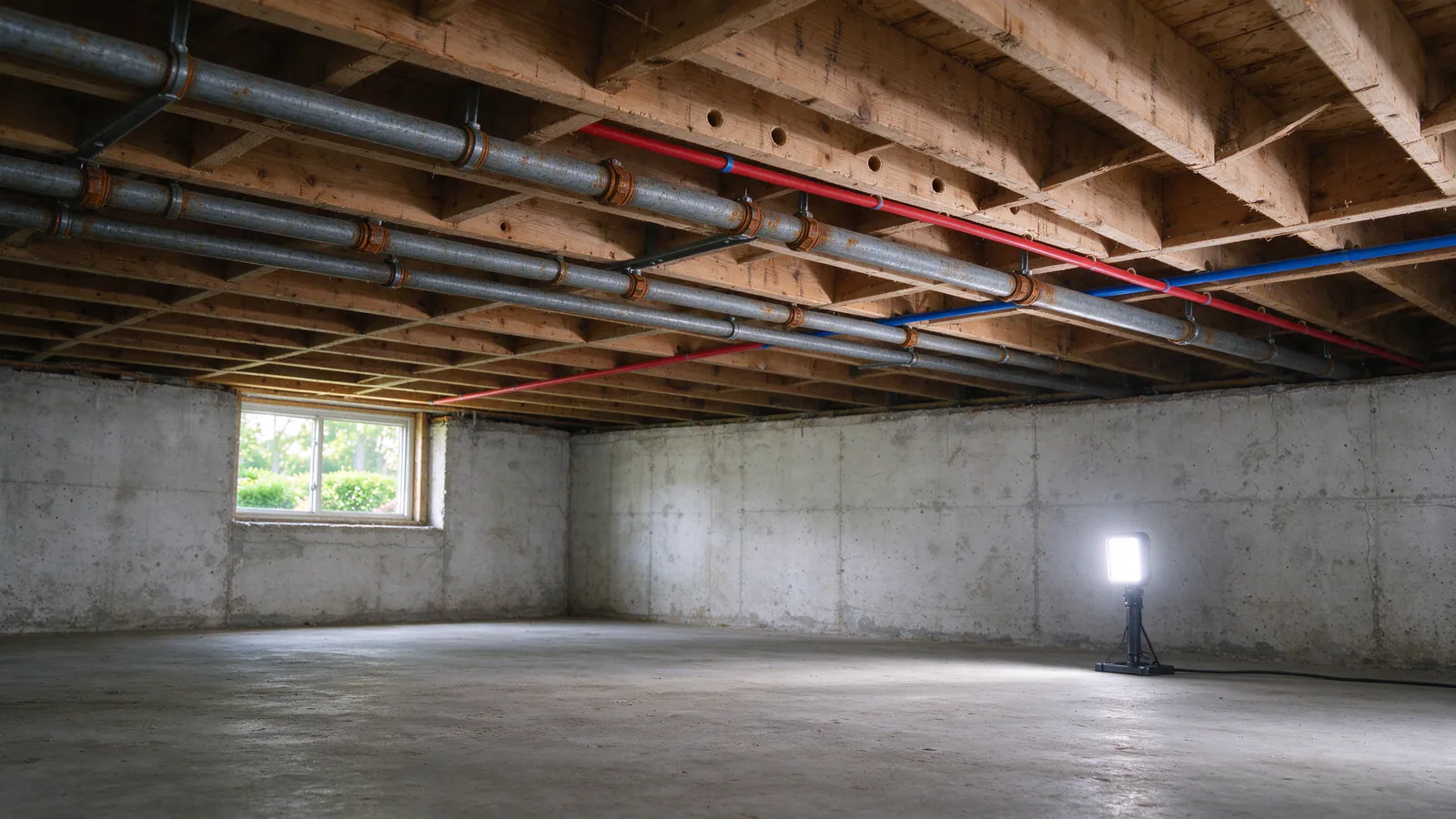
Circle City Repipe: Repiping & pipe repair in Indianapolis, IN
A rusty first draw, a third pinhole leak or a letter from Citizens Energy about your service line all raise the same question: fix one spot, or replace the pipe? Circle City Repipe works that out from the pipe itself, in writing, before a wall is opened. A typical Indianapolis-area whole-house repipe runs $4,000 to $15,000 or more.
Water where it shouldn't be
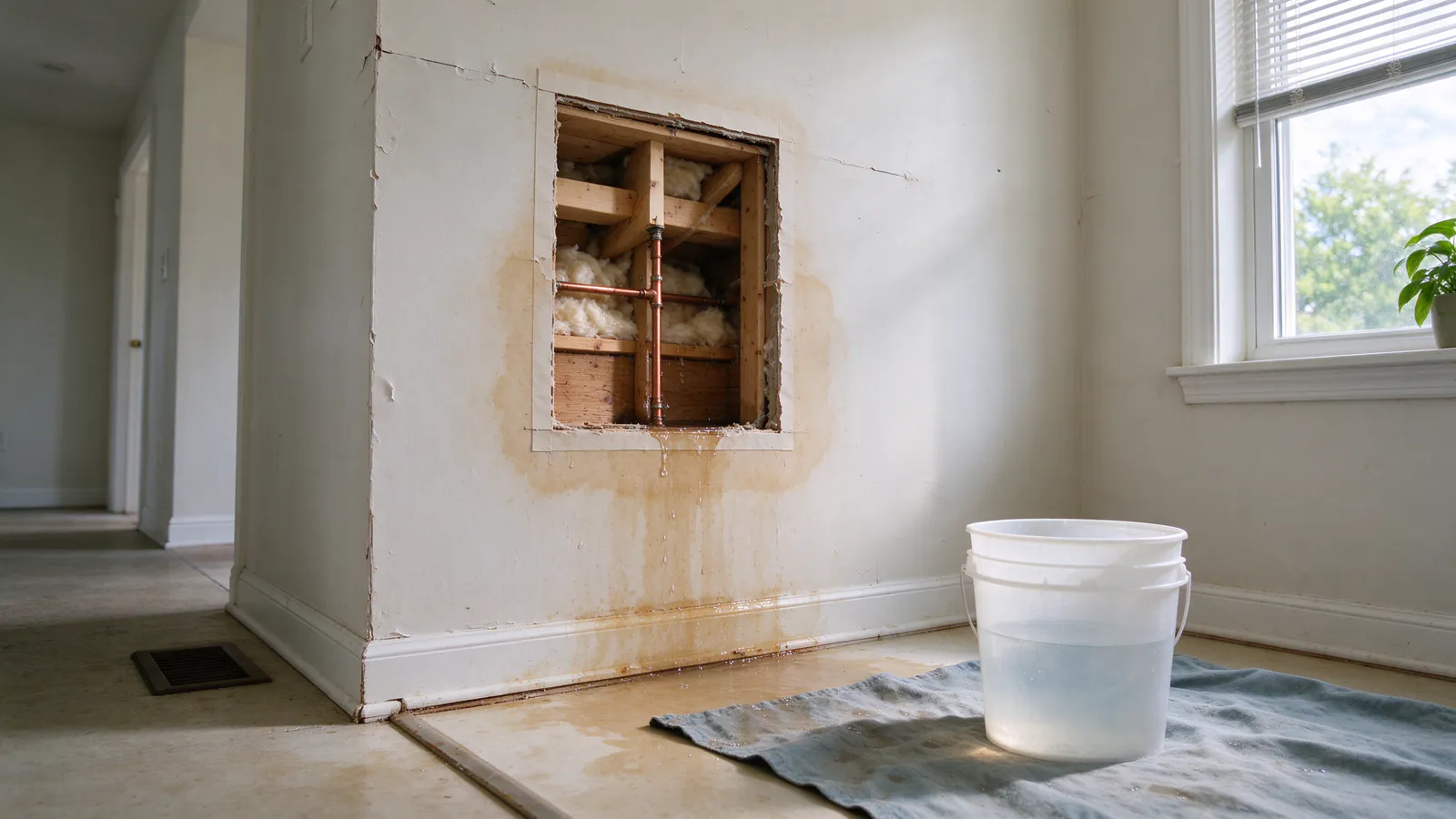
A ceiling stain, a damp wall or a water bill that jumped. The leak has to be found before anyone can say whether it is one joint or the whole run.Water leak repair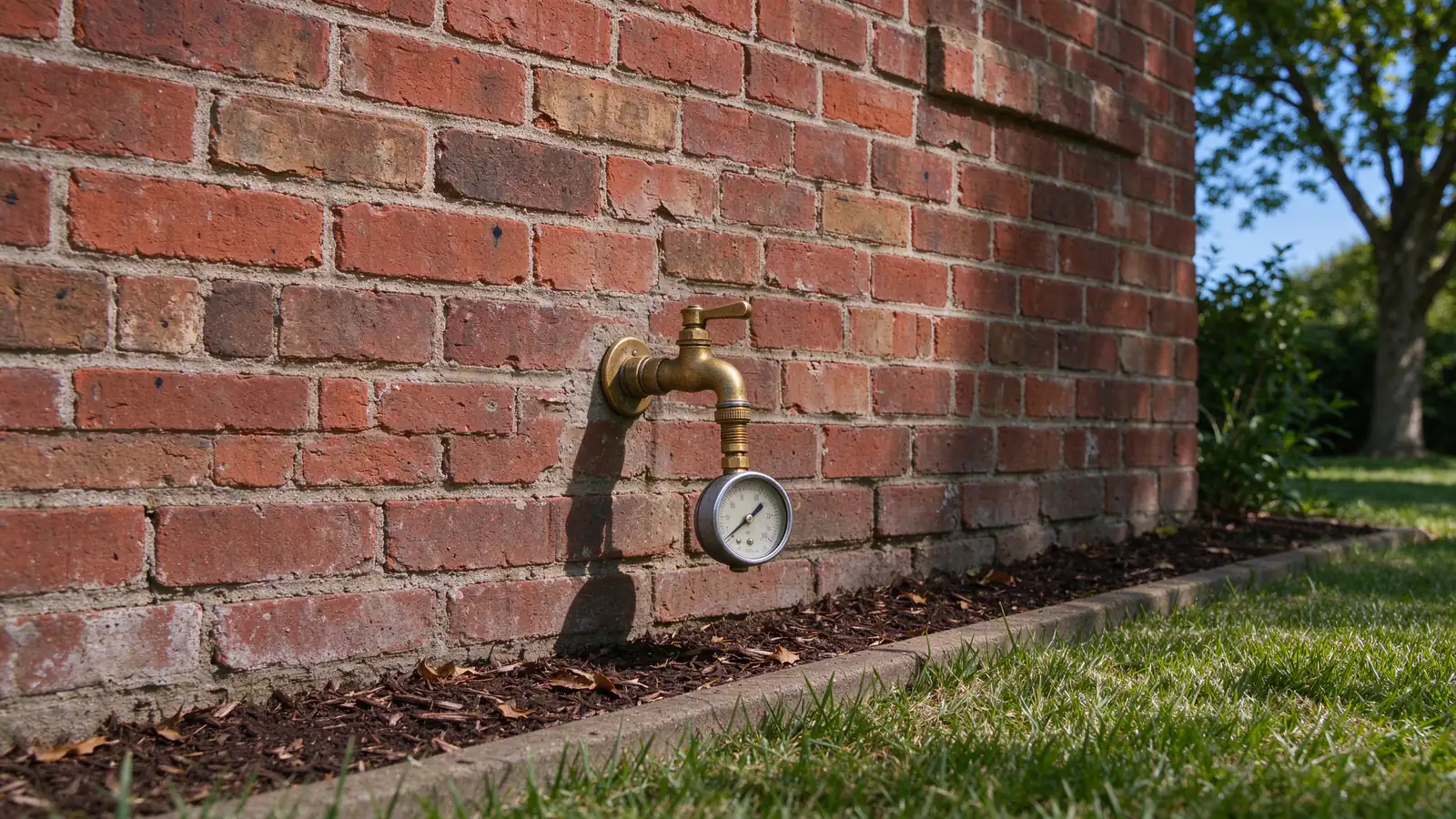
Weak flow at every tap
Galvanized scale, a failing pressure-reducing valve, a half-closed main or the street supply. Each has a different fix, and only one of them is a repipe.Low water pressure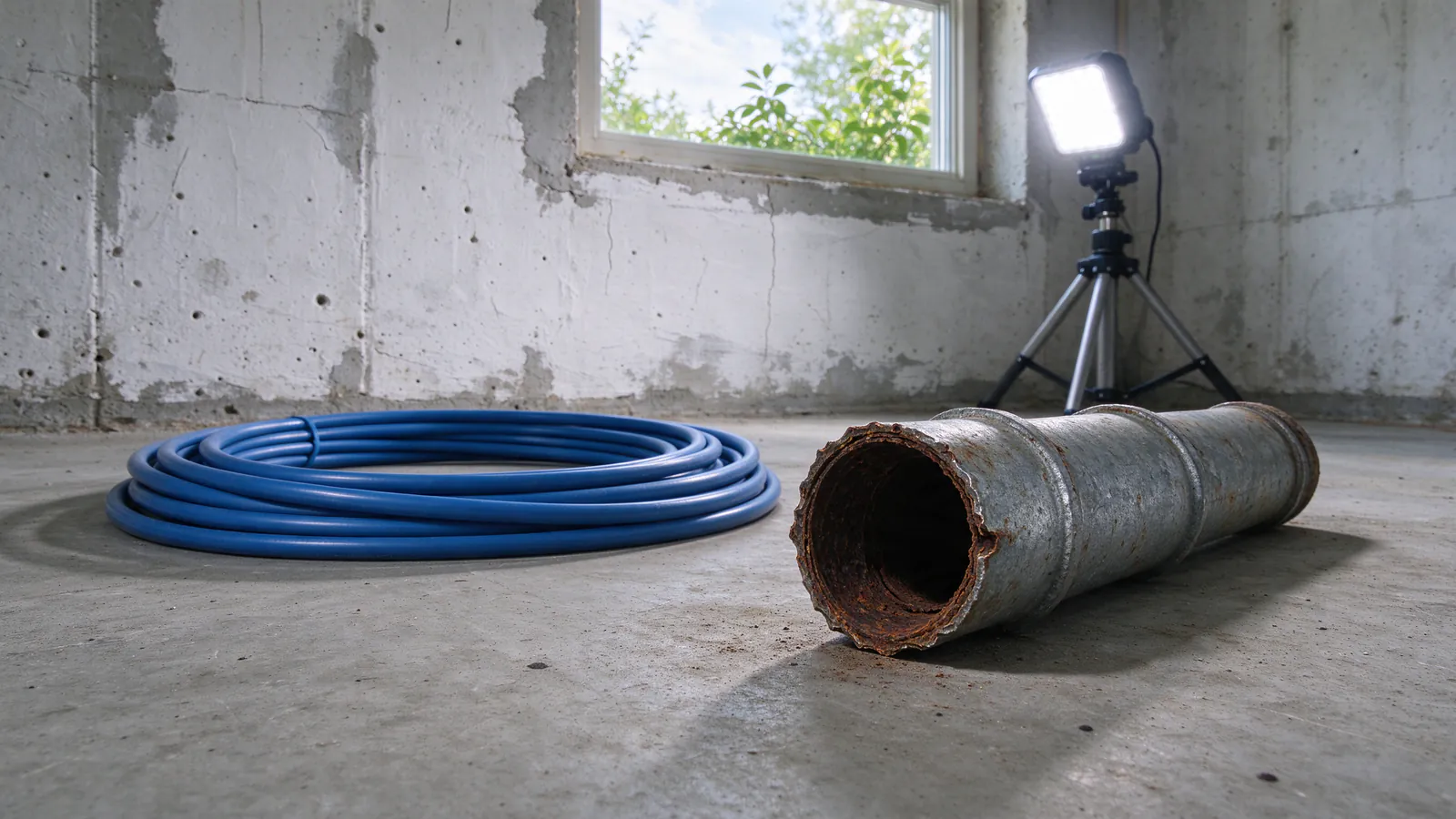
Brown or rusty water
Corroding steel pipe inside the house, or disturbed sediment after work on the main. Where it shows up, and whether it clears, points to the source.Brown water from the faucet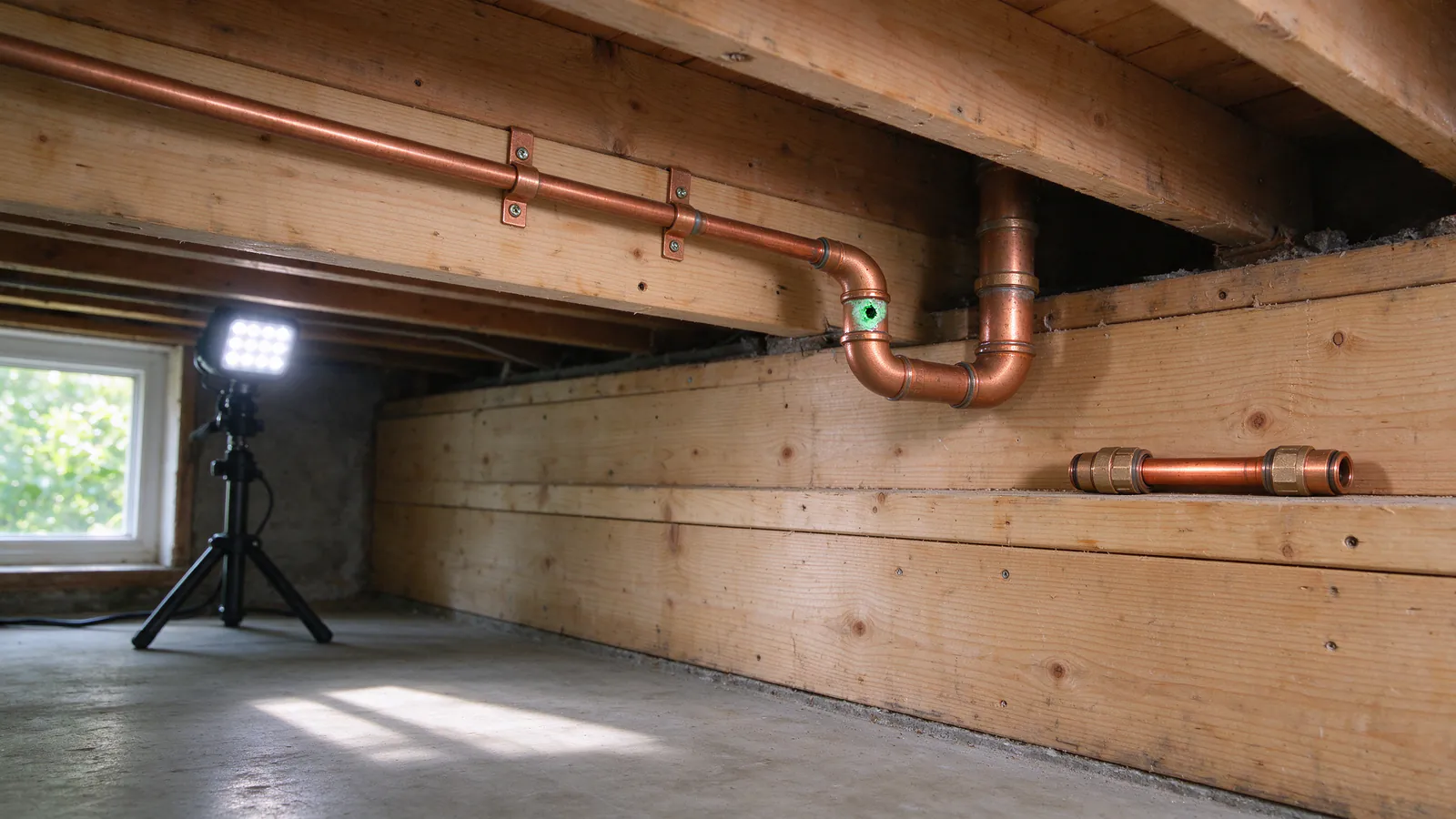
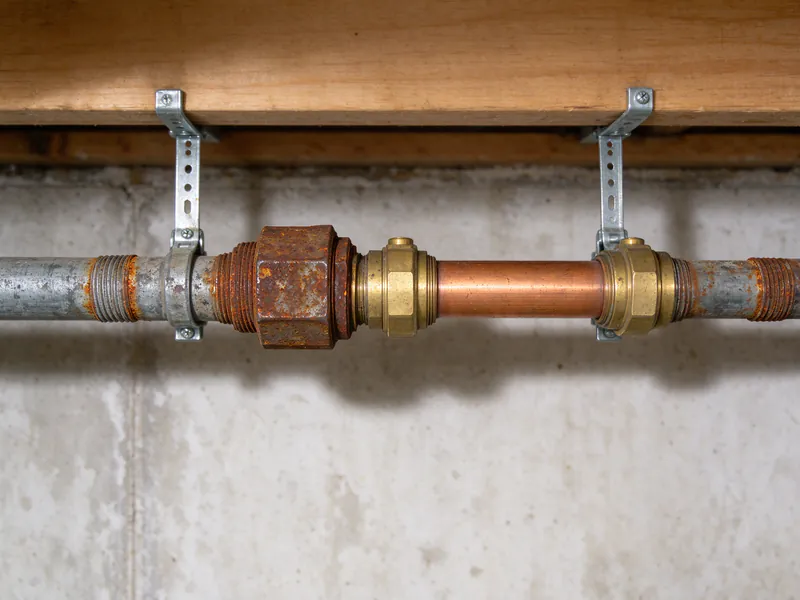
Another pinhole leak
A second or third pinhole in the same copper run. Patching starts to cost more than it saves once leaks appear in different places.Copper pipe repairA burst or frozen pipe
Close the main shutoff first, keep clear of anything electrical, then call. Indianapolis averages more than 100 nights a year at or below freezing.Burst pipe repairA letter about your service line
Citizens Energy or your town's utility says the line may be lead or galvanized. That letter covers the buried line, not the pipe inside your walls.Lead service line replacementRepiping and pipe repair services
Circle City Repipe offers and manages residential repiping, water supply pipe replacement, pipe and leak repair, and water and lead service line work across Indianapolis and nearby communities in Marion, Hamilton, Hendricks, Johnson and Boone counties. The work is carried out by licensed and insured contractors.
Repiping 08 pages
Pipe & leak repair 09 pages
Water & lead lines 03 pages
Commercial 02 pages
How a job runs
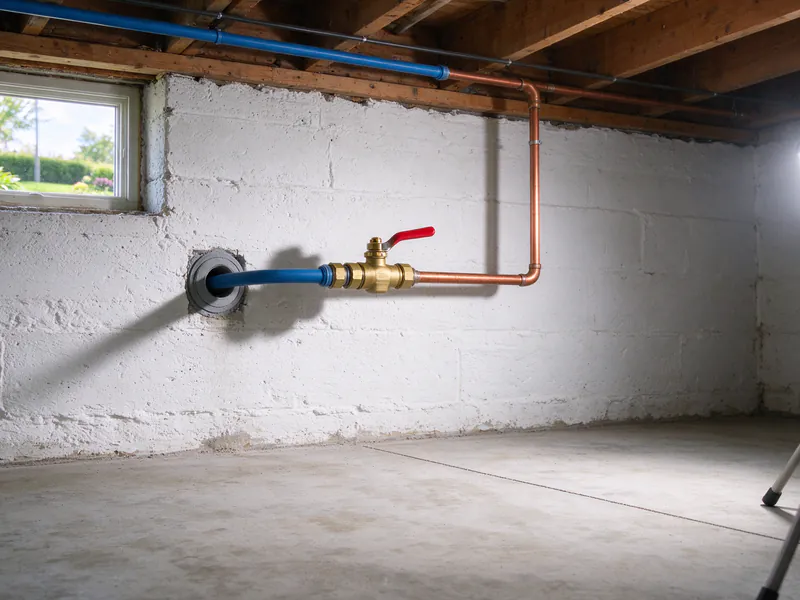
The order matters more than the speed. Nothing is cut until the scope is written down, and nothing is closed until the new pipe has been inspected and tested.
Look
Find out what the pipes are made of and where they are failing: pressure and flow at the fixtures, the visible runs, the meter setting and the main valve.
Recommend
A repair, a partial repipe or a whole-house repipe, with what each one replaces, which walls open and the price, in writing.
Do the work
Permit pulled where the job needs one, new lines run in stages so the house keeps water most of the day, rough-in inspected before any wall closes.
Test and close up
Pressure test and flush, fixtures and water heater reconnected, access openings patched as agreed.
Typical Indianapolis-area costs
Typical ranges for Indianapolis-area work, not quotes. The house sets the price: fixture count, stories, access, pipe material and how many walls open.
| Work | Typical range | What it covers |
|---|---|---|
| Whole-house repipe | $4,000 to $15,000+ | All hot and cold supply pipe from the main shutoff to the fixtures. Larger multi-story, tile-heavy or copper jobs can run higher. |
| Pipe repair | About $150 to $650 | An accessible spot repair. About $300 to $1,200 when a wall or ceiling has to be opened and patched. |
| Water leak repair | About $350 to $1,200 | Finding and fixing one leak behind a wall or ceiling, with a small access opening and basic patch. Finish work and water damage are extra. |
| Burst pipe repair | About $400 to $1,500 | The pipe repair itself. Water damage cleanup is separate, and after-hours calls push toward the high end. |
| City of Indianapolis plumbing permit, existing home | From $153 | $153 for up to 1,000 sq ft plus $23 for each additional 500 sq ft, set by the Department of Business and Neighborhood Services. A failed inspection adds a $175 reinspection fee. |
Repair or repipe?
Most calls start with one leak. Whether the answer is a repair or new pipe depends on what the rest of the system looks like, so both columns assume the pipe has been looked at first.
A repair may fit when
- There is one leak or one failed joint in one place
- The pipe on either side is sound when it is cut open
- The cause is known, such as a freeze, a nail or a failed fitting
- The section can be isolated and pressure tested on its own
A repipe may fit when
- Leaks keep appearing in different runs or on different floors
- Galvanized pipe is scaled inside throughout the house
- Several fixtures are weak at once and the supply checks out
- Walls are already open for a remodel
Indianapolis notes
Hard water
19 gr/galCitizens Energy's Indianapolis water averages 317 parts per million of hardness, about 19 grains per gallon, and varies with the plant serving the address. It scales water heaters and fixtures; it is not, on its own, proof that a house needs new pipe.
Source: Citizens Energy Group, Indianapolis water quality data
The service line is the owner's
SDR9Citizens customers own their water service line. A full replacement has to be SDR9 polyethylene with tracing wire (PEX and PVC are not allowed for it), and replacing the service to a house with an inside meter moves the meter to an outside pit.
Source: Citizens Energy Group, water connection and service line FAQs
When a permit is needed
20%Indianapolis requires a plumbing permit for work on a plumbing system. Replacing pipe in kind is exempt only up to 20 percent of all piping in the structure, so a repipe needs a permit, and the rough-in is inspected before walls are covered.
Source: City of Indianapolis, Department of Business and Neighborhood Services
Service areas
Indianapolis and the excluded cities of Lawrence, Beech Grove and Speedway, plus nearby Hamilton, Hendricks, Johnson and Boone county communities. Each area page covers who issues the permit, which utility owns the main and what the housing stock means for the pipe.
Area pages
- Irvington
- Old Northside, Herron-Morton Place, Chatham-Arch and Lockerbie
- Fountain Square
- Lawrence
- Beech Grove
- Speedway
- Carmel
- Greenwood
Also serving
- Meridian-Kessler
- Broad Ripple
- Butler-Tarkington
- Near Westside
- Fishers
- Westfield
- Noblesville
- Zionsville
- Avon
- Brownsburg
- Plainfield
Marion County and surrounding counties
Open Indianapolis, IN in Google MapsGuides
Plain answers to the questions that come before a repipe: what it costs here, which material to choose, what the permit involves and where the Citizens lead line program stops.
Old pipe, one leak or a letter from the utility?
Tell us what you are seeing, roughly when the house was built and what the pipe looks like where you can see it. The next step comes back in plain terms.
Call (463) 220-2779Circle City Repipe2601 E 56th St, Indianapolis, IN 46220office@circlecityrepipeindy.comMon–Sun 7 AM–6 PMPhones answered 24/7 for emergenciesIndianapolis and nearbyFAQ
- Q01
How much does it cost to repipe a house in Indianapolis?
A typical Indianapolis-area range for a whole-house repipe is $4,000 to $15,000 or more, and larger multi-story, tile-heavy or copper jobs can run higher. Inside the City of Indianapolis the plumbing permit for an existing home adds $153 for up to 1,000 square feet plus $23 for each additional 500. Fixture count, stories, access and wall patching decide where a house lands.
- Q02
Do I need a permit to repipe a house in Indianapolis?
Yes. The Department of Business and Neighborhood Services requires a permit for work on a plumbing system, and in-kind pipe replacement is exempt only up to 20 percent of all the piping in the structure. A repipe is well past that, and the rough-in has to be inspected before the walls are covered. Lawrence and Beech Grove issue their own permits; Speedway's process is confirmed per address.
- Q03
Does Citizens Energy replace my lead service line?
In its prioritized project areas, Citizens Energy Group replaces lead and galvanized service lines from the main to the home at no direct cost, once the owner signs a Right of Entry agreement. Outside those areas, a qualifying owner pays for the private side and the move of the meter to an outside pit, and Citizens pays for the right-of-way portion. Neither route replaces the pipe inside the house.
- Q04
Is a repipe the same as replacing my water line?
No. A repipe replaces the hot and cold supply pipe inside the house, starting at the main shutoff. The water line, or service line, is the buried pipe from the street to the house. In Citizens territory the owner owns that line, a full replacement must be SDR9 polyethylene, and the work needs a Citizens permit and a plumber bonded with Citizens.
- Q05
Will repiping fix low water pressure?
Only if the pipe is the restriction. Galvanized steel that has scaled shut inside starves the fixtures, and new pipe fixes that. Weak flow can also come from a partly closed or failing main valve, a pressure-reducing valve, clogged aerators or an undersized service line, and a repipe changes none of those. That is why pressure and flow are checked before anyone recommends new pipe.
- Q06
Can we stay in the house during a repipe?
Usually, yes. The work is staged so the water is off for set periods rather than for the whole job, and new lines are tied in one section at a time. The written scope should say which days the water is off, roughly for how long, and which rooms have open walls.
- Q07
Is PEX allowed for repiping in Indiana?
Yes, inside the house. The Indiana Plumbing Code, 675 IAC 16-1.4, is built on the 2012 International Plumbing Code and lists PEX alongside copper for water distribution. The buried service line is different: in Citizens territory a full replacement must be SDR9 polyethylene, and PEX is not allowed for it.
- Q08
Who actually does the work?
Circle City Repipe offers and manages the job, and licensed and insured contractors carry it out. In Indianapolis, plumbing work that needs a state license is permitted through a plumbing contractor licensed by the State of Indiana and registered with the City, and service-line work in Citizens territory needs a plumber with an active Citizens bond and permit.
- Q09
Should I fix the leak or repipe the house?
Fix it when the leak is in one spot, the cause is known and the pipe around it is sound. A repipe starts to make sense when leaks show up in different places, galvanized pipe is scaled throughout, or several fixtures are weak at once. An accessible spot repair typically runs about $150 to $650, so a single leak rarely justifies new pipe for the whole house by itself.
- Q10
Is emergency help available for a burst pipe?
Yes. Phones are answered 24/7 for emergencies, and emergency response is available for burst pipes and active leaks; regular hours are 7 AM to 6 PM, seven days a week. Before calling, close the main shutoff valve, usually just inside where the water line enters the basement or crawlspace, and stay away from water near outlets, appliances or the electrical panel. Then call, and the next steps start from what has already been shut off.
Leaking pipe or planning a repipe?
Tell us what you are seeing and how old the house is. You get the likely scope, what it would involve and how it is priced before anything is opened.