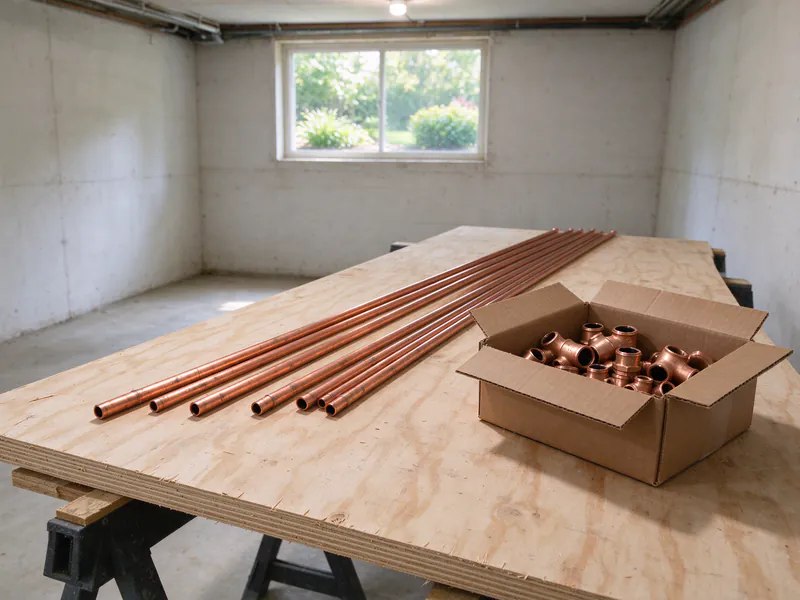
Circle City Repipe replaces water supply piping in copper for Indianapolis houses, doubles and small buildings, and in nearby communities across Marion and the surrounding counties. A copper repipe takes the old galvanized steel, aging copper or failing plastic out of service and runs new copper tube from the main shutoff to the fixtures, with the tube type and the joining method named in the written scope. The work is carried out by licensed and insured contractors, under a plumbing permit, and it is pressure tested before any wall closes.
Copper has been the standard metal supply pipe in American houses since the postwar years, and it earned that place. It is rigid, so exposed runs stay straight and tidy. It handles heat and sunlight, it does not need the close support plastic does, and rodents leave it alone. It also costs more than PEX and takes more fittings and often more openings to route through finished walls. The PEX vs copper guide compares the two in detail, and the PEX repiping page covers the plastic option. This page covers what a copper repipe involves and where it is the better fit.
What happens on the first visit
The first visit starts at the meter setting and the main shutoff and follows the main as far as it can be seen. The existing pipe is identified run by run: galvanized steel, older copper, plastic, or a mix left by past repairs. That matters for copper in particular, because every point where new copper would meet remaining galvanized steel needs a dielectric fitting. The guide to identifying pipe material covers the same checks for owners who want to look first.
Static pressure is read at a hose bibb or laundry connection, and flow is checked at the fixtures, upstairs and down, hot and cold. Weak flow with good static pressure points to restriction inside the house; weak static pressure points toward the street side, the service line or a pressure-reducing valve, which a repipe would not fix. The visit then maps routes for rigid pipe. Copper cannot bend around framing the way PEX does, so every change of direction needs a fitting and every riser needs a straight path. That is what sets the number of openings and the written price.
Type L, Type M and Type K
Copper water tube is made to ASTM B88 in three wall thicknesses, and the type is printed along the tube in a color code. Type K has the thickest wall and is mostly used underground; Citizens Energy Group, for example, requires Type K copper where it repairs a lead service line in the right-of-way. Type L has a medium wall and is the common choice for repipes, especially for exposed runs, hot water mains and higher flow velocities. Type M is the thinnest and lightest, and it has been used widely inside houses because it costs less.
The difference matters most where copper is under stress. A thinner wall has less metal to lose before a pinhole opens, so in a house where the old copper pinholed, Type L is the more cautious replacement. The Indiana Plumbing Code, 675 IAC 16-1.4, lists copper tube for water distribution; the type chosen within that is a scope decision, and the written scope should say which one is being installed. The Type L vs Type K copper guide goes further.
Press-fit vs soldered joints
A copper repipe uses one of two joining methods, and the choice affects how the job runs in an occupied house.
Soldered joints, also called sweat joints, are the traditional method. The pipe and fitting are cleaned, coated with flux, heated with a torch and filled with lead-free solder. A well-made soldered joint lasts as long as the pipe. It needs dry pipe, a careful hand and fire protection, because the flame works inches from framing, old wood lath and dust inside a wall cavity. Excess flux left inside the pipe can keep working on the copper after the job, and it has been tied to some pinhole leaks, so joints are wiped and the system is flushed.
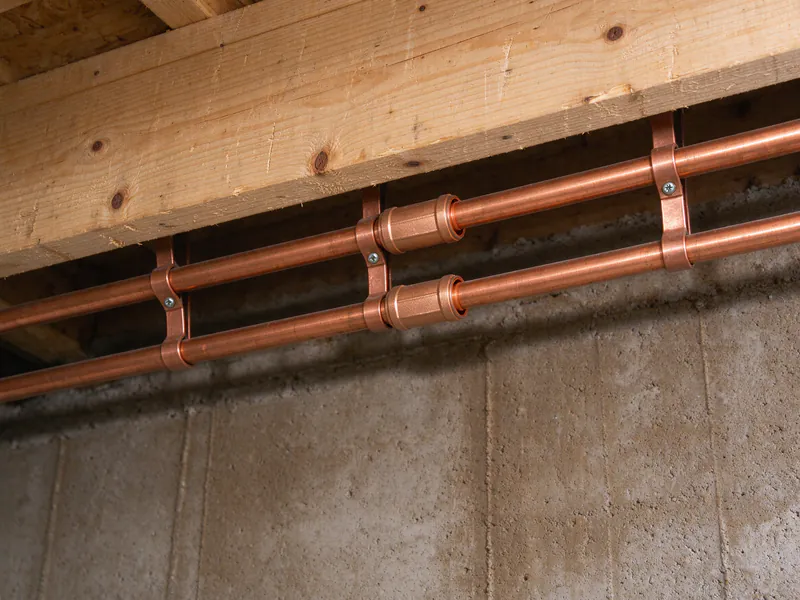
Press-fit joints use a fitting with a sealing ring inside. The pipe is cut square, deburred, marked for depth and inserted, then a powered tool presses the fitting onto it. There is no flame and no flux, the joint can be made with a little water still in the line, and each one takes seconds. The fittings cost more than solder fittings, and the method depends on the pipe being fully inserted and fully pressed. Many press systems are designed to leak visibly under test if a fitting was left unpressed, which is one reason the pressure test before the walls close matters.
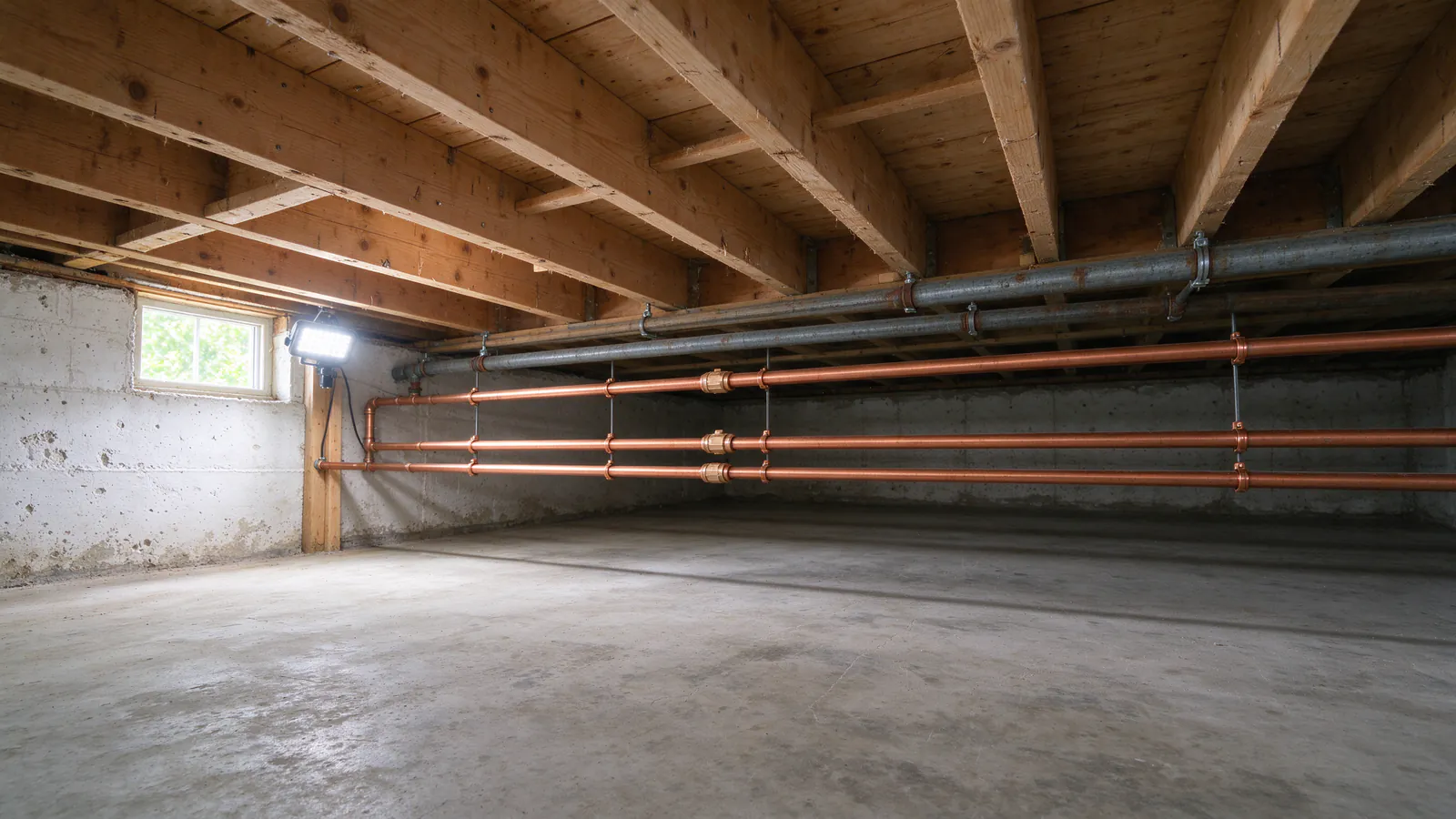
A copper repipe can use both: press fittings inside finished walls and near old framing, and soldered joints in an open basement where a torch is safe.
Copper, Indianapolis water and pinholes
Copper usually fails at pinholes and joints, and there is no single cause. Water chemistry, flow velocity, turbulence at fittings, flux left inside the pipe, poor joints and stray electrical current have all been tied to pinholes. One pinhole often means other thin spots nearby, which is why repeat leaks push an owner from copper pipe repair toward a repipe. The copper pinhole leaks guide covers each cause.
Indianapolis water sets the background without settling the question. Citizens’ Indianapolis water averages about 19 grains per gallon of hardness, with an average pH of 7.7, and it is treated with orthophosphate to limit lead and copper leaching from plumbing. In Citizens’ own tap sampling, copper levels at the 90th percentile were well under the federal action level, with no sampled home above it. Hardness scales water heaters and fixtures, but it is not, by itself, proof of how long copper will last in a given house. The Indianapolis hard water guide covers what it does and does not do.
What a copper repipe can control is the installation. Lines are sized so water does not move through them too fast, especially on a hot water recirculation loop, where constant flow wears copper from the inside. Joints are made clean and flushed. Copper is kept from touching steel framing and other metals, and every transition to remaining galvanized pipe gets a dielectric fitting.
Leaning toward copper?
Start with a written scope: the tube type, the joints, the routes and the openings.
Where copper fits better than PEX
Copper is the stronger choice in some places. Runs that stay exposed in a basement or utility room, especially near a window, hold up better in copper because sunlight degrades PEX. The first stretch of pipe off a water heater is usually metal. A crawlspace where rodents are active, or a mechanical room where pipe could be hit, also suits copper. Some owners want metal pipe throughout for its long record with drinking water, its tidy runs and its familiarity to anyone who works on the house later.
Copper is weaker in a freeze. It splits where PEX would stretch, so copper in a crawlspace, an outside wall or an attic needs routing and insulation even more than plastic does. Indianapolis averages more than 100 nights a year at or below freezing, by NOAA’s 1991-2020 climate normals. The burst pipe repair page covers what happens when an exposed line freezes.
Copper also keeps something PEX breaks: a continuous metal path. Older houses sometimes use the metal water pipe as part of the electrical bonding path. A copper repipe keeps that path if it is reconnected, but the bond should still be checked where it connects.
Old copper: repair, partial or full
Not every house with tired copper needs a full repipe. A single pinhole with a known cause and sound pipe around it is a repair. Repeat pinholes in one run, often a hot line, may justify a partial repipe of that section. Pinholes spread across several runs, green crusting at many joints, or copper that has already been patched several times point to a whole-house repipe.
Age matters as well. Citizens Energy Group notes that some homes built before 1986 may have lead solder in the joints of their copper. Repiping replaces those joints along with the pipe, so the lead question inside the house moves to whatever stays outside the scope.
Permit, inspection and testing
Inside the City of Indianapolis, the Department of Business and Neighborhood Services requires a plumbing permit for a copper repipe, because it goes far past the 20 percent in-kind exemption. The new piping gets a rough-in inspection before it is covered, then the system is capped, filled and held under pressure while every joint is checked. After that it is flushed through each fixture to clear flux and debris, and flow is compared with the first visit’s readings. The Indianapolis repiping permit guide covers fees and the offices outside the City.
What a copper repipe costs
A typical Indianapolis-area range for a whole-house repipe is $4,000 to $15,000 or more, and larger multi-story, tile-heavy or copper jobs can run higher. Copper sits higher than PEX for the same house because the material costs more, each change of direction needs a fitting, and rigid pipe can need more openings. The material gap has also widened: in the Bureau of Labor Statistics producer price index, copper mill products rose about 30% over a recent twelve months, against about 4 to 5% for plastic pipe. Labor and access still drive most of the price. The Indianapolis repipe cost guide and the cost estimator show how the drivers add up.