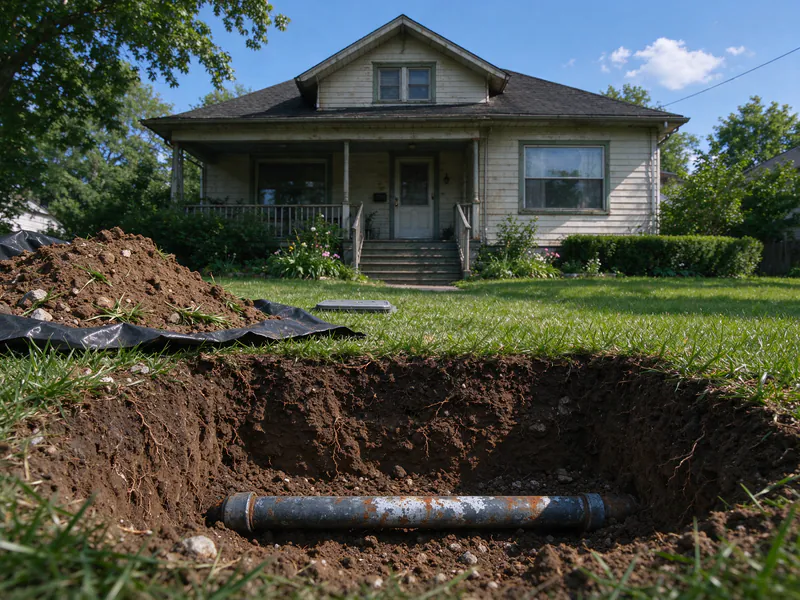
Circle City Repipe replaces buried water service lines for houses, doubles and small buildings in Indianapolis and nearby communities, from the curb valve or meter pit to the main shutoff inside the house. Water line replacement is a different job from repiping: the pipe is underground, the water utility sets the material and the permit, and in Citizens Energy Group territory the owner owns the whole line. The work is carried out by licensed and insured contractors, and Citizens service-line work goes through a plumber bonded with Citizens.
People call this pipe the water line, the main line or the service line. It is the one pipe that brings all the house’s water in from the main under the street. When it leaks, the water bill climbs or the yard stays wet; when it corrodes or is too small, every fixture in the house is starved at once. The supply piping inside the house is a separate scope, covered on the whole-house repiping page. Where the line is lead, the lead service line replacement page explains how Citizens’ program changes who pays.
What happens on the first visit
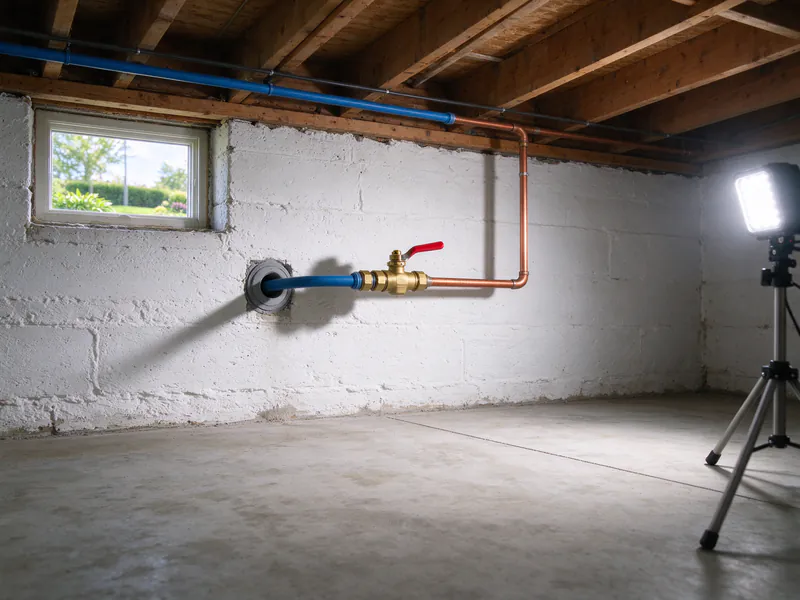
The first visit traces the line from both ends before anyone talks about a trench. Inside, it starts where the pipe comes through the foundation: the material at the wall, the meter if it is still in the basement, and the main shutoff after it. A magnet and a light scratch separate galvanized steel from copper and lead, and the guide to identifying pipe material covers the same checks. Outside, it finds the curb valve or meter pit and the likely route between the two.
Static pressure is read at a hose bibb or laundry connection, and flow is checked at the fixtures. Weak static pressure with sound pipe inside points at the service line or the street side; good static pressure with weak flow points inside the house. The low water pressure page explains that split. The visit also notes what is in the way: a driveway, a walk, mature trees, a porch over the entry point, or a finished basement wall where the line comes in. Then the utility for the address is confirmed, because the rules below are Citizens’ rules and other utilities around Indianapolis write their own.
Where the house piping ends and the service line begins
A repipe stops at the main shutoff. Everything upstream of it, through the foundation wall and out under the yard to the street, is the service line. That split matters because the two halves follow different rules. Inside the house, the Indiana Plumbing Code (675 IAC 16-1.4) governs the pipe, PEX and copper are both allowed, and in Indianapolis a plumbing permit comes from the City. Outside, the water utility governs the line, picks the material and issues its own permit.
Ownership follows the same line. Citizens says the service line “is owned by the property owner” for its full length. Its Terms and Conditions have Citizens repair leaks on the stretch between the main and the right-of-way line, and leave the owner to maintain, repair or replace everything from the right-of-way line to the house, along with the meter pit. So a leak under the front lawn is usually the owner’s to fix, and a leak under the street is usually the utility’s. Where the line between those two sits on a given lot is something the utility can confirm. The meter pit relocation guide covers how the meter fits into that split.
Citizens’ rules for a replacement line
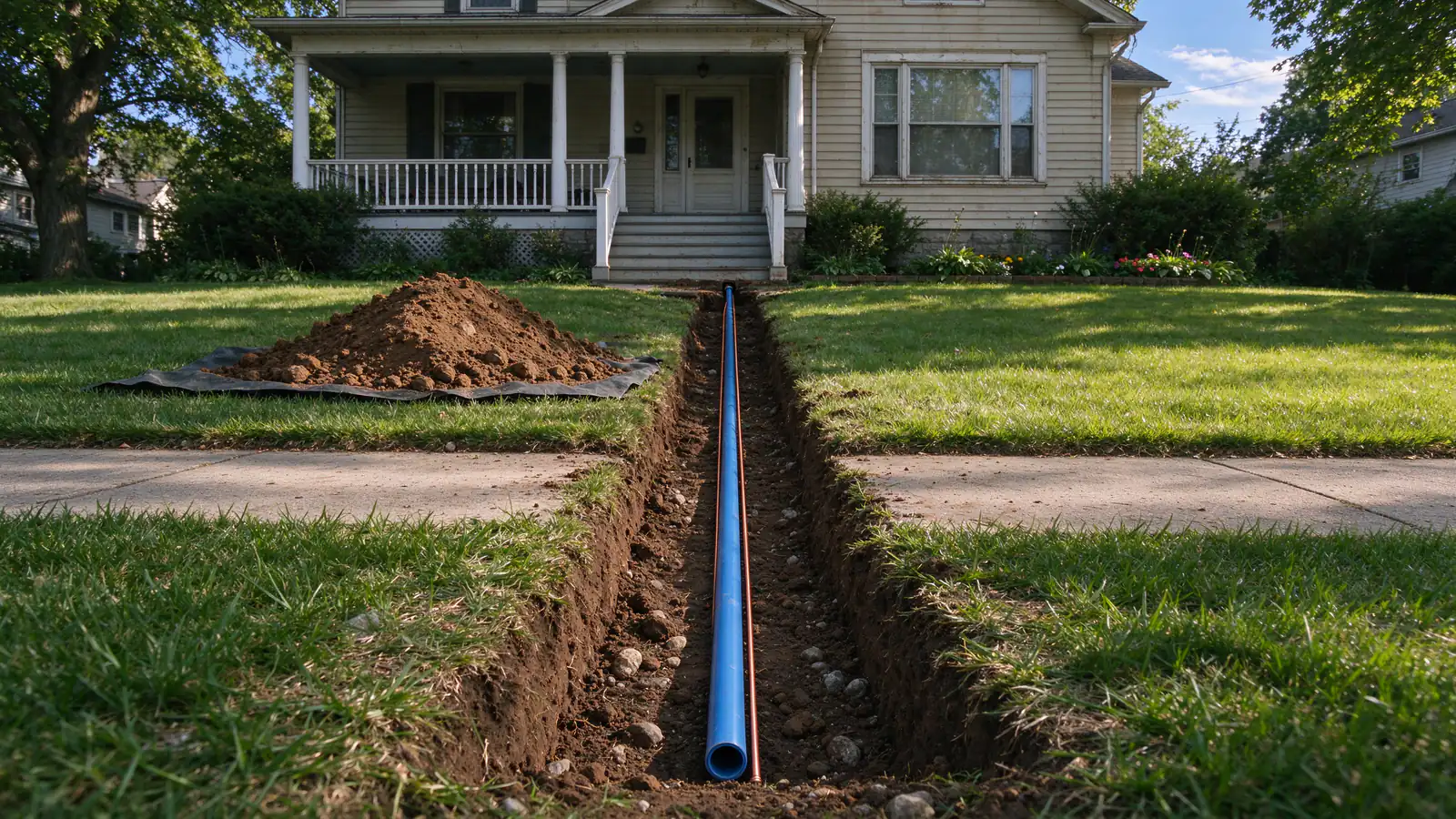
Citizens’ service-line standards decide most of the design before a price is written. A complete replacement, from the main to the meter pit or into the house, must be SDR9 polyethylene with tracing wire. “Material such as PEX or PVC is prohibited,” in Citizens’ words. The tracing wire lets the buried plastic line be located later, since a locator cannot find plastic by itself. Repairs in the right-of-way are like for like, except that lead is replaced with Type K copper.
Size is set by the house. Citizens’ minimum is a 3/4-inch inside diameter for a home under 2,000 square feet without irrigation, and 1 inch for a larger home or one with irrigation. An old 1/2-inch or 5/8-inch line is often the hidden reason an upstairs shower fades when a toilet flushes downstairs, and a replacement is the moment to bring it up to size.
Each domestic service now needs its own tap, and branched services are no longer accepted. For a double or a small building fed by one shared line, a replacement can mean separate services.
Then there is the meter. Where the meter is inside the house, Citizens’ Rule 7.3 moves it to an outside pit at the owner’s expense whenever the service pipe is replaced, or when a leak repair needs more than three feet of new pipe. A point repair of three feet or less can leave an inside meter where it is. The Citizens meter pit relocation guide explains what that adds to the job.
Who may work on a service line
Indiana’s plumbing licensing law, IC 25-28.5-1-32, does not apply to contractors who regularly install, alter or repair water lines outside building foundation walls. That does not open the work to anyone. Citizens allows “any plumber with an active bond and an approved permit with Citizens Energy Group” to repair, replace, modify or install a service line, and it requires a permit any time a line is modified or replaced. The bonded plumber files the application and schedules the inspection and tap. Citizens says a permit for a bonded contractor usually takes a few business days once the application is complete.
Inside the foundation wall the State’s licensing rules apply again. In Indianapolis, plumbing work that needs a state license is permitted through a plumbing contractor licensed by Indiana and registered with the City. A replacement that ends at a new main shutoff inside the basement touches both sides, which is why the Indianapolis repiping permit guide and the utility’s permit both matter.
Trenching, boring and freeze exposure
A service line has to stay below the frost, and Indianapolis gives frost plenty of chances: NOAA’s 1991-2020 climate normals average more than 100 nights a year at or below freezing at the airport. A line buried too shallow, or one that passes through an uninsulated gap where it enters the house, can freeze even when the rest of the plumbing is fine. The utility’s standards set the burial depth, and the entry point needs to be sealed and insulated as carefully as the trench is dug.
There are two common ways to put the new line in. An open trench runs from the pit or curb valve to the foundation. It is simple to inspect and suits an open lawn, but it means restoring everything it crosses. Boring pulls the new polyethylene line underground between two pits, which saves a driveway, walk or tree roots from being dug up. Which one fits depends on the length, what lies on the route, other buried utilities and soil conditions at the pits. Either way, the trench or pits stay open until the line is pressure checked and the utility has inspected it.
Water line leaking or too small?
Start with the utility's rules for your address and a written route, with restoration listed line by line.
Other water utilities around Indianapolis
Citizens serves Indianapolis and communities beyond it, such as Westfield, but not every address in the metro. Indiana American Water, which serves areas including Greenwood and Noblesville, splits ownership at a different point: its guide says the utility owns the line from the main to the outside shut-off or meter pit, and the customer owns it from that valve to the indoor plumbing. Speedway Water Works owns the mains, and the Town of Speedway says the service lines from the main to homes are privately owned. In Brownsburg the owner owns the line from the meter to the building, while the town owns the meter pit and meter.
The City of Lawrence and Carmel run their own water utilities, and their service-line material and permit rules are confirmed per address. The local pages for Greenwood, Speedway, Lawrence and Carmel cover what changes there.
Repair or replace the whole line
A single leak on a line that is otherwise sound can be a point repair. Replacement makes more sense when the line is lead or galvanized steel, when leaks keep coming back in different places, or when the line is too small for the house. Galvanized service pipe corrodes from the inside the same way galvanized supply pipe does, so a leak near the foundation is rarely the only weak spot. A lead line is its own case, because Citizens does not allow a lead line that is being modified to be only partly replaced; the lead program page covers that rule.
A leak is also a timing question. Water running under a yard can wash out soil and, near the foundation, find its way into the basement. If water is coming through a basement wall where the service enters, close the main shutoff and call. Emergency response is available for active leaks, and the emergency pipe repair page explains what happens next. Where the leak is between the curb valve and the house, water leak detection can confirm it is the service line before a trench is dug.
Insurance and service-line plans
Whether a homeowners policy pays for a buried service line depends on that policy’s wording, and coverage for the line is a different question from coverage for water damage inside the house. The homeowners insurance and repiping guide explains how to read those terms. Mailed offers for service-line protection plans are a separate thing again: the Indiana Utility Regulatory Commission describes them as voluntary and urges owners to be fully informed before signing.
What moves the price
No honest single number covers a service line, because the variables are large and visible only on site. These are the things that set it:
- Length and depth. The distance from the right-of-way or pit to the foundation, and how deep the line runs.
- Trench or bore. An open trench across a lawn, or boring under a driveway, walk or trees.
- What gets crossed. Concrete, pavers, landscaping and other buried utilities on the route, and how each is restored.
- The meter. Whether an inside meter moves to an outside pit, which Citizens’ rules require on a full replacement.
- Size. Upsizing from an old 1/2-inch or 5/8-inch line to 3/4 inch or 1 inch.
- The entry and the inside tie-in. A new foundation penetration, a new main shutoff, and any galvanized pipe just inside the wall.
- Permits and the bonded route. The utility’s permit and inspection, and a plumber bonded with that utility.
- Lead. A lead line may qualify for Citizens’ lead program, which can change who pays for which part.
A walk-through turns those into a written price. If the house’s interior pipe is also old, the repipe vs repair guide helps decide whether to plan both at once.