Circle City Repipe replaces galvanized steel water pipe in Indianapolis houses and in nearby communities across Marion and the surrounding counties. Galvanized pipe replacement in Indianapolis usually means taking the threaded steel supply lines out of service from the main shutoff to the fixtures and running new PEX or copper in their place, under a plumbing permit and a pressure test. The work is carried out by licensed and insured contractors, and the scope is written down before any wall is opened.
Galvanized steel was the standard supply pipe in American houses from the early twentieth century into the postwar years. Census survey figures show about a third of Indianapolis homes were built before 1960, and in the Census areas covering older neighborhoods on the near east, north and near south sides, the share runs well over half. Not every house of that age still has its original pipe, and any one house can differ. Many older houses have been partly redone, so galvanized steel near the original fixtures may sit beside copper from a past repair. The first job is finding out what the house actually has. Where galvanized is still in service throughout, the usual answer is a whole-house repipe, because the pipe fails as a system. Where one area is clearly worse, a partial repipe can come first.
What happens on the first visit
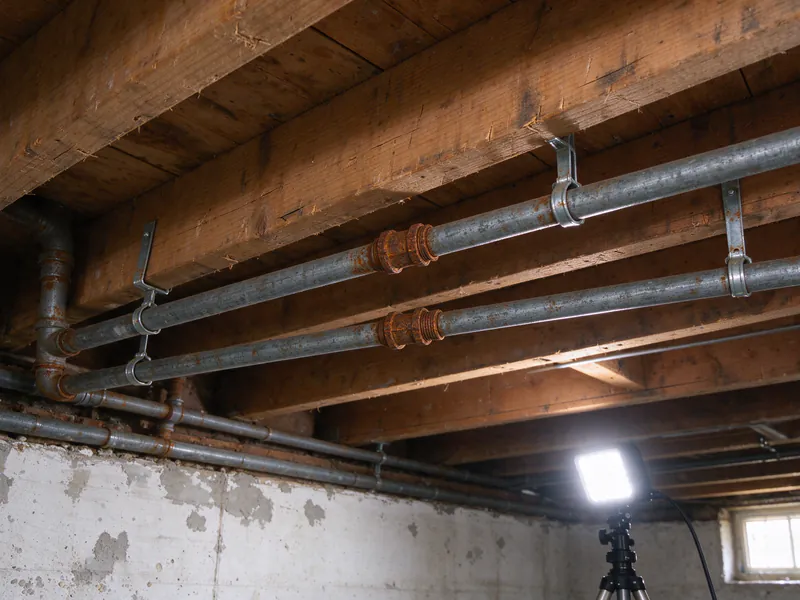
The visit starts at the meter setting and the main shutoff and follows the main as far as it can be seen. Galvanized steel is dull gray with threaded joints and collar-shaped fittings, and a magnet sticks to it. Lead, which can look similar, is soft, does not attract a magnet and shows bright silver when scratched lightly. That check matters at the service line, where the pipe enters through the foundation. The guide to identifying pipe material covers the same checks.
Static pressure is read at a hose bibb or laundry connection, then flow is checked at the fixtures, upstairs and down, hot and cold, and with two fixtures running at once. In a galvanized house that combination often tells the story: static pressure reads normal, a single tap runs acceptably, and flow collapses when a second fixture opens. That pattern points to restriction in the house piping. Low static pressure points the other way, toward the street, the service line or a pressure-reducing valve. The low water pressure page explains the difference.
The visit ends with access: where the risers run, whether the walls are plaster or drywall, and which runs can be reached from the basement or crawlspace. Those decide the openings and the written price.
How galvanized corrodes from inside
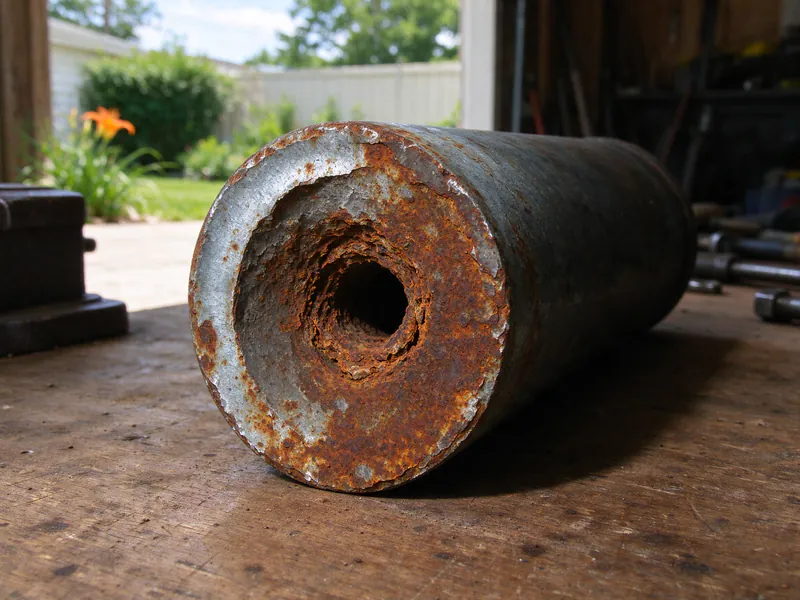
Galvanized pipe is steel coated with zinc. The zinc protects the steel by corroding first, which works well for years. Over decades the coating wears through, most quickly where the water is hottest and where the pipe was cut and threaded. Once bare steel is exposed to the water, it rusts.
That corrosion happens on the inside of the pipe, out of sight. The outside of a galvanized line can look sound while the inside is badly corroded, which is why rust at a threaded joint matters more than the color of the pipe. Threads are the weakest point for a second reason: cutting them removes part of the wall, so there is less steel left to lose. Galvanized leaks tend to start at a joint, and a fitting disturbed during a repair can start leaking where it was tight before.
Internal corrosion leads to restricted flow before it leads to leaks. The rust does not wash away; it builds up on the pipe wall and narrows the bore. Flow falls first when two fixtures run at once, even if the static pressure at the hose bibb reads normal, because a narrow pipe can hold pressure but cannot carry volume. That is why a galvanized house often has a shower that drops to a trickle when someone flushes a toilet.
Scale and tuberculation
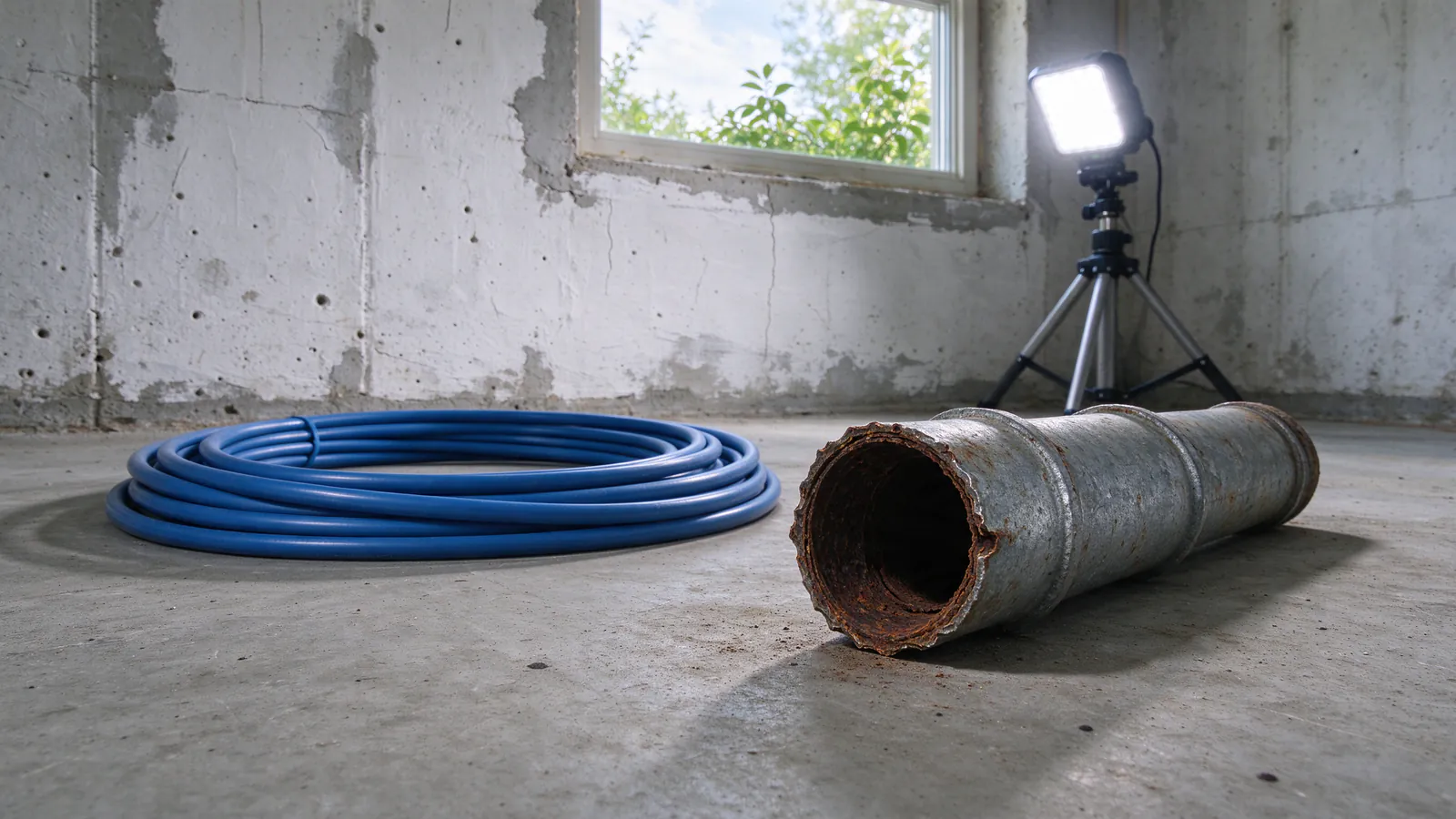
The deposits inside old galvanized pipe are called tubercles: lumpy mounds of iron oxide that grow from pits in the steel, with mineral scale layered over them. Over time they can close a three-quarter-inch line down to a fraction of its size. Small branch lines, often half-inch pipe to a single fixture, close first. Horizontal runs and the hot side tend to be worse.
Water chemistry adds to the buildup. Citizens Energy’s Indianapolis water averages about 19 grains per gallon of hardness, varying with the plant serving the address, and hard water deposits minerals inside pipe and water heaters. That is context, not proof of what is inside a particular house. Tuberculation cannot be cleaned out of galvanized pipe in any lasting way, and the pipe lining vs repiping guide explains why lining is a different decision. The Indianapolis hard water guide covers what hardness does and does not do.
Rusty or brown water: finding the source
Discolored water is a common reason owners suspect galvanized pipe, but the source has to be found before the interior piping is blamed. Three questions sort most cases.
Is it hot only, cold only, or both? Rusty water from the hot taps alone points toward the water heater, where a corroding tank or sediment can color the water, before it points at the pipe. Discolored water on the cold side as well points toward the piping or the supply.
Is it first-draw or constant? Water that runs brown for a few seconds after sitting overnight and then clears suggests rust picked up from the pipe it was sitting in, which fits galvanized steel. Water that stays discolored no matter how long it runs suggests a source further upstream.
Do the neighbors see it too? If nearby houses have the same color at the same time, or it follows street work or hydrant flushing, the cause is more likely in the utility’s mains than in the house, and the utility is the first call. The brown water from faucet guide goes through each case, and the guide to whether galvanized pipes are safe covers the health questions.
Rusty water or weak flow upstairs?
Start with pressure and flow readings at the meter and the fixtures, then a written scope.
Galvanized pipe, lead and the service line
Galvanized pipe inside the house and galvanized pipe in the service line are two different jobs, with two different sets of rules. The service line runs underground from the main to the meter and into the house. In Citizens Energy Group’s territory, the owner owns the full length of it, and replacing it takes a plumber bonded with Citizens, a Citizens permit and SDR9 polyethylene pipe with tracing wire.
Galvanized service lines matter for a reason beyond rust. Galvanized pipe that sat downstream of a lead line can collect lead in its corrosion scale, which is why Citizens’ Lead Service Line Replacement Program replaces lead or galvanized iron components from the water main to the home. In prioritized areas that work is done at no direct cost to the owner once a Right of Entry agreement is signed; outside them, Citizens pays for the street-side portion and the owner pays for the private side. The program does not cover the galvanized pipe inside the house. The lead service line replacement page and the Citizens program guide explain how the two scopes fit together.
Galvanized to PEX or copper
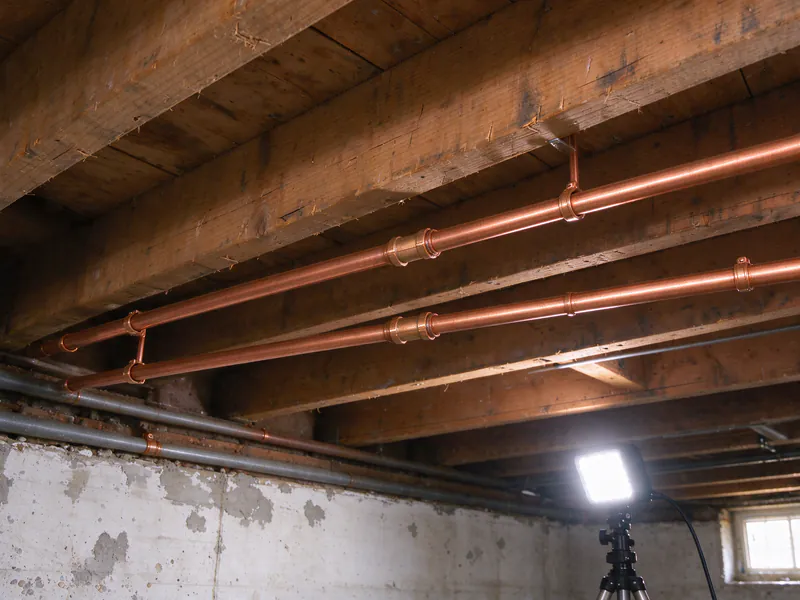
Either material replaces galvanized well, and the choice follows the house. PEX repiping bends through walls and chases with fewer openings, which suits plaster-walled older houses, and it joins remaining galvanized without metal-to-metal contact. Copper repiping is rigid and durable for exposed basement runs, but wherever copper meets galvanized steel it needs a dielectric fitting, because the two metals in contact corrode the steel side. The PEX vs copper guide compares them.
Two details are easy to miss. Galvanized nipples at the water heater, the main valve and fixture stops are part of the system and should be replaced with it. And in older houses the steel water pipe is sometimes part of the electrical bonding path; when it is replaced with PEX, the scope should note where the bond connects and say who checks it, which is work for a licensed electrician.
Buying, selling and insuring a house with galvanized pipe
Galvanized pipe often comes up during a sale. A home inspection may note it, and a buyer may ask the seller to replace it or to adjust the price. The useful document in either case is a written scope with pressure and flow readings, which shows what the pipe is doing rather than only its age. The guide to buying a house with old pipes covers what to ask before closing.
Insurers may ask about galvanized pipe when writing or renewing a policy, and policies differ on how they treat the damage from a failure versus the pipe itself. Only the policy and a written answer from the insurer settle that. The homeowners insurance and repiping guide goes further.
Permit, inspection and testing
Inside the City of Indianapolis, the Department of Business and Neighborhood Services requires a plumbing permit for galvanized pipe replacement beyond the 20 percent in-kind exemption, which covers any whole-house job and most partial ones. For an existing home the fee is $153 for up to 1,000 square feet plus $23 for each additional 500, and a failed inspection adds a $175 reinspection. The new pipe is inspected at rough-in, before it is covered, then pressure tested and flushed. The first flush after a galvanized switch-over can loosen scale left in fixture valves, so aerators and cartridges are cleared as part of it.
What galvanized pipe replacement costs
A galvanized-to-PEX or copper repipe of the whole house is priced as a whole-house repipe. A typical Indianapolis-area range is $4,000 to $15,000 or more, and larger multi-story, tile-heavy or copper jobs can run higher. Plaster walls, the number of baths and stories, and how many runs can be reached from below set where a house falls. The Indianapolis repipe cost guide and the cost estimator show how those drivers add up.