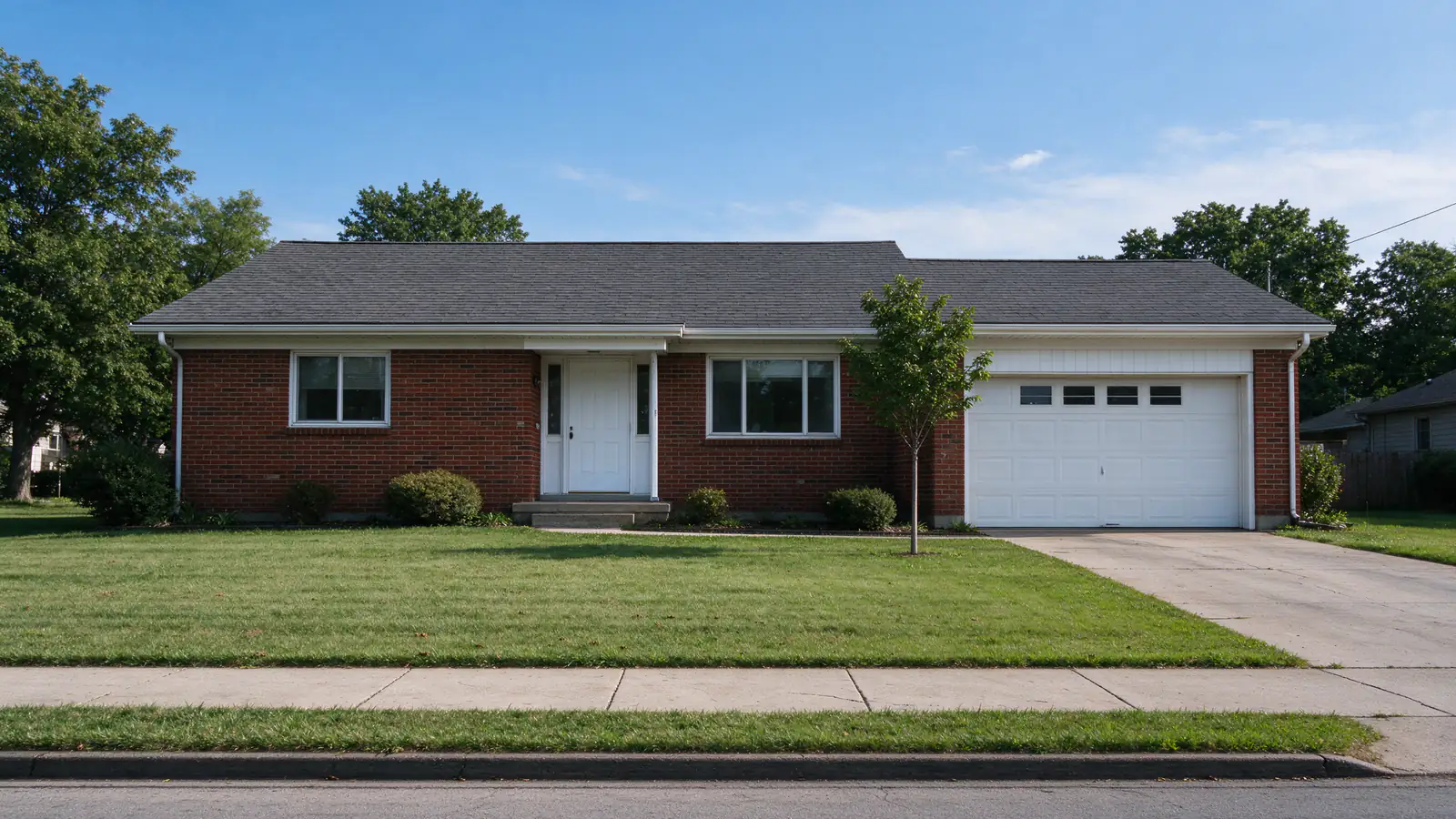
An address in Lawrence is in Marion County, yet its plumbing permit, its contractor registration and its tap water all come from the City of Lawrence rather than from Indianapolis. Circle City Repipe offers repiping and pipe repair in Lawrence: copper repiping and PEX repiping, copper pipe repair, polybutylene pipe replacement and water line work. The work is done by licensed and insured contractors, permitted the way Lawrence requires.
Why Lawrence is its own case
Marion County has four excluded cities, Lawrence, Speedway, Beech Grove and Southport, which sit outside the consolidated Indianapolis government. Each keeps its own municipal functions, and the one that matters for a repipe is the building office. Indianapolis spells out that its contractor licensing stops at their borders.
In Lawrence, the Department of Public Works issues all building permits. Its municipal code requires a permit to install, alter, repair or replace any plumbing system, and a hired contractor must be registered with the City of Lawrence. In certain circumstances, the department lets a homeowner obtain a permit for work they do themselves. Where a project is a structural remodel, plumbing is permitted separately from the building work. The plumbing permit fee is set by the department’s residential fee schedule and confirmed for each address. Statewide, the water piping still follows the Indiana Plumbing Code.
A younger housing stock, with different failures
Lawrence’s homes are newer than the Indianapolis average, and that changes which problem is likely. According to the American Community Survey, only 3.1% of Lawrence homes went up before 1940 and 12.8% between 1940 and 1959. Another 19.1% date from 1960 to 1979, 29.5% from the 1990s and 26.4% from 2000 on, for a median build year of 1992. Only 15.8% of Lawrence homes predate 1960, against about a third in Indianapolis.
So the prewar galvanized problem that defines older Indianapolis neighborhoods is less often the starting point here. Houses built from the 1960s into the 1980s were mostly plumbed in copper, and the questions there are pinhole leaks, worn joints and, in homes built before 1986, possible lead solder. Polybutylene was used in many places during the 1980s and into the 1990s, so a gray flexible supply line in a house of that age deserves a closer look; the polybutylene pipe replacement page shows how. Newer houses are usually plastic already and come up more for leak repair than for a repipe. None of this proves what a given house has. The survey at the meter does that, and the guide to identifying pipe material explains what it looks for.
Groundwater from nine wells
City of Lawrence Utilities supplies its water from nine wells, serving about 15,855 connections according to its consumer confidence report. The most recent report to state hardness gave 20 grains per gallon, about as hard as Citizens Water to the south and west. Its tap sampling showed lead at a 90th percentile of 0.76 parts per billion and no sites over the action level for copper.
Hardness at that level leaves scale in water heaters, aerators and valves, and it shapes the case for and against copper. The copper pinhole leaks guide explains the causes owners ask about, and the hard water and pipes guide covers what scale does to each pipe material. The PEX vs copper guide sets the two side by side for a repipe.
Repeat leaks in a Lawrence house?
Have the copper and the joints looked at before deciding between another repair and a repipe.
The service line inventory
Lawrence Utilities keeps its own service line inventory. A superintendent’s report to the utility recorded about 10,800 lines identified as not lead in the first pass, with roughly 4,543 of about 15,343 accounts needing field checks to confirm they were neither lead nor galvanized steel. The utility’s consumer confidence report points owners to the Indiana Department of Environmental Management’s inventory portal for results.
That matters because Citizens Energy Group’s rules and lead program apply to Citizens customers, and a home on Lawrence Utilities water sits outside them. The water bill shows which utility serves an address. Service line material, meter location and replacement terms in Lawrence come from Lawrence Utilities and are confirmed per address before a water line replacement is scoped.
How a Lawrence repipe usually runs
The survey begins where the water enters, at the meter and main valve, identifies the pipe material and measures static pressure and flow at fixtures on each floor, hot and cold. Where a house has a basement, the new main and branches run along the joists; where it sits on a slab, new lines usually go overhead through the attic and down interior walls, leaving the old pipe in the concrete, and slab leak repair covers that case. A home-run manifold suits many newer layouts; the manifold vs trunk-and-branch guide compares them.
If the main shutoff is an old gate valve that will not close fully, it is replaced as part of the job, because every later repair depends on being able to turn the water off; the main shutoff valve replacement page explains the swap. Old pipe is removed where it can be reached and capped where it cannot.
Work is staged so the water is off for part of a day, not all of it. Lawrence’s inspector checks the rough-in while it is still exposed. A pressure test and a full flush follow, then the fixtures and water heater go back on line and the openings are closed under the written list that names each one and who patches it.
Price in Lawrence
The price band is the same across the Indianapolis area: a whole-house repipe typically runs $4,000 to $15,000 or more. What moves a Lawrence house within it is size, number of baths, access through a basement, crawlspace or slab, and the material chosen. The Indianapolis repipe cost guide explains each driver, and the online estimator is a quick way to see where a house might land. The Lawrence permit fee is added on the city’s own schedule.
Neighboring areas
Irvington lies to the southwest under the Indianapolis permit office. Beech Grove, another excluded city, has its own building office but Citizens water. Carmel is to the northwest in Hamilton County. Others are on the service areas page.