Circle City Repipe replaces the water supply piping in Indianapolis houses with PEX, in the city and in nearby communities across Marion and the surrounding counties. A PEX repipe swaps old galvanized steel, copper or plastic supply lines for cross-linked polyethylene tubing, from the main shutoff to the fixtures, under a plumbing permit and a pressure test. The work is carried out by licensed and insured contractors, and the tubing type, the fittings and the layout are chosen for the house rather than out of habit.
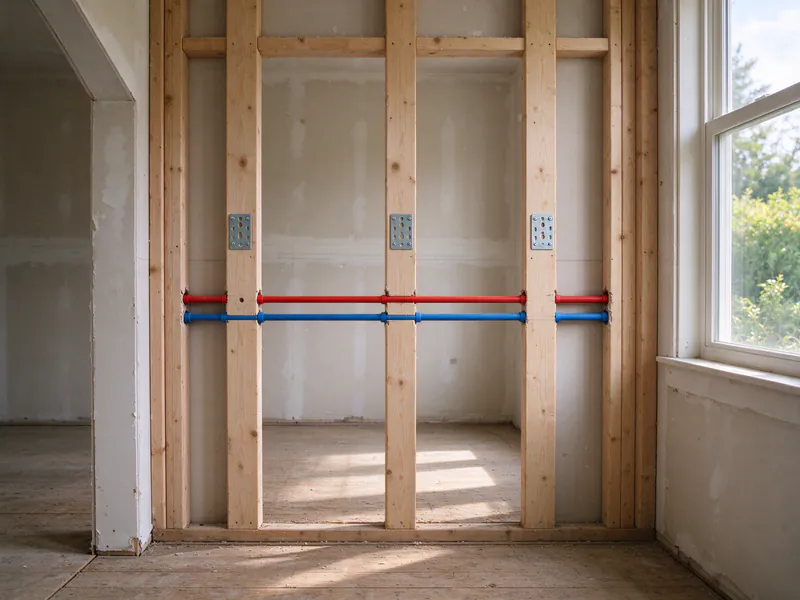
PEX is widely used for repipes because it suits older houses. It bends around framing and through tight chases, so it needs fewer fittings and fewer wall openings than rigid pipe. It comes off a coil in long lengths, so a run from the basement to a second-floor bath can often be pulled in one piece. It tolerates the occasional freeze better than copper. None of that makes it right for every run, and PEX has its own limits: it degrades in sunlight, needs closer support than metal pipe, expands more with temperature and depends on fittings made to its standard. Those limits are what a good PEX repipe is designed around. Owners still weighing the material can start with the PEX vs copper guide; the copper repiping page covers the other option.
What happens on the first visit
The visit starts where the water enters, at the meter setting and the main shutoff, and follows the main through the basement, crawlspace or utility room. The existing pipe material is identified along the way, using the checks in the pipe identification guide, because a house with galvanized near the street and copper further in needs transition fittings at different points. Static pressure is read at a hose bibb or laundry connection, and flow is checked at fixtures upstairs and down, hot and cold, to separate a pipe restriction from a supply problem. The low water pressure page explains that difference.
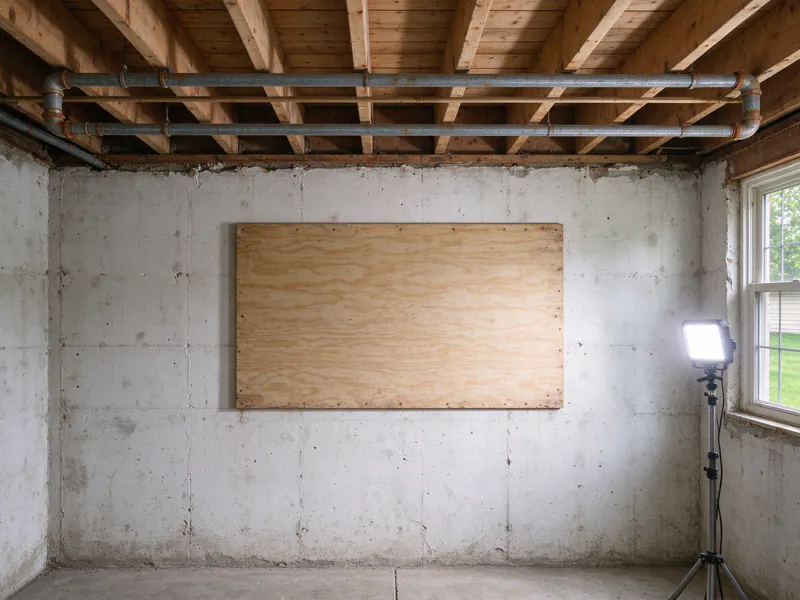
For PEX the rest of the visit is about routes. Where can the tubing run from the basement to each bathroom? Is there a closet, a chase or an old stack cavity that reaches the second floor? Which runs would cross a crawlspace, an outside wall or an attic, and can they be moved to the heated side? Is there space near the water heater for a manifold? Those answers decide the layout, the number of openings and the written price, whether the job is a whole-house repipe or a partial repipe of one area.
PEX-A and PEX-B
All PEX is polyethylene that has been cross-linked, which bonds its long molecules together so the tubing can carry hot water under pressure. The letters describe how the cross-linking is done, and the difference shows up during installation more than in service.
PEX-A is cross-linked while the tubing is formed. It is the most flexible type, it can make tighter bends without fittings, and a kink can often be reversed with a heat gun. Its elastic memory is what allows cold expansion fittings: the tubing end is stretched, slipped over the fitting and shrinks back to seal. PEX-B is cross-linked after it is formed. It is stiffer, holds the curl of the coil, and a kink usually means cutting that piece out. It is generally joined with crimp or clamp rings over insert fittings and costs less per foot.
Both types are made to the same tubing standard, ASTM F876, and both are listed for drinking water. Neither is better for every job. PEX-A suits houses with long runs, many bends and tight framing; PEX-B suits straightforward runs through an open basement. What matters most is that the tubing, fittings and tools come from one matched system, and that the scope names them. The comparison table on this page sets out the differences side by side, and the guide to whether PEX is safe covers drinking-water questions.
Fittings and connections
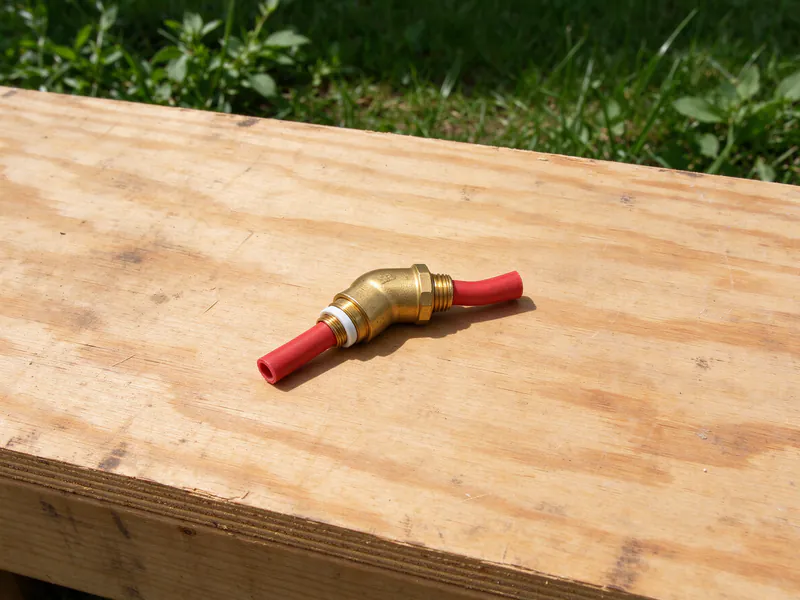
Most PEX failures happen at a joint rather than in the tubing, so the fitting system matters. Expansion fittings, used with PEX-A, stretch the tubing over a fitting whose inside diameter is close to the tubing’s own, so flow is barely reduced at each joint. Crimp fittings slide a copper ring over the tubing and an insert fitting and squeeze it with a calibrated tool; clamp or cinch rings do the same with a stainless band. Insert fittings sit inside the tubing and narrow the bore at every joint, which is one reason trunk-and-branch layouts in PEX-B are sized with care. Press fittings with a stainless sleeve are another option on some systems.
Each method works when it is made to its standard and checked. A crimp ring that is off square, an expansion joint made in very cold conditions without allowing time to shrink back, or a fitting from a different system can all leak. A go/no-go gauge confirms crimps, and the pressure test before the walls close confirms every joint at once. Where PEX meets remaining metal pipe, the water heater or a fixture, a brass or metal transition fitting rated for drinking water carries the connection. Water heater connections are usually made in metal for the first stretch of pipe, because PEX should not sit directly against the heat of a flue.
Manifold or trunk-and-branch
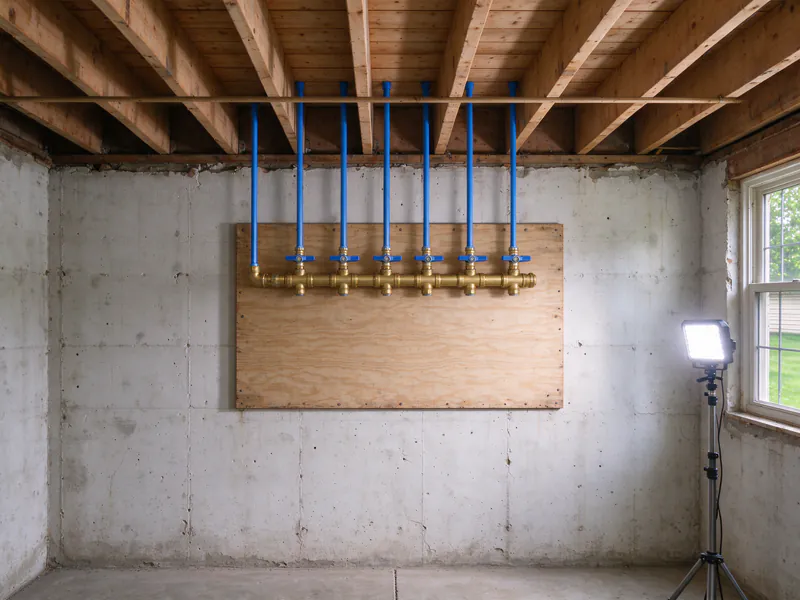
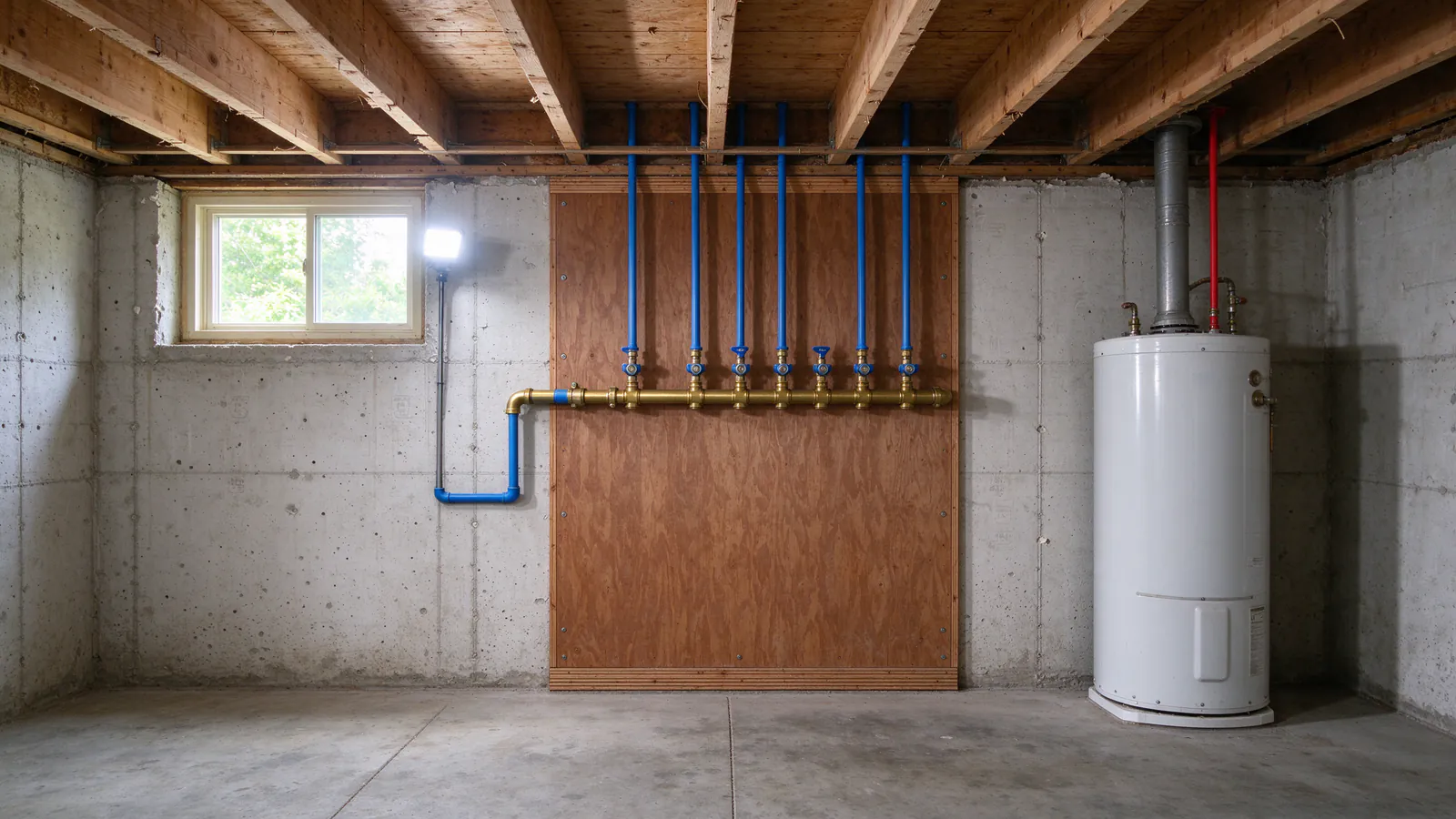
PEX allows two layouts, and many repipes use a mix. A trunk-and-branch layout runs a larger main through the house and tees smaller branches off it to each fixture group, the way the old system was built. It uses less tubing and fewer long runs. A home-run manifold layout brings every fixture its own line from a central manifold near the water heater, with a shutoff for each line on one panel. It uses more tubing, but there are no hidden fittings between the manifold and the fixture, and one bathroom can be shut off without touching the rest.
Hybrid layouts put small remote manifolds near each bathroom group, fed by one main. They shorten runs in a large house and still give local shutoffs. The choice also affects hot water. A home run of small tubing holds less cold water, so hot water can arrive sooner at a far fixture, but in a long house the wait can still be long, and a recirculation system may be the better fix. The manifold vs trunk-and-branch guide goes further.
Thinking about PEX for an older house?
Start with the routes: where the tubing can run, which openings it needs and what the permit covers.
Support, routing and expansion
PEX moves more than metal pipe. It expands and contracts many times more than copper for each degree of temperature change, so a hot line that cycles every time a tap opens grows and shrinks along its length. Poor support lets it sag between joists, and tight bends or tubing pulled hard against a fitting put that movement into the joint. Supports go in at shorter spacing than copper needs, long straight runs get room to move, and tubing passing through framing gets sleeves or plates so it cannot chafe or be hit by a nail.
Sunlight is the other enemy. Ultraviolet light breaks PEX down, so tubing is not left exposed outdoors or in a sunlit space after installation, and stock is kept covered on the job. Rodents can chew exposed tubing in a crawlspace, which is another reason to keep runs tidy and protected.
Freezing is the extreme case of temperature stress. Indianapolis averages more than 100 nights a year at or below freezing and a few nights a year at or below zero, by NOAA’s 1991-2020 climate normals. PEX is more likely than copper to survive a freeze without splitting, because the tubing stretches, but fittings can crack, repeated freezing weakens the tubing, and a frozen line still stops the water. New material does not remove freeze exposure; routing does. Runs belong inside the heated envelope, away from outside walls, eaves and crawlspace vents, and the few that cannot be moved are insulated. Where the main shutoff is an old gate valve, it is replaced while the water is off, as the main shutoff valve replacement page explains. The burst pipe repair page covers what to do when a line does freeze.
Where PEX is not used
PEX is listed for water distribution inside the house under the Indiana Plumbing Code, 675 IAC 16-1.4. It is not the material for every part of the system. In Citizens Energy Group’s territory, a replaced water service line from the main to the meter pit and into the house must be SDR9 polyethylene with tracing wire, and Citizens prohibits PEX for that run. That buried line is a separate scope, covered on the water line replacement page.
PEX also has no place on drains, which are a different system, or in spots where it would sit in direct sunlight or against a heat source. Indianapolis water is treated with chloramine for disinfection, according to Citizens’ water quality data, so the tubing’s chlorine resistance rating, printed on its side, should suit the planned use, especially where a hot water recirculation loop will keep hot water moving through it all day.
Grounding, permits and testing
Older houses sometimes rely on the metal water pipe as part of the electrical grounding or bonding path. When that pipe is replaced with PEX, the path is broken. It does not show until something goes wrong, so the scope should record where the electrical bond connects and say who checks it, which is work for a licensed electrician.
Inside the City of Indianapolis, the Department of Business and Neighborhood Services requires a plumbing permit for a PEX repipe, because it is far past the 20 percent in-kind exemption. The new tubing is inspected at rough-in, before it is covered, then pressure tested, flushed through every fixture and checked against the flow readings from the first visit. The Indianapolis repiping permit guide covers the fees and the offices outside the City.
What a PEX repipe costs
A whole-house PEX repipe falls within the typical Indianapolis-area range for whole-house work of $4,000 to $15,000 or more. For the same house, PEX usually costs less than copper, because the tubing costs less, it needs fewer fittings and fewer openings, and it goes in faster. Where the price lands inside the range depends on the number of stories, baths and fixtures, the access through basement, crawlspace or attic, plaster and tile in the way, the layout chosen and the patch scope. The Indianapolis repipe cost guide and the cost estimator show how those drivers add up.