Circle City Repipe diagnoses and fixes low water pressure in Indianapolis houses on city water, and in nearby communities across Marion and the surrounding counties. Low water pressure in a house can start at the street, the buried service line, the main shutoff, a pressure-reducing valve, the pipe inside the walls or a single clogged fixture, and each one has a different fix. Repiping fixes only the causes that live in the pipe itself. The work is carried out by licensed and insured contractors, and it starts with a gauge and a flow check rather than a sales pitch for new pipe.
This page is for homes on a public water system: Citizens Energy Group across most of Marion County and Fishers, or a city utility such as Carmel’s or Lawrence’s, or Indiana American Water in Greenwood.
If the pressure dropped today
A sudden drop across the whole house is often not the house at all. Water main breaks and planned repairs lower pressure or cut water for everyone nearby, and Citizens notes that waterline repair work may cause discolored water, reduced pressure or a temporary loss of water. Before calling a plumber, check the Citizens outage map, which Citizens updates continuously, or your own utility’s notices if you are outside Citizens territory. Ask a neighbor whether their water changed at the same time.
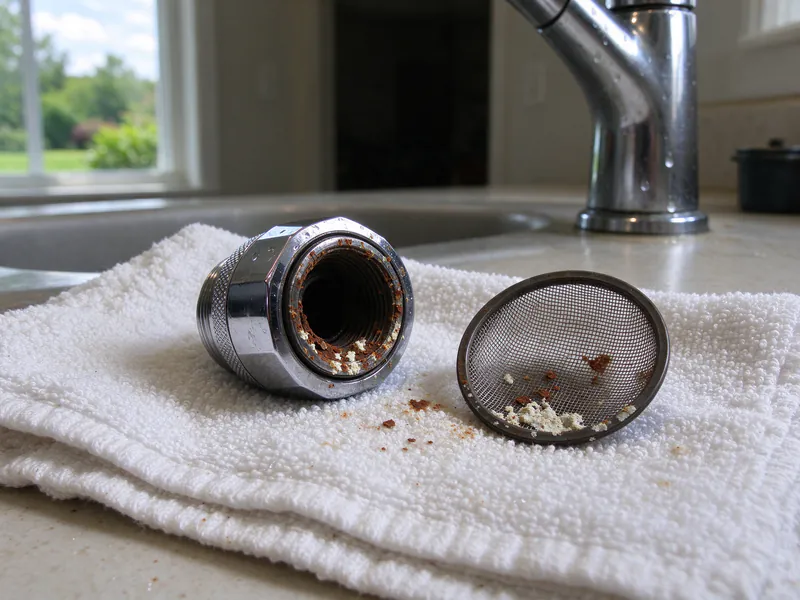
If the outage map shows work in the area, wait for the utility to finish. Once service is back, Citizens says it can take two to four hours for cold water to run clear, so run a cold tap rather than the washing machine. If pressure stays low after the work is done, or nobody else is affected, the cause is more likely on your side of the meter, and the rest of this page applies. Loosened sediment after a main repair can also clog aerators, which is the easiest fix there is.
What happens on the first visit
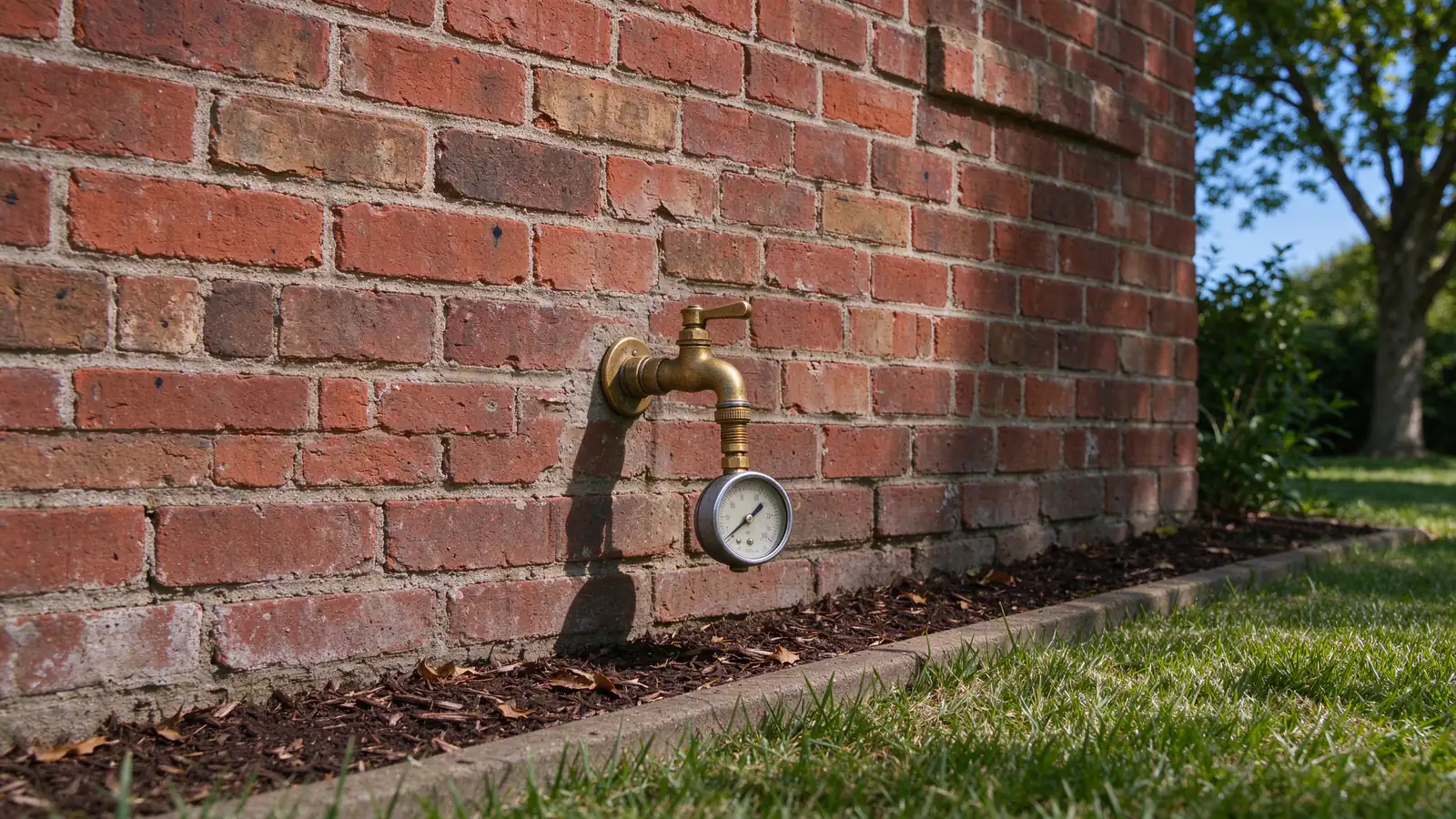
The visit measures before it guesses. Static pressure is read with a gauge on a hose bibb or laundry connection, with nothing running. Then flow is checked at the fixtures, upstairs and down, hot and cold, first one at a time and then two together. The combination tells most of the story. Low static pressure points toward the supply: the utility, the service line or a pressure-reducing valve. Normal static pressure with weak flow points to a restriction inside the house, such as a partly closed valve or scaled pipe.
The rest of the visit follows the water in. The meter setting and the main shutoff are checked for position and condition, since a gate valve that was half closed during a past repair and never opened again is an inexpensive answer when it turns out to be the cause. If the house has a pressure-reducing valve, its setting and behavior are checked. The pipe material is identified along the main and the risers, because a stretch of half-inch pipe near the main or a few feet of old galvanized left from a past renovation can choke a house that is otherwise copper or PEX. The guide to identifying pipe material covers what to look for.
One fixture or the whole house
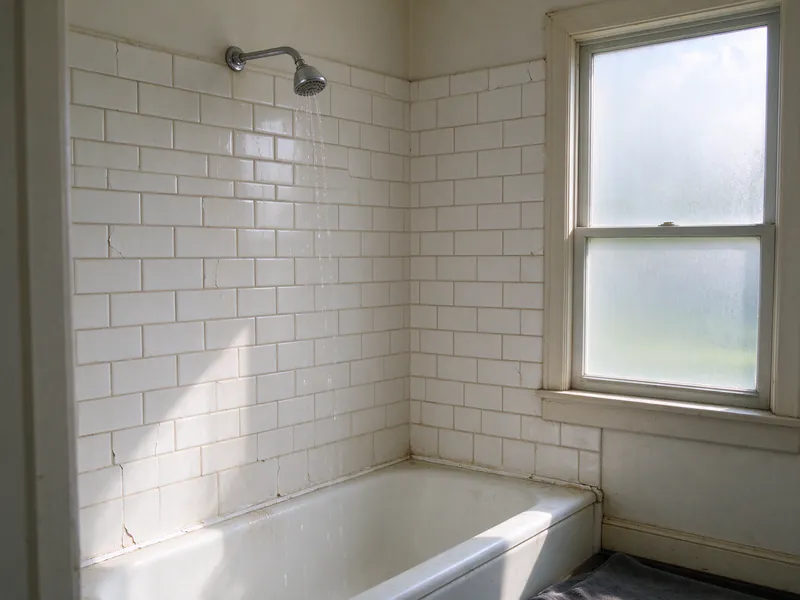
The first sorting question is how much of the house is affected. One faucet or one shower with weak flow while everything else is fine is almost always the fixture: a clogged aerator, a showerhead full of scale or a worn cartridge. Indianapolis water is hard, averaging about 19 grains per gallon from Citizens, and minerals collect in the small openings of fixtures first. Scale and rust shaken loose from old galvanized pipe end up there too. The hard water guide explains what hardness does to fixtures and what it does not do to pipe.
A whole floor, the hot side only, or every fixture getting weaker together is a system problem. Weak upstairs and fine downstairs points to the risers, since each floor of height costs some pressure and a restricted riser makes the loss worse. Weak hot and strong cold at several fixtures points to the water heater or the hot-side piping. Weak everywhere points to the supply or the main.
The service line and the main valve
The buried service line sets how much water can reach the house. Older homes may still have small lines, and today Citizens requires at least a 3/4-inch inside diameter for a home under 2,000 square feet without irrigation, and 1-inch for larger homes or homes with irrigation. An old line that small, a line partly crushed or scaled, or a leak on the line can all lower pressure under flow. Homeowners notice it most when two fixtures run at once. Replacing the service line is water line replacement, a Citizens-permitted job separate from the plumbing inside, and in older homes it can overlap with lead service line replacement.
The main shutoff is the next suspect. Gate valves wear and their wedges can drop off the stem, leaving the valve partly closed no matter how the handle turns. A valve that cannot open fully throttles the whole house. Replacing it with a quarter-turn ball valve is a small job; the main water shut-off valve replacement page covers it, including the different rules when the valve sits in a Citizens meter pit.
Weak shower, slow-filling tub?
A gauge reading and a flow check at each fixture tell whether it is the street, a valve, the pipe or the faucet.
Scale inside old galvanized pipe
Galvanized steel is the cause that repiping fixes. The zinc coating wears through over decades, the steel underneath rusts, and the rust builds into scale that narrows the inside of the pipe. The pressure on a gauge can read normal, because a gauge measures pressure with nothing flowing, while flow at the fixtures is poor, because a narrow pipe cannot carry much water. That is why weak flow in a galvanized house gets worse when a second fixture opens, and why it is usually worst at the farthest and highest fixtures.
Scale does not reverse, and it does not stay put. Flushing loosens some of it, which then lodges in aerators and valves. Where testing shows normal static pressure, poor flow and galvanized pipe along the restricted runs, replacing those runs is the fix: galvanized pipe replacement for the galvanized sections, a partial repipe where one area is clearly worse, or a whole-house repipe where it runs throughout. The same pipe is often behind brown water at the tap, which the brown water guide covers.
Pressure that rises and falls
Pressure that changes through the day has its own causes. Some swing is normal on any public system as demand rises and falls, and nearby construction or a main repair can change it for days. Inside the house, a pressure-reducing valve that is wearing out often shows as pressure that creeps up overnight and drops when water runs, or as banging pipes and a relief valve on the water heater that drips. A gauge with a maximum-reading needle, left on a hose bibb for a day, shows whether pressure is spiking while nobody is watching.
When pressure is too high: PRVs
High pressure is as much of a problem as low pressure, just quieter. Static pressure well above what fixtures and appliances are built for strains supply connectors, toilet fill valves, washing machine hoses and water heaters, and it makes water hammer worse when valves close quickly. The answer is a pressure-reducing valve at the main, not new pipe. In a house with a PRV, or with a backflow device at the meter, the system becomes closed, and water heated in the tank has nowhere to expand. Thermal expansion then raises pressure every time the heater runs, which is why an expansion tank often belongs with the valve. The pressure-reducing valve replacement page covers that work.
What fixing low pressure involves and costs
The fix is priced by the cause, so there is no single price for low water pressure. Cleaning an aerator or opening a valve is minutes. A new main valve or a PRV is a valve job. A service line is an excavation job under Citizens’ rules. Scaled galvanized pipe is a repipe, priced on the repiping cost estimator. The pressure test at the hose bibb comes first, because it decides which of those jobs the house actually needs. The repipe vs repair guide and the repiping assessment help if pipe replacement is on the table.