A Greenwood owner who reads about lead service lines is usually reading Citizens Energy Group’s rules, and those do not apply south of the county line. Water in Greenwood comes from Indiana American Water, an investor-owned utility with its own lead line policy, and permits come from the City’s own Community Development Services. Circle City Repipe offers repiping in Greenwood, IN, along with copper pipe repair, leak detection and the interior side of lead line work, with every job carried out by licensed and insured contractors.
Indiana American Water and the lead line
The EPA’s drinking water records list Indiana American Water’s Johnson County system for Greenwood, serving about 86,800 people. Its customer guide on lead in water service lines sets out terms that differ from the Citizens program in Indianapolis in ways that matter to the order of work.
The utility replaces lead service lines, and galvanized lines downstream of lead, at no direct cost to the customer while it is upgrading water infrastructure in the area. When the customer-owned portion is lead, the property owner has to sign an access agreement. The replacement covers any lead portion from the main to the shut-off valve inside the property, and the utility installs a valve if the house has none. Lead plumbing and fixtures past that valve stay with the owner. The utility does not test individual customers’ water for lead, though it provides a test kit after a replacement and a pitcher filter for six months.
Outside a planned project, an owner may replace their own portion through their own contractor, at their own expense, and the utility does not reimburse it; it asks owners to contact it first. Indiana American Water describes its own portion as running from the main to the outside shut-off or meter pit, and the customer’s from that valve to the indoor plumbing. Its service line map is the place to check what its records show for an address. The lead service line replacement page covers the owner-side work, and the Citizens program guide is useful mainly as a contrast for anyone comparing notes with Indianapolis neighbors.
A city of 1960s copper and newer subdivisions
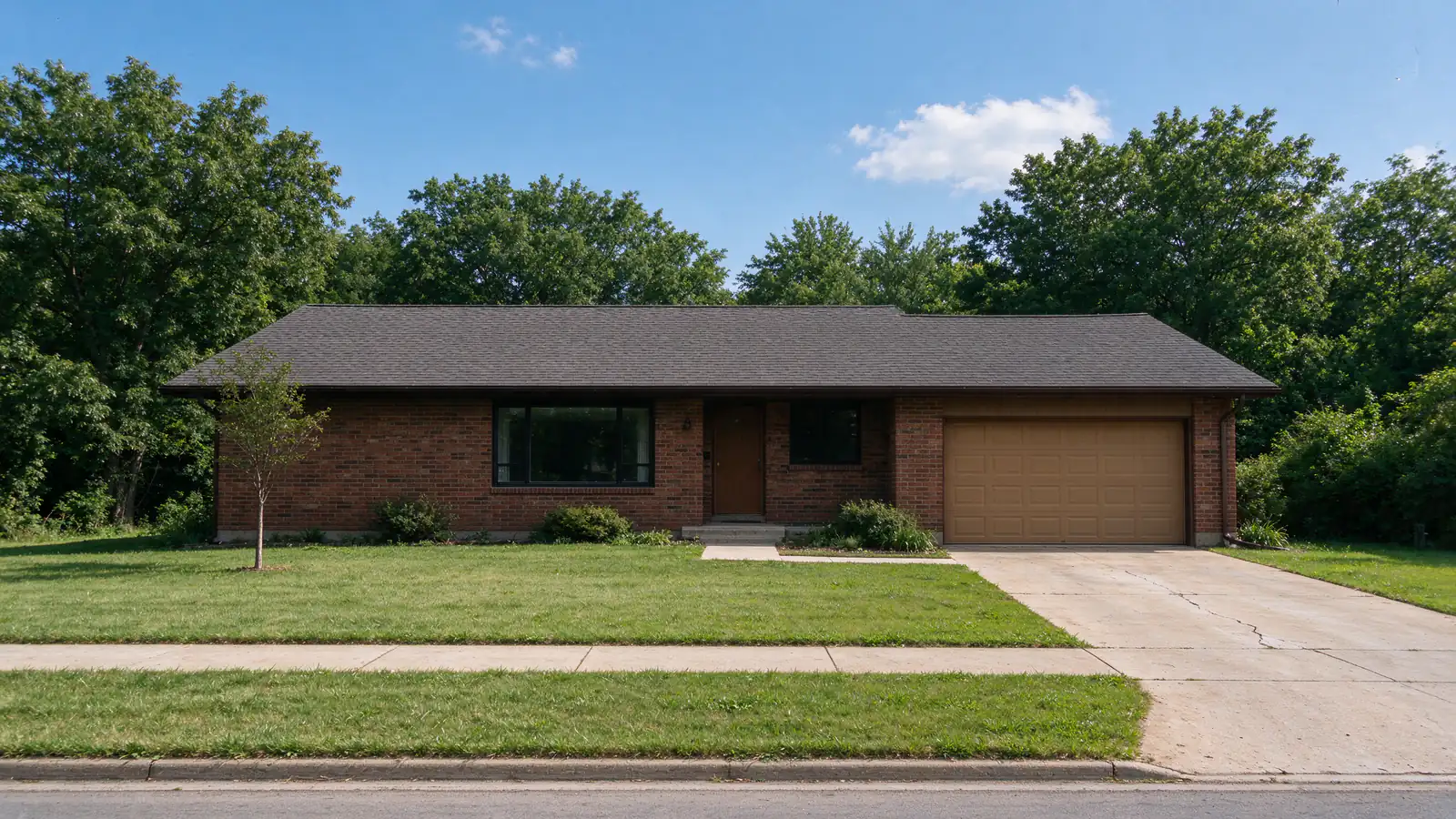
Greenwood’s housing is mostly recent. Census Bureau survey data, from the American Community Survey, put Greenwood’s median year built at 1996, with 73.1% of homes dating from 1980 or later. The older layer is thinner but real: 17.9% were built between 1960 and 1979, and about 9% before 1960. The Old Town Historic District along Madison Avenue marks where the city began, though age is only a hint about any one house there. Roughly seven in ten homes are single-unit houses.
Those eras point to different questions. Copper was the standard supply pipe for houses of the 1960s and 1970s, and after decades of flow it can erode from the inside out until it pinholes; why one pinhole leak tends to lead to another is what changes the repair-or-replace math. Houses built before 1986 may also have lead solder at the copper joints, a point Citizens raises for its own customers and one that applies to copper of that age anywhere. Older houses near the historic core may still have galvanized steel in places. In the newer subdivisions the supply pipe is likely to be plastic from the start, so a water leak detection visit or one repair is the likelier job than a repipe. What any one house has is found at the meter, using the guide to identifying pipe material as a check.
Water chemistry is the one local piece this page leaves out. Indiana American Water’s annual water quality report for the Johnson County system is the source for hardness and treatment, and those figures are not repeated here without it.
Expecting Indiana American Water in your Greenwood neighborhood?
Have the interior piping past the inside valve traced and priced, so it is ready when the line outside is replaced.
The City permit and what it costs
Greenwood’s Community Development Services issues residential permits, and its residential application lists plumbing among the trades a permit can cover. Its current form puts the fee for a residential plumbing permit at $75, with any combination of trade permits capped at $225. Fees are collected when the permit is issued, not at application, and a plumbing plan is required when plumbing is included. The same form asks the applicant to name the code the work follows: the 2020 Indiana Residential Code or the 2012 Indiana Plumbing Code. A repipe on its own is normally the plumbing line; a remodel that also needs electrical or structural work goes on the same application under the cap.
Order of work in a Greenwood house
In Greenwood the first look is at the inside valve the utility’s rules turn on, along with the meter setting and whatever material the service line is where it comes through the wall. Static pressure and running flow get recorded at a low fixture and a high one, hot side and cold side. A written price, scope and opening list follow, and only then does any cutting start.
Where a house is a single-story ranch over a crawlspace or basement the main and branches run below the floor, which keeps wall openings few. Where a house sits on a slab, new supply lines are routed through the attic and down interior walls instead of through the concrete, kept inside the insulation so they do not freeze. A two-story house adds the climb to an upstairs bath, usually through a closet or chase. Cutover happens a section at a time, so the household has water most of the day. The rough-in gets its inspection with the walls open; pressure testing and flushing follow, and the water heater and fixtures are reconnected last. An old gate-style or stuck main valve is swapped during the shutdown, and the patching follows the written list of openings.
Planning the interior and the service line together
The Indiana American Water rules leave a gap at the inside valve. Outside it, the utility replaces lead during its own projects; inside it, everything is the owner’s. If a house has lead or old galvanized plumbing past the valve, replacing the service line alone leaves that interior pipe in place, and a repipe done first can be sequenced so the new interior connects cleanly to whatever the utility installs later. Where the interior is copper in decent shape, a copper pipe repair may be all the house needs; where leaks keep returning, copper repiping or a whole-house repipe is the honest scope. Greenwood uses the same whole-house figure as the rest of the metro, $4,000 to $15,000 or more, and the Indianapolis repipe cost guide explains what moves a house within it.
North of Greenwood
Beech Grove is the closest excluded city in Marion County, with its own building office on Citizens water. Fountain Square and Irvington have older housing and Citizens’ lead line program. The service areas page has the full list, from the north suburbs to the south side.