Fix a Leak Week is an annual campaign from the U.S. Environmental Protection Agency’s WaterSense program, held each March, that asks households to find and fix leaks. Its standard checks catch dripping faucets and running toilets. This leak check for older pipes adds the places where aging supply pipe and buried service lines hide water you cannot see.
Circle City Repipe finds and repairs leaks and replaces old supply piping across Indianapolis and nearby communities, with the work carried out by licensed and insured contractors. The checks below need nothing more than a look at the meter, a few drops of food coloring and a walk through the basement.
Why the campaign exists
EPA’s Fix a Leak Week page puts the scale plainly. The average household’s leaks can account for more than 9,300 gallons of water wasted every year, and nine percent of homes have leaks that waste 50 gallons or more per day. A faucet dripping once a second wastes more than 3,000 gallons a year. Most of that comes from fixtures, which is where the campaign starts. Dates move a little from year to year, so check the WaterSense site for the current week.
The meter test
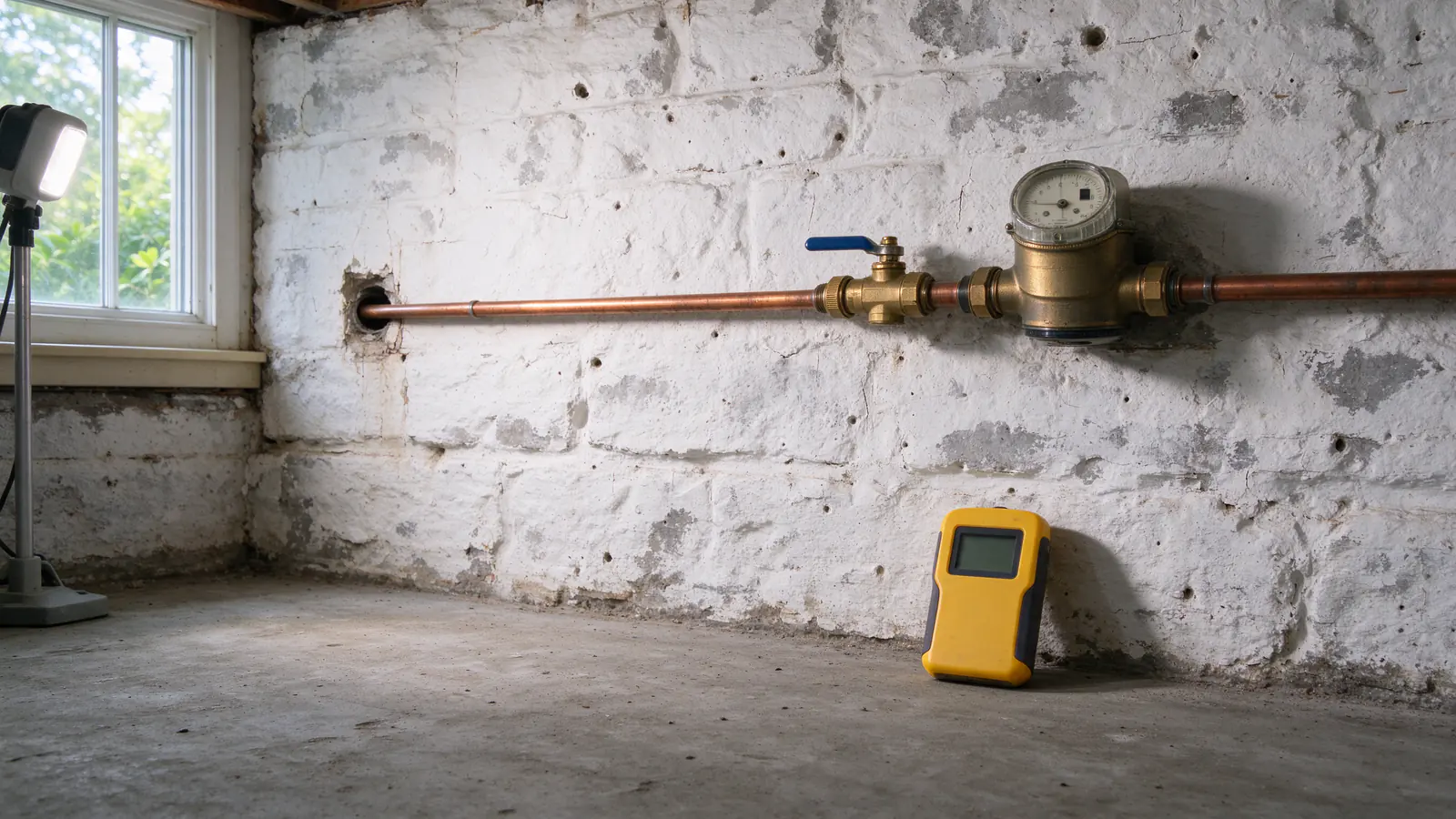
The water meter is the most reliable leak detector a house has, because it counts every gallon that passes it whether you can see the water or not. EPA’s method is simple: read the meter before and after a two-hour period when no water is being used. If the reading changed, something is leaking. Many meters also have a small leak indicator, a triangle or dial that turns with very low flow.
Before you rely on the result, know where your meter is. Citizens Energy Group’s standards put meters one inch and smaller in an outside pit near the right-of-way, and an inside meter moves to a pit when the service line is replaced, but some older houses still have the meter in the basement. The position decides what the test can see, which matters for the buried line described below. Read an outside meter only if the lid comes off easily and safely; a utility bill that compares months also shows a change in use.
The toilet dye test
EPA’s second check is for toilets, which can leak into the bowl silently for months. Put a few drops of food coloring in the tank and wait without flushing. If color shows up in the bowl within ten minutes, the flapper is letting water through. Flush afterward so the dye does not stain the tank. A worn flapper is a cheap part and one of the few leak repairs that is a reasonable do-it-yourself job.
Where older pipes hide leaks
Fixture leaks are visible or close to it. The leaks that make old houses expensive are in the pipe, and they follow the material:
- Galvanized steel rusts from the inside, and the threads at each joint are the thinnest point. Look for rust staining, damp spots or white and orange crust at threaded fittings in the basement ceiling or crawlspace.
- Copper can develop pinhole leaks, small enough to drip slowly inside a wall for weeks before a stain appears. Green or blue spots on the outside of the pipe are worth noting. The copper pinhole leaks guide explains the possible causes.
- Polybutylene, a gray plastic used in some houses from the late 1970s into the 1990s, tends to fail at its fittings. The polybutylene pipe replacement page shows what it looks like.
- Slab and under-floor lines can leak with no visible sign beyond a warm spot on the floor, the sound of running water or a meter that never stops. The slab leak repair page covers what happens next.
If you are not sure which pipe you have, the guide to identifying pipe material walks through each one.
Meter moving and no leak in sight?
A hidden leak is found with the right tools before any wall is opened.
The buried service line
In Citizens Energy Group territory the property owner owns the full length of the service line, the buried pipe from the main to the house. A leak in the right-of-way is repaired by Citizens; a leak on the owner’s side, outside the right-of-way, is the owner’s to repair through a licensed and bonded plumber.
That is where the meter’s position matters. With an outside pit, the buried line to the house is past the meter, so a leak in it shows up in the two-hour test. With an inside meter, the buried line comes before the meter, so a leak there never moves the dial. Signs to watch for instead are a soft or unusually green strip of lawn along the line’s route in a dry spell, or water at the street that does not dry up. The water line replacement page covers the repair, and the water leak repair page covers fixing one leak inside the house.
When one leak is a pattern
One leak at an old joint is a repair. A second and third in the same galvanized or copper system point to the pipe itself. That is when comparing a run of repairs with a partial or whole-house repipe makes sense, and the repipe vs repair guide lays out how to weigh it. Whatever the check turns up, water leak detection is the place to start when the meter says there is a leak and the house will not show you where.