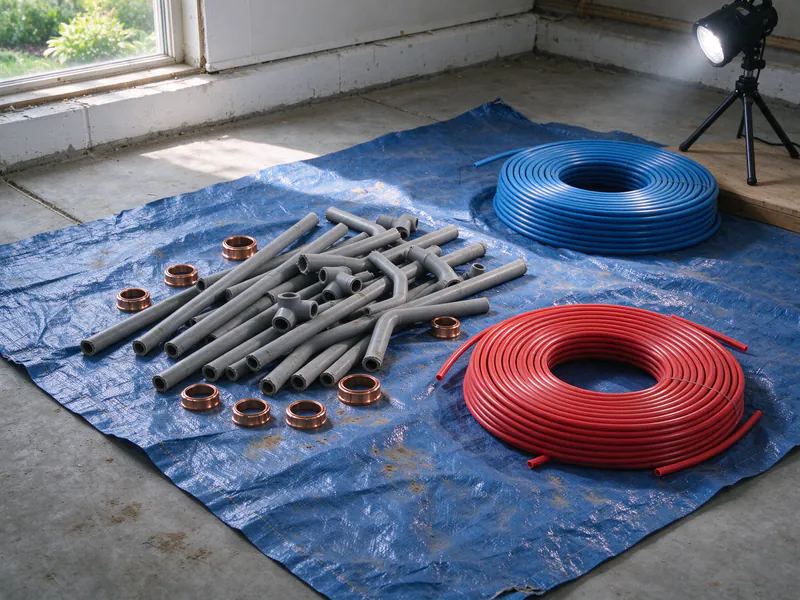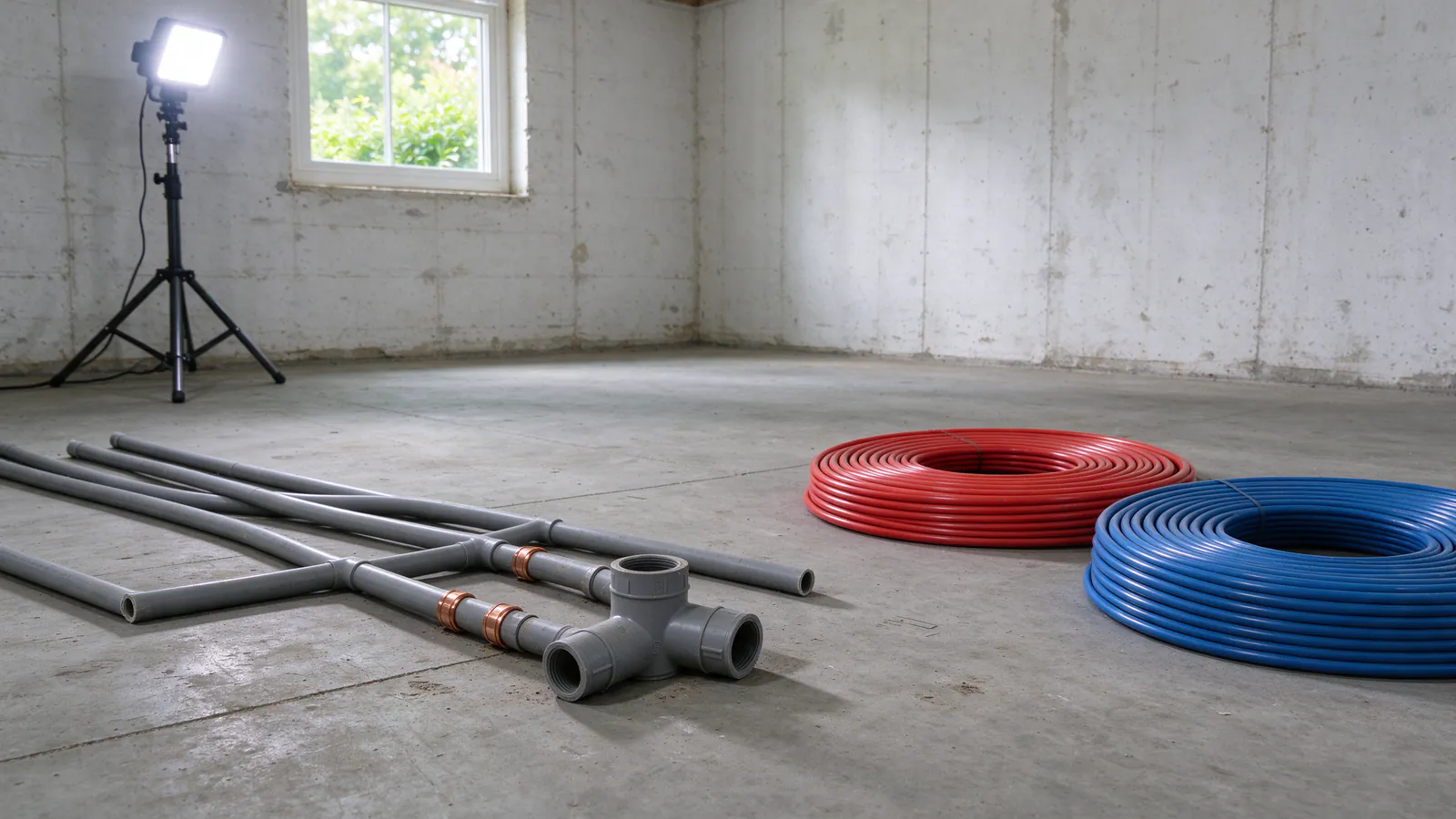
Circle City Repipe replaces polybutylene water piping in Indianapolis houses and condominiums and in nearby communities across Marion and the surrounding counties. Polybutylene pipe replacement takes the gray plastic supply lines and every one of their fittings out of service and replaces them with PEX or copper, under a plumbing permit and with the walls opened only where the routes need them. The work is carried out by licensed and insured contractors.
Polybutylene is worth replacing because of how it fails. The damage starts on the inside of the pipe and its fittings, with nothing to see from the outside, and when a joint gives way it usually does so without warning and at full water pressure. A repair fixes one joint. The rest of the system is the same age and carries the same water. There is one honest limit to start from: no utility, permit office or public dataset records how many Indianapolis-area homes have polybutylene, so the only way to know about one house is to look at its pipe.
What happens on the first visit
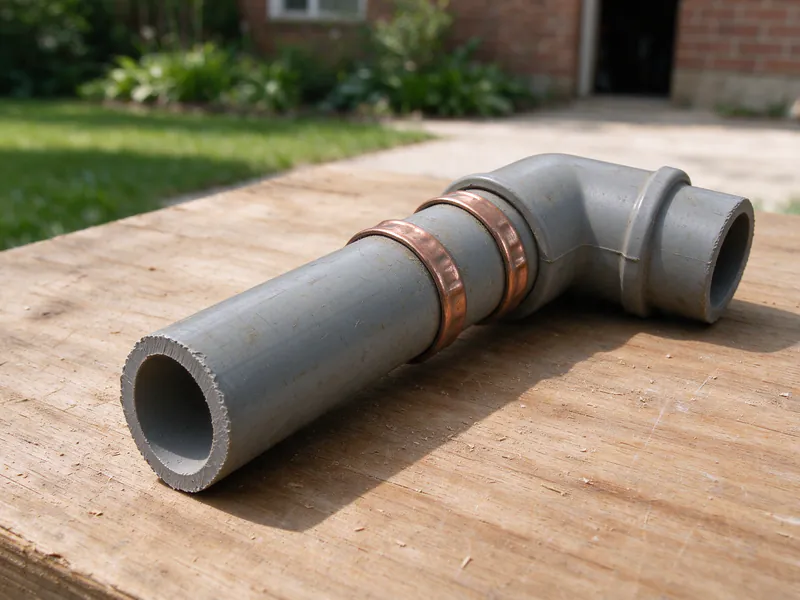
The first job is to confirm what the pipe is, because polybutylene, PEX and some older plastics can look alike to an untrained eye. The visit starts at the meter setting and the main shutoff, then follows the supply wherever it can be seen: at the water heater, under sinks, behind the access panel of a tub and along the basement or crawlspace ceiling. Polybutylene is usually dull gray, sometimes white or black, and joined with copper or aluminum crimp rings over plastic or metal insert fittings. The printing on the tubing settles it. Polybutylene distribution pipe is commonly marked PB2110 and often ASTM D3309; PEX is marked PEX with ASTM F876 or a related standard. The guide to identifying pipe material shows what to look for before anyone visits.
A home inspection can miss polybutylene where it is hidden, for example when the only exposed pipe is copper stub-outs at the fixtures and the plastic runs behind a vanity or in a ceiling. That is why the visit checks every place the pipe can be seen, not one. It also looks for the history: a past owner may have replaced the upstairs and left the downstairs, or patched a failed fitting with a different material. Static pressure and fixture flow are checked hot and cold, upstairs and down, as on any repipe, and then the visit turns to access, since the routes and openings set the price.
Why polybutylene pipe fails
Polybutylene was used for water supply across the country from roughly the late 1970s into the mid-1990s. It was cheap, flexible and quick to install, which is why it spread. Its weakness is chemical. The disinfectants that public water systems keep in drinking water, such as chlorine, slowly attack polybutylene and the acetal plastic used in many of its fittings. The inner surface becomes brittle and starts to crack, and the cracks grow through the wall over time. Heat speeds it up, so hot lines near the water heater and runs that sit in a warm space tend to age faster.
The fittings are the other weak point. Early plastic insert fittings could crack on their own, and a crimp ring that was not crimped evenly could let a joint creep apart years later. Metal fittings removed one problem but not the pipe’s. None of this shows on the outside, and that is the whole case for replacement. There is no test a homeowner can run and no visible sign that says which joint will be next. Production of polybutylene for U.S. plumbing ended in the mid-1990s, and the national class-action settlement that once paid for some replacements has long since closed, so the cost now sits with the owner.
Polybutylene in Indianapolis-area houses
Housing age gives context but not proof. Census figures show about 11% of Indianapolis homes were built in the 1980s and about 12% in the 1990s, the tail end of the polybutylene years. Several suburbs grew faster in that window: about 30% of homes in Lawrence date from the 1990s, as do about 20% in Greenwood and about 21% in Carmel. Plenty of houses from those years were plumbed in copper, though, and polybutylene also turns up in condominium buildings and manufactured homes of the same era. The mobile home repiping page covers the access under a manufactured home.
Polybutylene was also used for buried service lines, often blue or black, running from the meter to the house. That line is not part of an interior repipe. In Citizens Energy territory the owner owns the service line, a full replacement has to be SDR9 polyethylene with tracing wire, PEX and PVC are not allowed for it, and the work is done by a plumber bonded with Citizens under a Citizens permit. The water line replacement page explains how that job runs.
Repair, partial or full replacement
A leaking polybutylene fitting can be repaired. The failed piece is cut out and the gap is bridged with PEX or copper using transition fittings listed for polybutylene. That is the right call for a leak at 9 p.m. while a full job is planned, and pipe repair covers how it is done. It is the wrong long-term answer, because every other joint in the house is the same age.
A partial repipe fits where part of the house has already been replaced, so the job is to finish what a past owner started, with a clear written boundary. Everywhere else, the usual answer is a whole-house repipe that removes every polybutylene line and fitting from the main shutoff onward.
PEX or copper as the replacement
Both are allowed for water distribution under the Indiana Plumbing Code. PEX repiping is the common choice because PEX bends along routes much like the ones polybutylene used, with fewer fittings and fewer openings. It is a different material, cross-linked polyethylene, made and tested to its own standards, and it does not share polybutylene’s history; the guide to whether PEX is safe covers the questions owners ask about it. Copper repiping suits owners who want metal pipe where it is exposed. The PEX vs copper guide compares them in detail.
Insurance, inspections and selling a house
Polybutylene often comes up at two moments: an insurance application or a home sale. Some insurers ask about the pipe material when writing or renewing a policy, and what they do with the answer differs from one insurer to the next, so the only reliable answer comes from the policy and the agent. The homeowners insurance and repiping guide covers what is commonly covered and what is not. A buyer’s inspector may flag polybutylene, and buyers often ask for it to be replaced or priced into the sale; the guide to buying a house with old pipes walks through that negotiation.
In both cases, paperwork helps. A replacement done under a City permit, with its rough-in and final inspections, leaves a record that the pipe was changed, when and by whom, which is far easier to show an insurer or a buyer than a receipt.
Permit, inspection and testing
Inside the City of Indianapolis, the Department of Business and Neighborhood Services exempts in-kind pipe replacement only up to 20 percent of the piping in the structure, so replacing a polybutylene system needs a plumbing permit. For an existing home the fee is $153 for up to 1,000 square feet plus $23 for each additional 500, with a $175 reinspection if an inspection fails. The rough-in inspection happens after the new pipe is in and before it is covered. Lawrence and Beech Grove issue their own permits, and the permit office for other excluded cities and suburbs is confirmed per address; the Indianapolis repiping permit guide explains who covers which address.
Before any opening closes, the new lines are capped, filled and held under pressure while every joint is checked, then flushed through each fixture, hot and cold.
Gray plastic pipe at the water heater?
Find out how much of the house is polybutylene and what replacing it involves, in writing.
What polybutylene replacement costs
A polybutylene replacement is priced like any whole-house repipe. The typical Indianapolis-area range is $4,000 to $15,000 or more, and larger multi-story, tile-heavy or copper jobs can run higher. Where a house lands depends on fixture count, stories, access from a basement or crawlspace, the number of openings, the material and the patching scope, not on the fact that the old pipe is polybutylene. The cost estimator gives a planning range without a phone call, and the Indianapolis repipe cost guide explains each driver.