Circle City Repipe installs hot water recirculation pumps and return lines in Indianapolis houses and in nearby communities across Marion and the surrounding counties. Hot water recirculation pump installation cuts the wait for hot water at the fixtures farthest from the water heater, by moving the water that has cooled in the hot line back toward the heater instead of running it down the drain. The work is carried out by licensed and insured contractors, and it is planned around the house’s layout, the water heater and whether walls are going to be open anyway.
The wait has a simple cause. Between the water heater and a faraway faucet, the hot line holds water that has cooled since the last use, and all of it has to run out before hot water arrives. Fifty feet of three-quarter-inch copper holds roughly a gallon and a quarter. At the flow of a bathroom faucet, that is somewhere between half a minute and a minute of cold water, every time. Recirculation keeps that line warm or warms it on demand, so the wait drops to a few seconds.
What happens on the first visit
The first visit measures the problem before choosing a fix. Hot water is timed at each far fixture, upstairs and down, and the run from the water heater to each one is traced as far as it can be seen. The visit notes the pipe size and material, the heater type and age, where the nearest outlet is, and whether the house already has a return line. Some do: a third pipe at the heater, often tied into the drain port, sometimes disconnected years ago.
Pipe condition matters as much as distance. Recirculation keeps hot water moving through the pipe for hours a day. On sound copper or PEX that is fine. On galvanized steel that is scaling shut, or copper that has already pinholed, it puts more wear on pipe that is already failing, and a whole-house repipe or galvanized pipe replacement may need to come first. The visit also checks static pressure and flow, because a slow, weak trickle of hot water is a different problem from a long wait.
How a recirculation system works
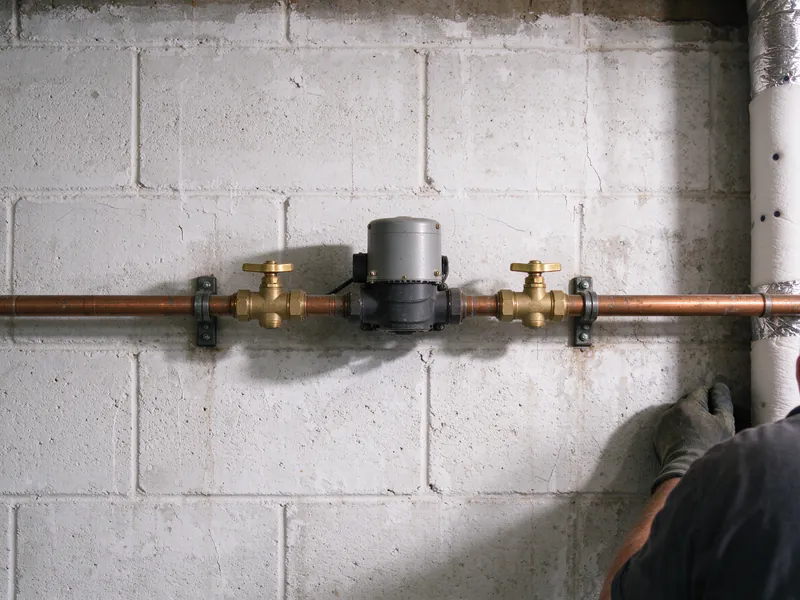
Every system has the same parts: a small pump, a check valve so water moves only one way, isolation valves for service, a control, and a path for cooled water to get back to the heater. The choice is mostly about that path.
Crossover valve systems
A crossover, or comfort, valve fits under the sink farthest from the heater and connects the hot supply to the cold supply. When the water at the valve cools, it opens and lets the pump push that water back through the cold line toward the heater; when the water reaches temperature, it closes. No new pipe is needed, so this is the least invasive option and often the only one that makes sense without opening walls. The tradeoff is that the cold line carries warm water for a while, so the cold tap at that sink, and sometimes at fixtures along the same run, comes out warm for a few seconds. It works best where one far bathroom is the problem and the hot and cold lines serve it on a simple path.
Dedicated return lines
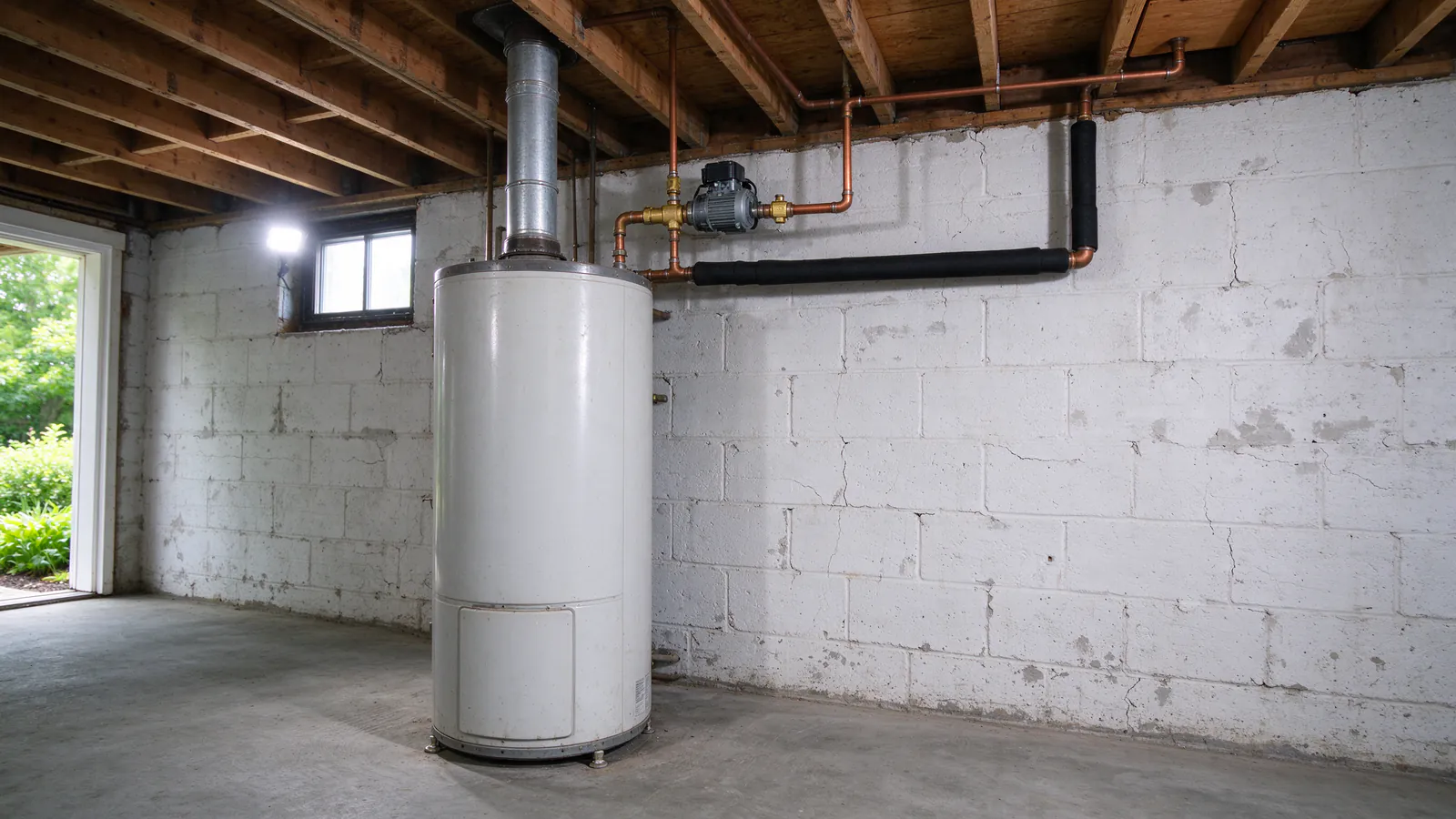
A dedicated return line is a third pipe, usually half-inch, from the last fixture group back to the water heater. The pump circulates water around that loop, the cold line stays cold, and every fixture along the loop gets hot water quickly. It performs better, especially for houses with several far fixtures, but the return needs a route, and in a finished house that means openings. In an Indianapolis house with an open basement or a crawlspace, the return can run along the joists beside the hot main, so the openings are mostly where it rises to the upstairs bath.
Controls and running cost
How long the pump runs decides most of the running cost. A pump left on around the clock keeps the whole loop warm, and the pipe loses heat all day; a timer that matches the household’s mornings and evenings, a thermostat that stops the pump once the return is warm, or an on-demand button or motion sensor at the bathroom cut that loss to a fraction. Insulating the hot and return lines keeps the water warmer between cycles. In an attic or crawlspace, insulation also matters for freezing: Indianapolis averages more than 100 nights a year at or below freezing, by NOAA’s 1991-2020 normals, and a return line in unheated space is exposed like any other pipe.
Pump size matters too. A pump that is too strong for a small loop moves water faster than the pipe needs, and high flow velocity is one of the factors linked to erosion and pinholes in copper, along with water chemistry and workmanship. The copper pinhole leaks guide covers the rest of them.
When recirculation is not the fix
A long wait for hot water is a distance problem. Other complaints look similar and are not. Weak flow at every fixture with good pressure at the hose bibb points to restricted pipe, and the low water pressure page explains how that is separated from a pressure problem at the street. Hot water that arrives but never gets fully hot points to the water heater, a failing mixing valve or a single-handle faucet cartridge letting cold water cross over. Brown or rusty hot water is its own question, covered in the brown water from the faucet guide. A pump will not fix any of those.
Adding a return line during a repipe
The cheapest time to add a dedicated return is while the supply pipe is being replaced. The walls and ceilings that open for the new hot lines, described in the guide to how invasive repiping is, are the same ones a return would need, the route is planned on paper first, and the new hot piping can be laid out so the loop is short. A repipe can also cut the wait without a pump: a smaller dedicated line to a far bath, or a home-run manifold, holds less water between the heater and the tap. The manifold vs trunk and branch guide explains how layout changes the wait, and PEX repiping and partial repiping show how a new layout goes in. Where the far bathroom is being remodeled, the same logic applies on a smaller scale.
Hot water takes a minute to arrive?
Get a written recommendation: crossover valve, return line or a layout change, with the openings each one needs.
Permit and installation details
Inside the City of Indianapolis, the Department of Business and Neighborhood Services requires a plumbing permit for construction on a plumbing system, with exemptions for replacing valves, fixtures and some pipe in kind. Adding a return line is new piping, so expect a permit for it; whether a pump-only installation needs one is confirmed with the permit office for the job. Where a permit applies to an existing home, the City’s fee starts at $153. The Indianapolis repiping permit guide explains which office covers which address.
At the heater, the pump and check valve go where the pump maker specifies, with isolation valves so the pump can be changed without draining the system. The pump needs an outlet nearby; where there is none, adding one is electrical work arranged separately. A thermal expansion tank, where the house has one, stays connected as before. Tankless heaters need a pump and control that the heater’s maker approves.
What changes the price
Recirculation has no published local price range, so it is priced from what the house needs. The biggest drivers are whether a return line already exists, whether the job uses a crossover valve at the farthest fixture or a new return pipe, and whether that pipe can run through an open basement or crawlspace or has to go through finished walls and floors. An outlet near the water heater, the type of control, insulation on long runs and the patching scope come next. Adding the return during a repipe usually costs far less than adding it to a finished house later. The Indianapolis repipe cost guide explains how the same drivers work on a larger job.