Carmel’s water is softened before it reaches the tap, and that changes the usual Indianapolis-area story about pipes closing up with scale. Repiping in Carmel, IN is more often about copper that has started to pinhole, plastic pipe from the 1980s and 1990s, or a remodel that already has the walls open. Circle City Repipe replaces and repairs water supply piping across Carmel, including copper repiping, PEX repiping and copper leak repair. Licensed and insured contractors do the work.
The houses Carmel actually has
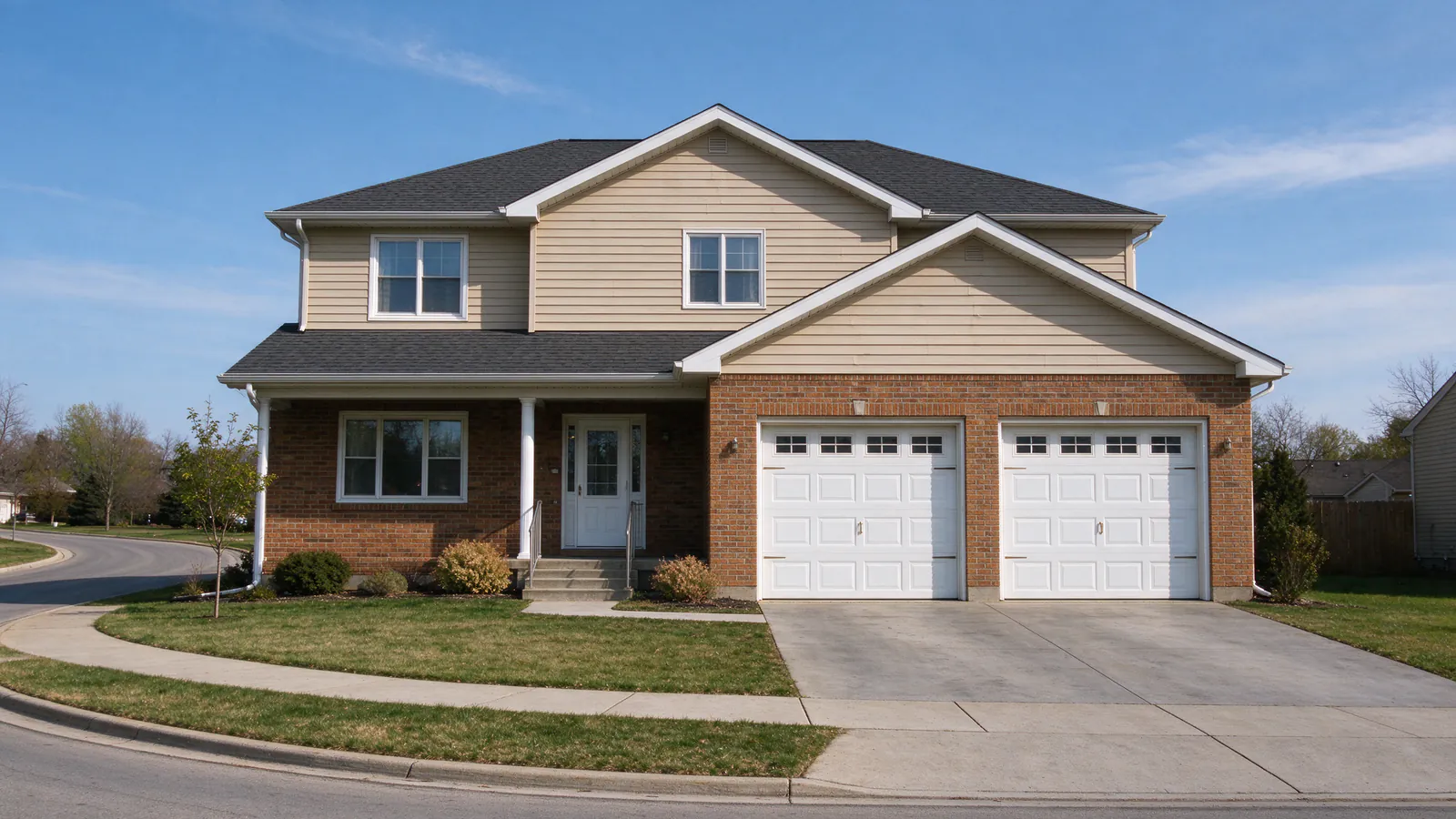
Carmel’s housing is young for the metro. In the Census Bureau’s American Community Survey, the city’s median home was built in 1998, 78.2% of homes were built in 1980 or later and 44.8% since 2000. Fewer than 1% predate 1940. About three quarters are single-unit houses. Since a 2018 annexation took in Home Place, the city is coextensive with Clay Township, so the older pockets near the center and along the Monon Trail sit inside the same city as subdivisions finished in the last two decades.
That age profile moves the decision away from galvanized steel, which belongs mostly to houses built before the 1960s. A house from the 1970s or 1980s was most likely plumbed in copper, and copper of that age can thin from the inside until pinholes appear; the guide to copper pinhole leaks explains why one leak often means more are coming. Houses built from the late 1970s into the mid-1990s are the era of polybutylene, the gray flexible pipe that is no longer allowed for new work; where a house has it, polybutylene pipe replacement is the usual scope. Newer houses are typically plastic already, and the work there is usually a repair, a fixture change or a remodel branch rather than a repipe.
What softened water does and does not change
Carmel Utilities draws groundwater from 20 wells in the Upper White River Basin aquifer, removes iron at five treatment plants and then softens the water to eight grains of hardness, which the utility calls moderately hard. It also says softening may be reduced during extreme summer demand. Citizens Water, which serves most of Indianapolis, averages about 19 grains per gallon. The difference is real: less scale inside water heaters and fixture valves, and less buildup in old pipe.
Softened water is not zero-hardness water, though, and it does not make copper immune to pinholes, which have other causes. Carmel Utilities reports a 90th percentile lead level of 2.94 ppb and a 90th percentile copper level of 0.144 ppm in its most recent reported tap sampling, with none of the 30 homes sampled above the action level, and it publishes a service line inventory map. The guide to Indianapolis hard water and pipes sets Carmel’s water beside the rest of the metro and covers what a home softener adds.
Planning a remodel in Carmel?
Have the supply piping behind the open walls checked and priced before the drywall goes back up.
One permit per project
The City of Carmel’s Department of Community Services, through Building Safety, issues building permits, and it says one permit is typically issued for a given construction project, with all of the work covered under it. Projects are built to the 2020 Indiana Residential Code. Carmel’s fee schedule has no stand-alone plumbing permit line. A remodel is priced as an improvement location permit with a base fee plus a charge per gross square foot, and each construction inspection carries its own flat fee, with a higher fee for a reinspection. Whether a repipe with no other remodel work needs that permit is confirmed per project.
Carmel’s inspection procedures put plumbing into the rough-in inspection, which has to be approved before insulation goes in, and the fee schedule lists an under-slab plumbing inspection before backfill for work below a slab. Permits stay valid for 18 months. For an owner, the practical effect is that a repipe inside a remodel rides on the remodel’s permit and inspections, so the plumbing scope should be settled before the permit is applied for rather than added once walls are open.
How a Carmel job usually runs
A Carmel visit opens at the meter and main shutoff, where the material is identified and any pressure reducing valve gets a gauge on it. Then come pressure and flow readings at the upstairs and downstairs fixtures, on both the hot and the cold side. When pressure is the complaint, the cause is often not the pipe; the low water pressure page walks through utility, valve and pipe causes in order. Scope, openings and price are in writing before a single wall is cut.
In a two-story house with a basement, new lines run along the basement joists and climb through closets, chases or the cavity beside a drain stack to the upstairs baths. Where a house sits on a slab, supply lines are rerouted overhead through the attic or interior walls rather than broken out of the floor, with the attic runs kept inside the insulation. Copper or PEX is chosen per house; the PEX vs copper guide compares them on cost, joints and how each handles the openings. Water stays on for most of each day because the new system is connected one section at a time. Building Safety sees the rough-in before insulation; after that comes a pressure test and a flush, then the water heater and fixtures are hooked back up. Patching follows a written list of every opening and who closes it.
Why scope here usually starts small
In a house that is twenty or thirty years old, a whole-house repipe is rarely the first answer. A single pinhole is a copper pipe repair. Repeat leaks on one run, polybutylene anywhere in the house, or a remodel that opens most of the walls are the points where replacing more makes sense, and repipe vs. repair covers that threshold in detail. Carmel has no price band of its own: a whole-house repipe here is budgeted on the same $4,000 to $15,000+ range used across the metro, with larger floor plans and more baths sitting higher in it. The Indianapolis repipe cost guide explains what drives the number.
Around Carmel
Lawrence sits to the southeast on its own permit office and its own water utility. The Old Northside and Speedway show the older end of the metro, where galvanized pipe is the more common question. The service areas page lists the rest.